CERN has launched a three-year programme, the Open Quantum Institute (OQI), to make quantum computing resources and expertise widely available. The OQI, designed by the Geneva Science and Diplomacy Anticipator (GESDA) and funded by UBS, aims to support projects aligned with the UN’s Sustainable Development Goals. The initiative will be integrated into CERN’s Quantum Technology Initiative from March 2024. The OQI will focus on quantum computing and algorithms, quantum simulation and information processing, quantum sensing, metrology and materials, and quantum communication and networks. The programme aims to reduce the digital divide by making cutting-edge technologies accessible to underserved regions.
Open Quantum Institute: A New Programme for Quantum Computing Resources
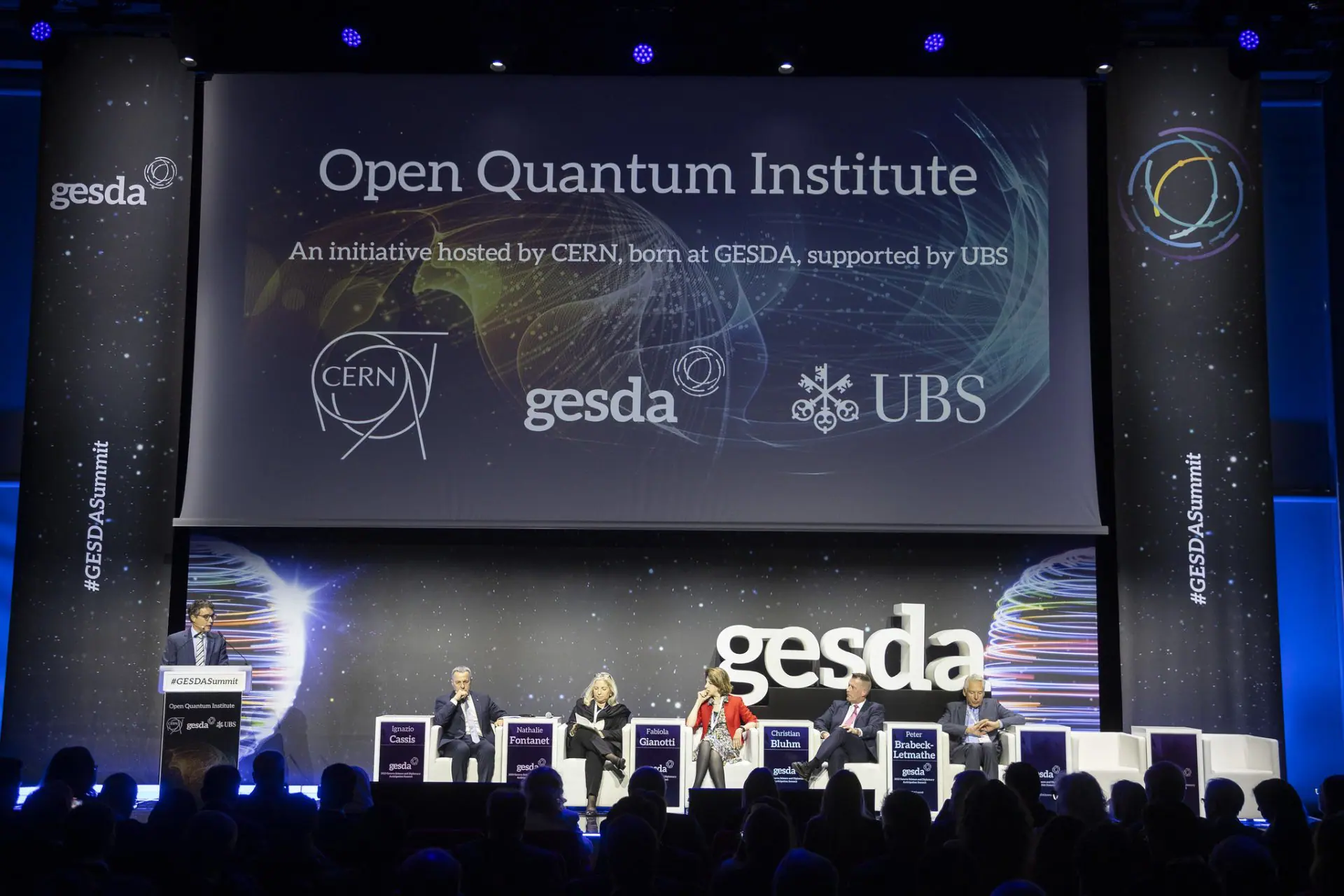
A new three-year programme, the Open Quantum Institute (OQI), has been launched with the aim of making quantum computing resources and technical expertise widely accessible. The programme is based at CERN and has been designed by the Geneva Science and Diplomacy Anticipator (GESDA) in collaboration with around 130 experts. The funding for the programme will be provided by UBS. The announcement of the pilot phase was made on 13 October during the 2023 GESDA summit and the programme will be fully integrated into CERN’s Quantum Technology Initiative (QTI) from 1 March 2024.
The OQI will essentially serve as the societal arm of the QTI, which was established at CERN in 2018 and is managed by the IT department. The QTI currently involves several researchers from CERN departments and experiments working on four main domains and applications: quantum computing and algorithms, quantum simulation and information processing, quantum sensing, metrology and materials, and quantum communication and networks.
The OQI’s Goal: Societal Impact of Quantum Computing
The primary objective of the OQI is to maximise the societal impact of quantum computing by promoting and facilitating access to quantum computing resources and technical expertise. The OQI aims to make cutting-edge nascent technologies available to people from underserved regions, thus contributing to reducing a potential new digital divide.
The OQI is designed to support projects that align with the UN’s Sustainable Development Goals (SDGs). Enrica Porcari, Head of CERN’s IT department, stated that the SDGs represent the international community’s collective view of the greatest societal challenges today. The OQI will provide a platform to transcend geographical and disciplinary boundaries in harnessing the power of quantum computing to address these challenges.
The OQI’s Role in CERN’s Quantum Technology Initiative
The OQI will be fully embedded into CERN’s wider Quantum Technology Initiative (QTI) as of 1 March 2024. The QTI, established at CERN in 2018, involves several researchers from CERN departments and experiments working on various domains and applications of quantum technology. The OQI will serve as the societal arm of the QTI, focusing on the societal applications and implications of quantum technology.
CERN, with its long tradition of collaboration across borders and knowledge sharing, is the ideal place to host the pilot phase of the OQI. The OQI will strengthen CERN’s profile as a scientific institution that serves society, in the Member and Associate Member States and beyond, on some of humanity’s most pressing challenges. It will expand CERN’s networks in support of knowledge transfer, education and training in quantum technologies.
Potential Projects and Use Cases for the OQI
The OQI has been designed to focus on specific items and accelerate the potential of quantum computing for society. Potential use cases to be explored as projects in the pilot phase of the OQI include quantum computing optimisation of the food supply chain for better food security, more accurate medical imaging thanks to quantum machine-learning solutions, and quantum computing simulation to improve the catalysis process involved in the fixation of carbon on the surface of materials, thus reducing CO2 in the atmosphere.
During the three years of its pilot phase, the OQI will support three or four projects targeting SDG-related use cases. It will also lay the foundations for the next phase of the programme and potentially become a reference for other initiatives aimed at deploying quantum technologies for the benefit of all.
The Future of the Open Quantum Institute
The OQI is set to run for three years during its pilot phase, during which it will support three or four projects targeting SDG-related use cases. The pilot phase will also lay the groundwork for the next phase of the programme. The OQI has the potential to become a reference for other initiatives aimed at deploying quantum technologies for the benefit of all, thus contributing to the wider societal impact of quantum computing.
“The UN’s SDGs represent the international community’s collective view of what the greatest societal challenges are today,” says Enrica Porcari, Head of CERN’s IT department. “This is why we are proud to host the OQI at CERN and to provide a platform to transcend the boundaries of geography and disciplines in harnessing the power of quantum computing to address the SDGs. With its long tradition of collaboration across borders and knowledge sharing, CERN is the ideal place to host the pilot phase of the OQI and publicly reiterate that innovation has no boundaries. The OQI will strengthen CERN’s profile as a scientific institution that serves society, in the Member and Associate Member States and beyond, on some of humanity’s most pressing challenges. It will expand CERN’s networks in support of knowledge transfer, education and training in quantum technologies”.
“This preparatory journey has allowed us to design a platform that focuses on specific items and really accelerates the potential of quantum computing for society,” confirms Porcari.
Quick Summary
The Open Quantum Institute (OQI), a three-year programme hosted by CERN, aims to make quantum computing resources and expertise widely accessible, with a focus on projects supporting the UN’s Sustainable Development Goals. The OQI intends to maximise societal impact by facilitating access to quantum technologies, including for underserved regions, thereby addressing potential digital inequality.
- A new three-year programme, the Open Quantum Institute (OQI), has been launched by CERN, designed by the Geneva Science and Diplomacy Anticipator (GESDA) and funded by UBS.
- The OQI aims to make quantum computing resources and technical expertise widely available, particularly to projects supporting the UN’s Sustainable Development Goals (SDGs).
- The OQI will be integrated into CERN’s Quantum Technology Initiative (QTI) from 1 March 2024.
- The QTI, established in 2018, involves researchers from CERN working on quantum computing and algorithms, quantum simulation and information processing, quantum sensing, metrology and materials, and quantum communication and networks.
- The OQI will also provide access to cutting-edge technologies to people from underserved regions, aiming to reduce a potential new digital divide.
- Enrica Porcari, Head of CERN’s IT department, emphasised the importance of harnessing the power of quantum computing to address the SDGs.
- Potential projects for the OQI pilot phase include quantum computing optimisation of the food supply chain, more accurate medical imaging through quantum machine-learning solutions, and quantum computing simulation to improve carbon fixation processes.
- During its pilot phase, the OQI will support three or four projects targeting SDG-related use cases.