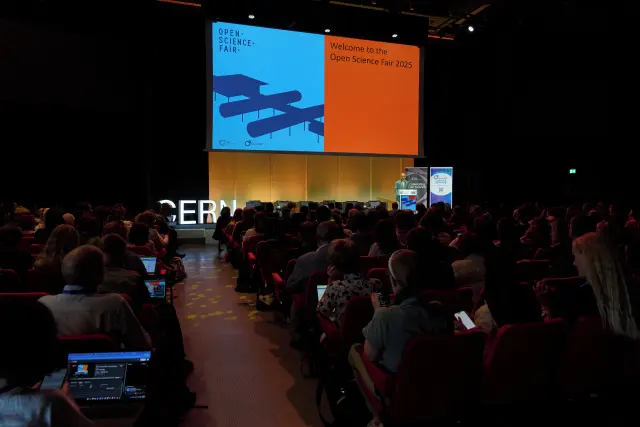
What the CERN Open Science Office accomplished at its September 2025 Breakthrough Fair united 353 participants from 43 countries to advance open science. From September 15 to 17, the event at CERN Science Gateway fostered global collaboration on research accessibility. Researchers, librarians, and data stewards joined funders, infrastructure providers, and publishers to discuss five key topics shaping open science. Kamran Naim, Head of Open Science at CERN, emphasized the fair’s role in nurturing openness as a core research value. Recordings and materials from the event are available for continued engagement.
Global Collaboration for Open Science
More than 350 participants from 43 countries convened at CERN this past September to advance the principles of open science, fostering a truly global exchange of ideas. This gathering highlighted the increasing recognition that collaborative, international solutions are essential for tackling complex worldwide challenges. The event underscored a commitment to making scientific research and its applications accessible to all, building on CERN’s long-standing dedication to openness.
Discussions at the Open Science Fair (OSFair 2025) brought together not only researchers, librarians and data stewards, but also funders, infrastructure providers, and publishers. These stakeholders explored key topics including impact measurement, research security, and the development of robust digital infrastructures. Kamran Naim from CERN emphasized that sustained dedication and creativity are vital for nurturing openness in research.
“Openness in research must be continually nurtured through collaboration, creativity and sustained dedication.”
Head of Open Science Kamran Naim, CERN
Building on this momentum, OSFair 2025 aimed to strengthen open science as both a core value and a practical model for research that benefits society. Recordings and materials from the event are readily available through the CERN Document Server and the OSFair Zenodo Community, ensuring wider dissemination of knowledge. This commitment to accessibility demonstrates a proactive approach to global scientific advancement.
Future of Open Science Discussions and Outcomes
Discussions at OSFair 2025 centered around five key areas, providing a focused framework for advancing open science practices. These included impact measurement and monitoring, crucial for demonstrating the value of open research, alongside research security, a growing concern in the digital age. Digital infrastructures also received significant attention, recognizing the need for robust platforms to support data sharing and collaboration.
Building on this, participants explored essential skills development and community building, acknowledging that successful open science requires a workforce equipped with the necessary expertise. Furthermore, the fair addressed research assessment, with conversations focused on developing metrics that appropriately value open science outputs, according to unnamed groups including researchers, librarians and data stewards.
Kamran Naim from CERN emphasized the need for sustained dedication to openness, noting that collaborative, international solutions are vital for addressing increasingly complex global challenges. Recordings and materials from the event are publicly available through the CERN Document Server and the OSFair Zenodo Community, furthering accessibility and ensuring the fair’s outcomes continue to benefit the wider scientific community.
“The increasing complexity of global challenges demands collective, international solutions”
Kamran Naim, CERN
Building on this collaborative spirit, the Open Science Fair 2025 fostered crucial dialogue amongst researchers, librarians and data stewards, funders, and infrastructure providers including CERN and OpenAIRE. Kamran Naim from CERN emphasized the need for collective action to address increasingly complex global challenges, a sentiment echoed throughout the event.
“This year’s fair developed ideas to strengthen open science: both as a core value and as a working model for research that serves society.”
Head of Open Science Kamran Naim, CERN
This momentum could enable wider adoption of open science principles, fundamentally changing how research is conducted and shared internationally. For industries relying on rapid innovation and data accessibility, this represents a pathway towards accelerated discovery and collaborative problem-solving, ultimately widening the impact of scientific advancements worldwide.