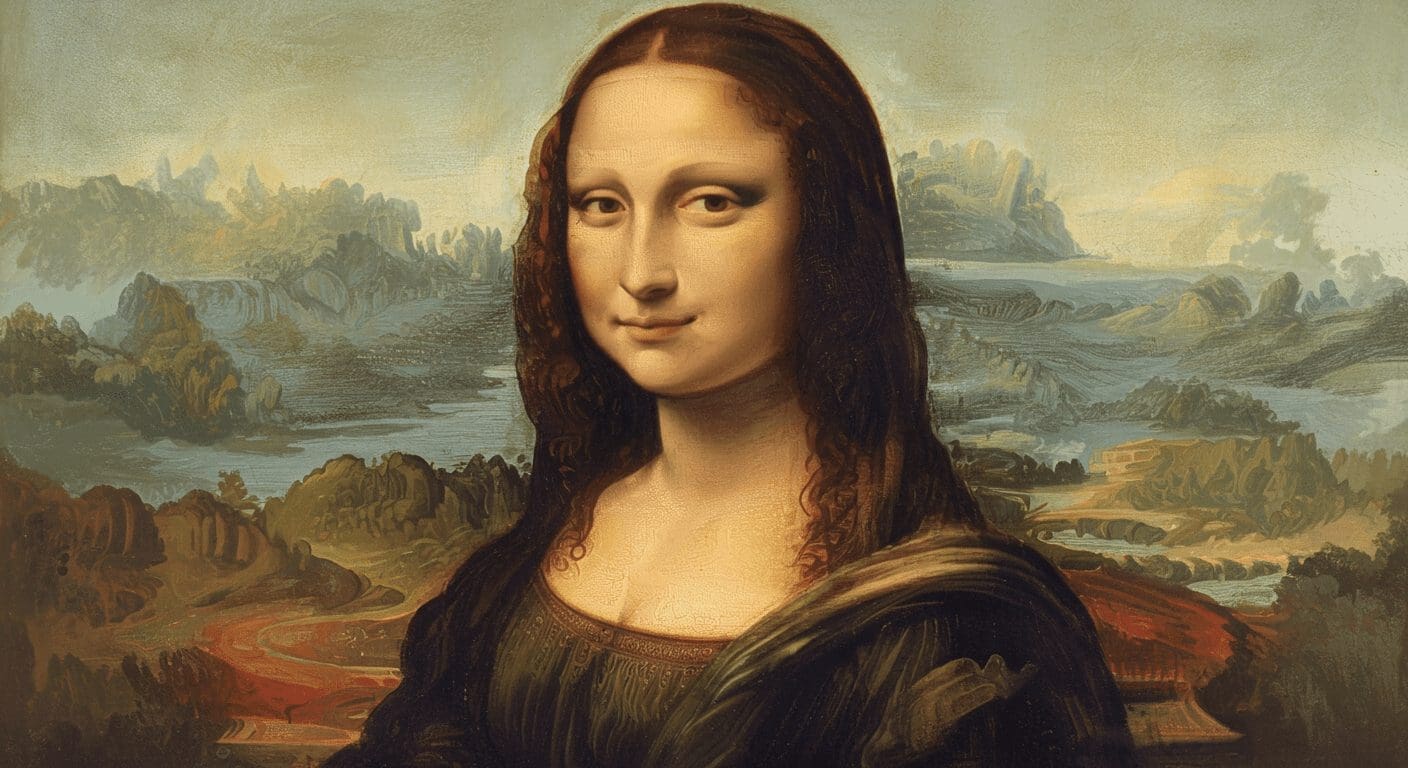
In an era where AI-generated art increasingly challenges human creativity, Meien Li and Mark Stamp have developed innovative machine learning techniques to discern between human and AI artwork with remarkable precision.
The study investigates the ability of machine learning models—Logistic Regression (LR), Support Vector Machine (SVM), Multilayer Perceptron (MLP), and Convolutional Neural Network (CNN)—to distinguish between AI-generated and human-generated artwork across three artistic styles: baroque, cubism, and expressionism. The best-performing model achieved a multiclass accuracy of 0.8208 over six classes and an impressive binary classification accuracy of 0.9758 in distinguishing AI from human art.
Art has traditionally been a subjective field, with styles and movements defined by nuanced visual characteristics. From Baroque to Cubism, identifying and categorizing artistic styles has relied on human expertise. However, advancements in deep learning are transforming this landscape by offering new avenues for automating art analysis. This research investigates the use of machine learning models to classify art into distinct styles, such as Baroque, Cubism, and Expressionism. By extracting visual features from artworks, researchers aim to develop algorithms capable of accurately identifying these styles with minimal human intervention. The study not only demonstrates the potential for automating art analysis but also raises questions about technology’s role in understanding cultural heritage.
Methodology
The research employs deep learning techniques and traditional machine learning models to classify artworks into predefined categories. Key steps include:
- Feature Extraction: Visual features such as color histograms, texture analysis, and edge detection are extracted from artworks. These features serve as inputs for training the models.
- Model Selection: Various algorithms are tested, including CNNs, logistic regression (LR), support vector machines (SVM), and multilayer perceptrons (MLP). Each model is evaluated based on its accuracy in classifying art styles.
- Data Analysis: The dataset comprises historical and contemporary artworks, ensuring a diverse representation of styles. Histograms and confusion matrices are used to visualize feature distribution and assess model performance.
The findings reveal that deep learning models, particularly CNNs and MLPs, demonstrate strong performance in classifying art styles. In binary classification tasks—such as distinguishing between AI-generated and human-created artworks—these models achieve high accuracy rates. However, challenges emerge in multiclass scenarios, where the complexity of distinguishing between multiple styles increases. For instance, while MLP shows promise in handling multiclass classification, it struggles with imbalanced datasets, a common issue in art history where certain styles may be underrepresented. These results underscore the importance of data diversity and balanced representation in training effective models.
This research highlights the transformative potential of deep learning in art analysis. By automating the classification of artistic styles, these technologies could revolutionize how we study and preserve cultural heritage. They also open new possibilities for detecting forgery, enhancing museum curation, and aiding artists in understanding historical influences. However, the study also points to limitations, particularly in handling complex multiclass scenarios and imbalanced datasets. As deep learning continues to evolve, addressing these challenges will be crucial to unlocking its full potential in the art world. In summary, this research not only advances our technical capabilities but also invites us to rethink the intersection of technology and culture—a reminder that while machines can analyze art, they cannot replace the human appreciation for its beauty and significance.
👉 More information
🗞 Detecting AI-generated Artwork
🧠 DOI: https://doi.org/10.48550/arXiv.2504.07078