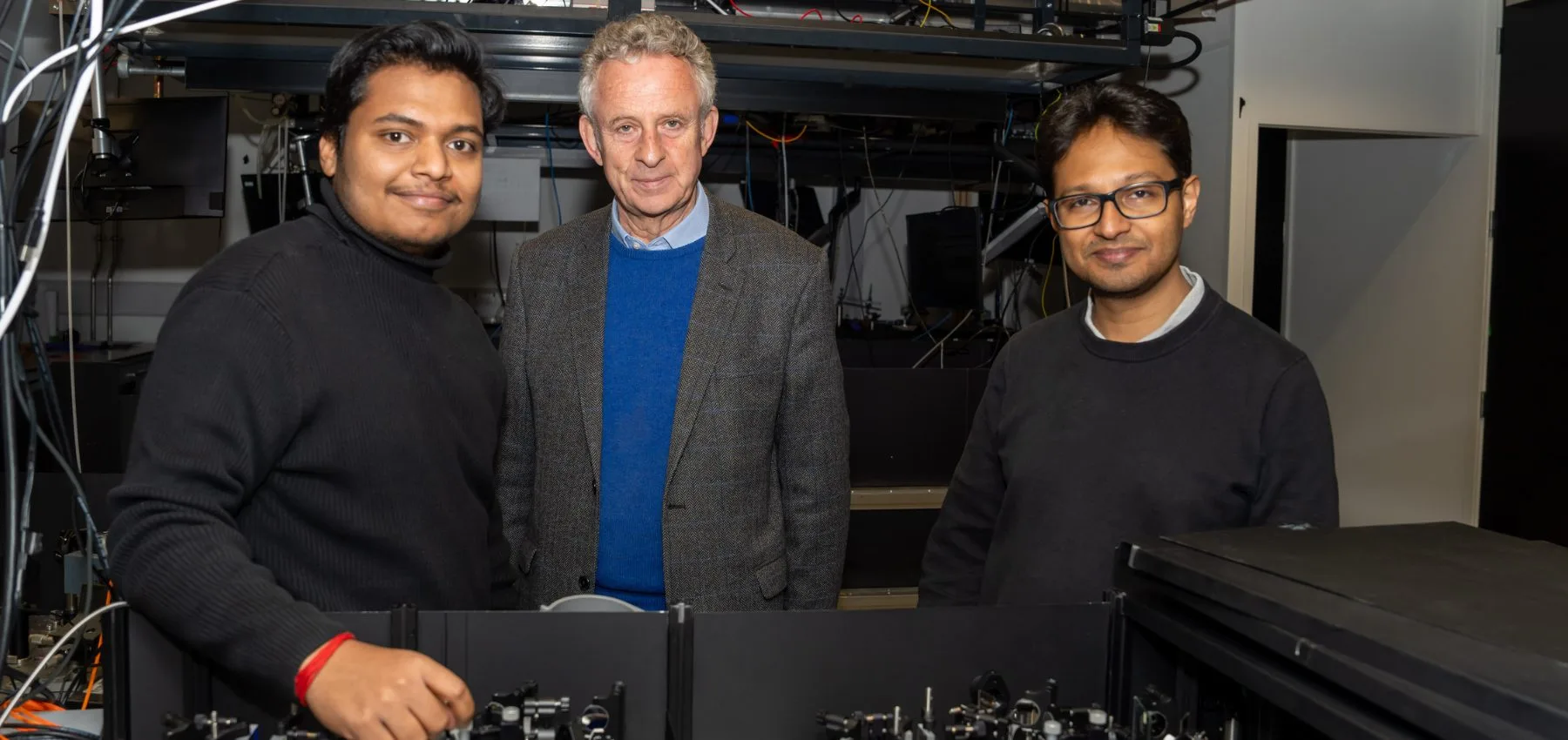
Researchers at the University of Cambridge, led by Professor Akshay Rao, have discovered a method to halt the quantum motion of atoms in carbon-based organic molecules, improving their performance in light-emitting applications such as displays and bio-medical imaging. The team used laser-based spectroscopic techniques to develop new molecular design rules that can stop the coupling of electrons to atomic vibrations. This discovery could enhance technologies ranging from display screens to disease detection. The research was first authored by Cavendish PhD student Pratyush Ghosh and published in Nature.
Quantum Dance of Atoms: A New Understanding
Researchers at the University of Cambridge have made a significant breakthrough in the understanding of the quantum behavior of atoms within carbon-based organic molecules. This development could potentially enhance the performance of light-emitting molecules used in various applications, including display technologies and biomedical imaging.
For over a century, since the advent of quantum mechanics, it has been understood that electrons within molecules can be linked to the motion of the atoms that constitute the molecules. This phenomenon, often referred to as molecular vibrations, involves the atoms acting like minuscule springs, undergoing periodic motion. The electrons in these systems, being intimately connected with these vibrations, are also in constant motion, moving in sync with the atoms on timescales of a femtosecond (one millionth of a billionth of a second). However, this constant motion results in energy loss, which in turn limits the performance of organic molecules in applications such as light-emitting diodes (OLEDs), infrared sensors, and fluorescent biomarkers used in cellular studies and disease detection.
Halting the Quantum Dance: New Molecular Design Rules
The Cambridge researchers have now discovered new molecular design principles that can halt this atomic dance. Using laser-based spectroscopic techniques, they have identified key design elements that can decouple the electrons from atomic vibrations, effectively stopping their constant motion and enabling the molecules to achieve unprecedented performance levels.
Pratyush Ghosh, a Cavendish PhD student and the first author of the study, explains that all organic molecules, such as those found in living cells or within the screen of a phone, consist of carbon atoms connected to each other via a chemical bond. These bonds act like tiny vibrating springs, which are generally felt by electrons, impairing the performance of molecules and devices. However, the researchers have found that certain molecules can avoid these detrimental effects when the geometric and electronic structure of the molecule is restricted to specific configurations.
Demonstrating the Design Principles: Efficient Near-Infrared Emitting Molecules
To demonstrate these design principles, the scientists designed a series of efficient near-infrared emitting (680-800 nm) molecules. In these molecules, energy losses resulting from vibrations—essentially, electrons moving in sync with atoms—were more than 100 times lower than in previous organic molecules.
This new understanding and the development of new rules to design light-emitting molecules have opened an exciting path for the future, where these fundamental observations can be applied to various industries.
Translating Discovery into Better Technologies
“These molecules also have a wide range of applications today. The task now is to translate our discovery to make better technologies, from enhanced displays to improved molecules for bio-medical imaging and disease detection,” concluded Professor Akshay Rao from Cavendish Laboratory, who led this research.
This research represents a significant step forward in our understanding of the quantum behavior of atoms within organic molecules. The potential applications of this discovery are vast, ranging from improved display technologies to enhanced biomedical imaging capabilities. As we continue to delve deeper into the quantum world, such breakthroughs bring us closer to harnessing the full potential of quantum mechanics in practical applications.
External Link: Click Here For More