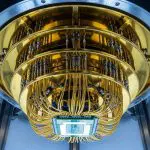
A new atomic clock developed at the top-secret Defence Science and Technology Laboratory in the UK is poised to revolutionize military operations with unprecedented precision. The quantum clock, which will lose less than one second over billions of years, was built using experimental quantum technology and is the first to be constructed in the UK.
Minister for Defence Procurement and Industry Maria Eagle MP hailed the development as a key example of the government’s commitment to innovation in the defence sector. The project involved collaboration with several key partners, including Infleqtion, Aquark Technologies, HCD Research, and Imperial College London. According to Dstl’s Chief Executive Paul Hollinshead, the trial represents a major achievement in the UK’s quantum technology capabilities, with potential benefits for military and national infrastructure resilience.
The technology has far reaching implications, from improving GPS accuracy to securing communications systems, and is expected to be deployable on military operations within the next five years.
Introduction to Quantum Technology and Atomic Clocks
The development of a revolutionary UK-built atomic clock using experimental quantum technology has the potential to significantly enhance military operations by providing more secure and precise timekeeping. This cutting-edge device, developed at the Defence Science and Technology Laboratory (Dstl), boasts an unprecedented level of precision, losing less than one second over billions of years. The implications of this technology extend far beyond the realm of military operations, with potential applications in fields such as global navigation systems, satellite communication, and aircraft navigation.
The quantum clock’s exceptional accuracy results from its ability to measure time at an unprecedented scale, making it an invaluable asset for various industries. The UK Government’s investment in this technology is part of its Plan for Change, which aims to safeguard national security while supporting skilled, productive jobs that foster economic growth. As research continues to advance, the technology is expected to decrease in size, allowing for mass manufacturing and miniaturization, which will unlock a wide range of applications, including use by military vehicles and aircraft.
The development of this quantum clock is a testament to the UK’s commitment to innovation in the defence sector. Minister for Defence Procurement and Industry Maria Eagle MP emphasized the importance of integrating cutting-edge technology into existing capabilities to ensure the Armed Forces have the best equipment to maintain national security. The trial of this emerging technology has the potential to not only strengthen operational capability but also drive progress in industry, bolster the science sector, and support high-skilled jobs.
The collaboration between Dstl and key partners, including Infleqtion (UK), Aquark Technologies, HCD Research, and Imperial College London, has been instrumental in bringing this technology to fruition. The prototype frequency standards were tested with the Royal Navy‘s Office of the Chief Technical Officer and the Army Futures team at the BattleLab, demonstrating the potential for quantum clocks to provide a stable sovereign-controlled capability for maintaining precise time in critical operations.
Quantum Clocks and Their Applications
Quantum clocks have far-reaching implications that extend beyond precision timekeeping. The development of this technology has the potential to transform global navigation systems, enabling more accurate and independent navigation and reducing reliance on GPS satellites, which are vulnerable to jamming or destruction in conflict scenarios. Secure communication systems, such as encrypted military networks, also depend on highly synchronized timekeeping, making quantum clocks an essential component.
The accuracy of advanced weapon systems, like guided missiles, relies on precise timing to calculate trajectories and coordinate attacks. Quantum clocks can provide the necessary level of precision, allowing the Armed Forces to gain an edge over adversaries in timing-critical operations. The potential applications of quantum clocks are vast, with possibilities in fields such as finance, transportation, and healthcare, where precise timekeeping is essential.
The UK’s investment in quantum technology has been significant, with over £28 million allocated to shape research and development and achieve early adopter advantage. This investment has enabled the UK to take a leading role in developing quantum clocks, with potential benefits for military and national infrastructure resilience. As Jonathan, a technical leader for industry partner Infleqtion, noted, “Quantum is really important to the UK, especially from a defence perspective. If you look at what’s happening in the world at the moment, it’s becoming increasingly obvious that we need better and more robust position navigation and timing services, and that’s something that quantum is uniquely placed to be able to provide.”
The Demonstration of Advanced Timing Apparatus (DATA)
The DATA project is a planned series of experiments designed to understand the performance and limitations of quantum clocks. This initiative has brought together key partners from industry and academia to test prototype frequency standards in real-world scenarios. The collaboration between Dstl, Infleqtion, Aquark Technologies, HCD Research, and Imperial College London has been instrumental in advancing the development of quantum clocks.
The trial involved testing the prototype frequency standards with the Royal Navy’s Office of the Chief Technical Officer and the Army Futures team at the BattleLab. The results of this trial will shape future Defence efforts and demonstrate the UK’s commitment to exploring quantum technologies for secure and resilient operational advantage. As Commander Matt Steele, the Future Technology Officer for the Royal Navy’s Office of the Chief Technical Officer, noted, “The Navy has been looking at quantum technologies for a number of years, and it is exciting to see that the challenges of physics and engineering in this area are now no longer a scientific concept, but are now reaching the cusp of reality.”
The Future of Quantum Technology
The development of quantum clocks is just the beginning of a new era in quantum technology. As research continues to advance, we can expect to see significant breakthroughs in fields such as quantum computing, quantum communication, and quantum sensing. The potential applications of these technologies are vast, with possibilities in fields such as finance, healthcare, and transportation.
The UK’s investment in quantum technology has positioned the country at the forefront of this emerging field. As Dstl’s Chief Executive, Paul Hollinshead, noted, “This first trial of advanced atomic clock represents a significant achievement in the UK’s quantum technology capabilities. The data gathered will not only shape future Defence effort but is also a signal to industry and academia that we are serious about exploring quantum technologies for secure and resilient operational advantage.”
As the world becomes increasingly reliant on precise timekeeping, the development of quantum clocks has the potential to provide a stable sovereign-controlled capability for maintaining precise time in critical operations. The future of quantum technology holds much promise, and it will be exciting to see how this emerging field continues to evolve and shape the world around us.
Atomic Clocks in Defence Applications
In conclusion, the development of a revolutionary UK-built atomic clock using experimental quantum technology has the potential to significantly enhance military operations by providing more secure and precise timekeeping. The implications of this technology extend far beyond the realm of military operations, with potential applications in fields such as global navigation systems, satellite communication, and aircraft navigation.
As research advances, we can expect to see significant breakthroughs in fields such as quantum computing, quantum communication, and quantum sensing. The UK’s investment in quantum technology has positioned the country at the forefront of this emerging field, and it will be exciting to see how this technology continues to evolve and shape the world around us.
External Link: Click Here For More