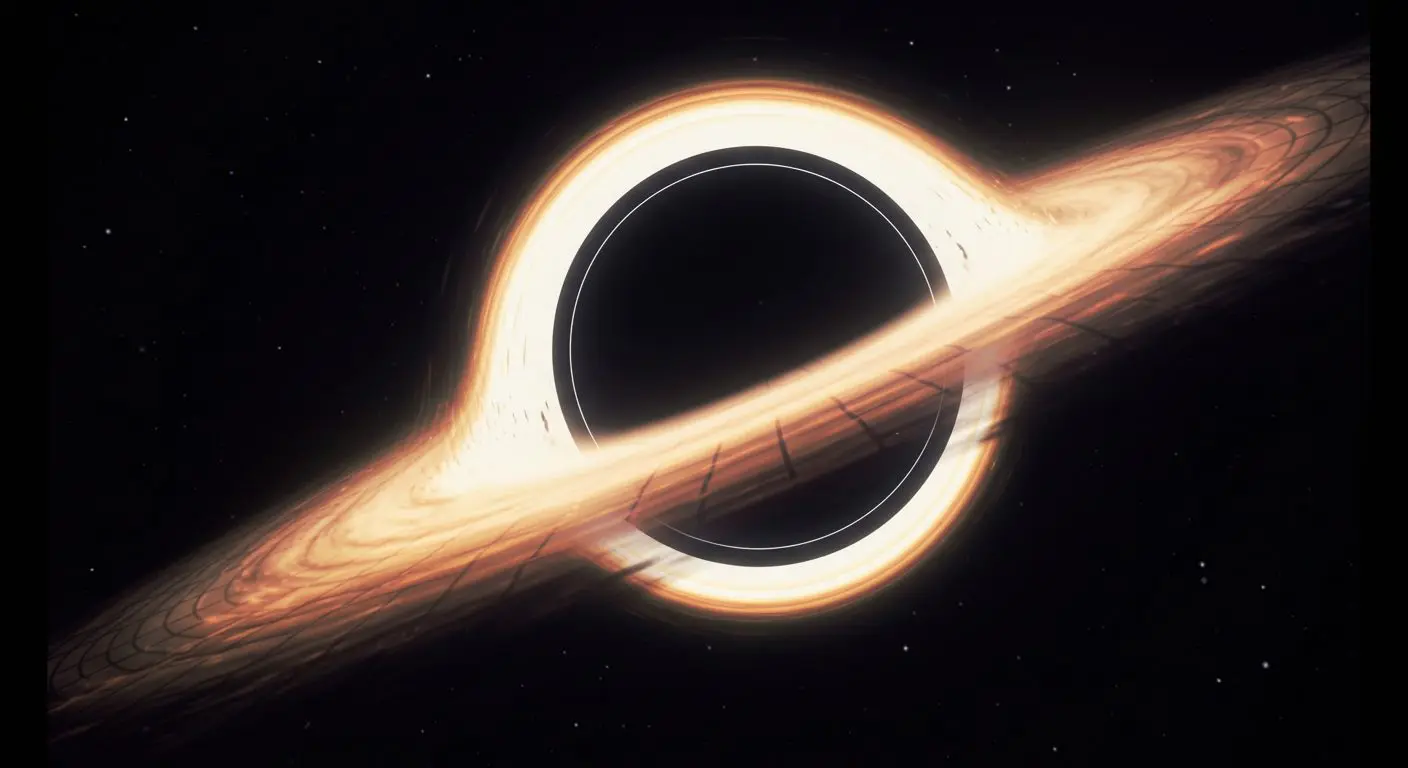
Research into Reissner-Nordstrom-AdS black holes reveals that incorporating off-shell geometries within a path integral approach modifies the black hole’s phase diagram, creating a richer structure. The study demonstrates a transition from first to zero-order phase transitions and recovers the semi-classical black hole in limiting conditions.
The enduring mystery of black holes continues to yield to increasingly sophisticated theoretical treatments, with recent work focusing on refinements to established thermodynamic descriptions. Researchers are now incorporating quantum corrections to better understand the behaviour of these extreme gravitational objects, moving beyond purely classical interpretations. Yu-Qi Liu, from the Center for Joint Quantum Studies and Department of Physics at Tianjin University, alongside Hao-Wei Yu of Southwest University’s School of Physical Science and Technology, and Peng Cheng, also from Tianjin University, present a detailed analysis of these corrections in their paper, “Quantum-corrected black hole thermodynamics from the gravitational path integral”. Their investigation utilises the gravitational path integral, a technique from quantum field theory, to examine the thermodynamic properties of Reissner-Nordstrom-AdS black holes, revealing a richer phase structure and a modified understanding of phase transitions when quantum effects are included. The team’s calculations demonstrate how incorporating ‘off-shell’ geometries – deviations from the classical solution – within the path integral leads to a more nuanced picture of black hole thermodynamics and recovers established results in the appropriate limit.
Theoretical physicists continually refine our understanding of black hole entropy, extending beyond classical formulations to incorporate quantum corrections and explore novel theoretical frameworks. Recent investigations focus on corrections to the Bekenstein-Hawking entropy formula, with particular attention given to quantifying logarithmic corrections, as evidenced by publications from Kapec et al. and Iliesiu et al. These corrections suggest a more nuanced understanding of the microstates contributing to black hole entropy than previously considered, prompting a reevaluation of established models. The Bekenstein-Hawking entropy formula, a cornerstone of black hole thermodynamics, originally states that entropy is proportional to the area of the event horizon, but these corrections propose a more complex relationship.
Emphasis on entanglement entropy and the holographic principle attempts to connect gravitational phenomena with quantum information theory, offering a promising avenue for resolving long-standing theoretical challenges. Solodukhin’s work underscores this connection, proposing that black hole entropy arises from the entanglement of quantum degrees of freedom, aligning with the holographic principle. This principle posits a duality between gravity in a given spacetime and a quantum field theory residing on its boundary, suggesting that all information contained within a volume of space can be encoded on its surface. Recent investigations by Cheng represent a departure from established paradigms, exploring the potential influence of non-local effects, boundary conditions, and quantum anomalies on black hole entropy, suggesting previously overlooked physical mechanisms may play a crucial role in determining this fundamental quantity.
Theoretical physicists obtain a one-loop effective action by
Theoretical physicists obtain a one-loop effective action by meticulously considering subleading-order terms, effectively verifying the consistency of derived effective quantities with the established effective action framework. This process defines a valid thermodynamic description, allowing for a more nuanced understanding of black hole behaviour and enabling the exploration of quantum corrections to thermodynamic properties. The inclusion of off-shell geometries within the path integral calculation significantly modifies the phase diagram of the black hole, resulting in a richer and more complex phase structure than previously understood, offering new insights into the stability and behaviour of these extreme objects. Off-shell geometries represent configurations that do not necessarily satisfy the classical equations of motion, but are included in the quantum calculation to account for quantum fluctuations.
Researchers actively explore corrections to black hole entropy, particularly logarithmic corrections, and utilise ensemble-averaged theory based on the Euclidean path integral approach to probe the statistical properties of these enigmatic objects. The study focuses on the Reissner-Nordstrom-AdS black hole, a charged, rotating black hole within an anti-de Sitter spacetime, and investigates the impact of including off-shell geometries within the path integral calculation, providing a more complete picture of black hole thermodynamics. This approach allows physicists to move beyond semi-classical approximations and delve into the quantum realm, revealing subtle effects that were previously hidden. The Euclidean path integral is a mathematical tool used in quantum field theory to calculate probabilities by integrating over all possible field configurations in imaginary time.
Theoretical physicists successfully recover the semi-classical limit, validating the methodology and establishing a clear connection to established theory, while simultaneously demonstrating a more complex phase diagram with the inclusion of off-shell effects. The investigation reveals that incorporating off-shell effects shrinks the region associated with first-order phase transitions, while simultaneously giving rise to zero-order phase transitions, indicating a shift in the dominant mechanisms governing the black hole’s behaviour. First-order phase transitions involve a discontinuous change in the system’s properties, while zero-order transitions involve a continuous change.
Researchers contribute to a growing body of evidence suggesting that logarithmic corrections are crucial for accurately describing the microscopic origin of black hole entropy and understanding the quantum nature of these gravitational systems. This challenges the classical understanding of black hole entropy as being solely proportional to the area of the event horizon and suggests that quantum effects play a significant role in determining the number of microstates. Furthermore, the research builds upon established connections between black hole thermodynamics and holographic duality, specifically the AdS/CFT correspondence, which links gravitational systems to quantum field theories.
Theoretical physicists employ sophisticated mathematical techniques and rigorous
Theoretical physicists employ sophisticated mathematical techniques and rigorous calculations to provide new insights into the quantum corrections affecting black hole thermodynamics and expand our knowledge of the fundamental laws governing these extreme astrophysical objects. This work actively pushes the boundaries of black hole research, moving beyond traditional approaches to embrace quantum corrections, holographic connections, and potentially novel physical mechanisms. The results offer valuable insights into the fundamental nature of black hole entropy and its implications for our understanding of gravity and quantum information.
Researchers apply the principles of quantum gravity and string theory to develop a more complete understanding of black hole entropy, moving beyond the limitations of classical general relativity. Theoretical physicists investigate the role of quantum fluctuations and entanglement in determining the microscopic degrees of freedom responsible for black hole entropy, offering a potential resolution to the information paradox. The study of black hole microstates and their contributions to entropy provides valuable insights into the nature of quantum gravity and the emergence of spacetime. The information paradox arises from the apparent loss of information when matter falls into a black hole, which contradicts the principles of quantum mechanics.
🗞 Quantum-corrected black hole thermodynamics from the gravitational path integral
🧠 DOI: https://doi.org/10.48550/arXiv.2506.15261