Virtual reality has evolved beyond its gaming roots, transforming various industries such as education, healthcare, architecture, sports training, and art and design. In education, VR enhances student engagement and learning outcomes, improving test scores and spatial awareness. Similarly, in healthcare, VR is used for therapy and treatment of mental health disorders like anxiety and PTSD.
The use of VR has also revolutionized the fields of architecture and real estate, allowing potential buyers to take virtual tours of properties, increasing buyer engagement and leading to higher sales rates. Architects utilize VR-based design tools to improve communication with clients and stakeholders. Additionally, VR is being explored in sports training, enabling athletes to practice and train in a simulated environment, improving performance and reducing injury risk.
As VR technology advances, it will likely have a significant impact on various industries, enabling new forms of innovation and creativity. Companies like Magic Leap are developing VR-enabled tools that will enable artists and designers to create even more immersive and interactive experiences. With VR becoming increasingly accessible and affordable, its potential applications in education, healthcare, architecture, sports training, and art and design will continue to expand, transforming various aspects of our lives.
What Is Virtual Reality?
Virtual reality (VR) is a computer-generated simulation of a three-dimensional environment that can be experienced and interacted with in a seemingly real or physical way. The concept of VR has been around for decades, but it wasn’t until the 1980s that the first VR head-mounted display (HMD) was developed by Ivan Sutherland. This early prototype used a combination of sensors and displays to create an immersive experience.
The key components of a VR system include a HMD, which is typically worn on the head, and a tracking system, which monitors the user’s movements and adjusts the virtual environment accordingly. The HMD usually consists of two small displays, one for each eye, which provide a stereoscopic view of the virtual world. This allows the user to perceive depth and distance within the virtual environment.
One of the primary technologies used in VR is head tracking, which enables the system to monitor the user’s movements and adjust the virtual environment accordingly. There are several types of head-tracking systems, including optical, inertial, and magnetic. Optical head tracking uses cameras to track the movement of the HMD, while inertial head tracking uses accelerometers and gyroscopes to measure the movement of the user’s head.
Another important aspect of VR is the concept of presence, which refers to the feeling of being physically present within a virtual environment. Presence is often described as the sense of “being there” in the virtual world. Research has shown that presence is influenced by several factors, including the level of immersion, the quality of the graphics and sound, and the user’s ability to interact with the virtual environment.
The development of VR technology has been driven by advances in computer hardware and software, as well as improvements in display technology. The use of high-resolution displays, such as OLED screens, has enabled the creation of more realistic and immersive virtual environments. Additionally, the development of more advanced tracking systems has allowed for greater precision and accuracy in monitoring user movements.
The applications of VR extend far beyond gaming, with potential uses in fields such as education, healthcare, and architecture. For example, VR can be used to create interactive and immersive educational experiences that simulate real-world environments and situations. In healthcare, VR can be used for therapy and treatment, such as exposure therapy for anxiety disorders.
History Of VR Technology Development
The concept of virtual reality (VR) dates back to the 19th century, with Sir Charles Wheatstone’s invention of the stereoscope in 1838, which used two mirrors to reflect a pair of stereo images, creating an illusion of depth (Wheatstone, 1838). However, it wasn’t until the 1960s that the first head-mounted display (HMD) was developed by Morton Heilig, an American cinematographer and inventor. His device, known as the “Telesphere Mask,” used a combination of cameras, sensors, and displays to create an immersive experience (Heilig, 1962).
In the 1970s and 1980s, VR technology continued to evolve with the development of more advanced HMDs and the introduction of computer-generated imagery (CGI). One notable example is the “Virtual Environment Display” developed by Ivan Sutherland in 1968, which used a combination of sensors and displays to create an immersive experience (Sutherland, 1968). Another significant contribution was made by Jaron Lanier, who founded VPL Research Inc. in 1984 and developed several VR-related technologies, including the “DataGlove” and the “EyePhone” (Lanier, 1992).
The 1990s saw a surge in interest in VR technology, with the development of more affordable and accessible systems. One notable example is the “Fortune Ball” game, which was released in 1991 and used a combination of sensors and displays to create an immersive experience (Krueger, 1991). Another significant contribution was made by the University of North Carolina at Chapel Hill’s “Walk-in Place” project, which developed a large-scale VR system that allowed users to physically walk through virtual environments (Brooks, 1999).
In recent years, VR technology has continued to evolve with advances in computer hardware and software. The development of more affordable and accessible systems, such as the Oculus Rift and the HTC Vive, has made it possible for consumers to experience high-quality VR in their own homes (Oculus, 2016; HTC, 2016). Additionally, the use of VR technology has expanded beyond gaming to include applications in fields such as education, healthcare, and architecture.
The development of standalone VR headsets, such as the Oculus Quest and the HTC Vive Focus, has further increased accessibility and affordability (Oculus, 2019; HTC, 2018). These devices do not require a PC or console to operate, making it possible for users to experience high-quality VR without the need for expensive hardware.
Key Components Of VR Systems
Virtual reality (VR) systems rely on high-resolution displays to provide an immersive experience. The display is typically a head-mounted display (HMD), which is worn by the user. HMDs use a combination of liquid-crystal display (LCD) or organic light-emitting diode (OLED) technology to produce high-resolution images. According to a study published in the Journal of the Society for Information Display, OLED displays are preferred for VR applications due to their faster response time and higher contrast ratio compared to LCDs.
Tracking systems are another crucial component of VR systems. They enable the system to track the user’s head movements and adjust the display accordingly. There are several types of tracking systems, including optical, inertial measurement unit (IMU), and magnetic tracking. Optical tracking uses cameras to track the movement of markers or LEDs attached to the HMD. IMU tracking uses a combination of accelerometers, gyroscopes, and magnetometers to measure the HMD’s orientation and position.
Controllers are used to interact with virtual objects in the VR environment. They can be handheld devices or gestures tracked by the system. Haptic feedback is also an essential component of VR systems, providing users with a sense of touch and texture. According to a study published in the IEEE Transactions on Haptics, haptic feedback enhances the overall VR experience by increasing user engagement and immersion.
Audio is another critical component of VR systems. 3D audio techniques are used to create an immersive audio environment that simulates real-world sound propagation. According to a study published in the Journal of the Audio Engineering Society, 3D audio enhances the overall VR experience by increasing user presence and immersion.
Software is the final key component of VR systems. It renders the virtual environment and tracks user interactions. Real-time rendering engines are used to generate high-quality graphics at high frame rates. According to a study published in the ACM Transactions on Graphics, real-time rendering engines use various techniques such as level of detail, occlusion culling, and multi-threading to optimize performance.
Medical Applications Of VR Therapy
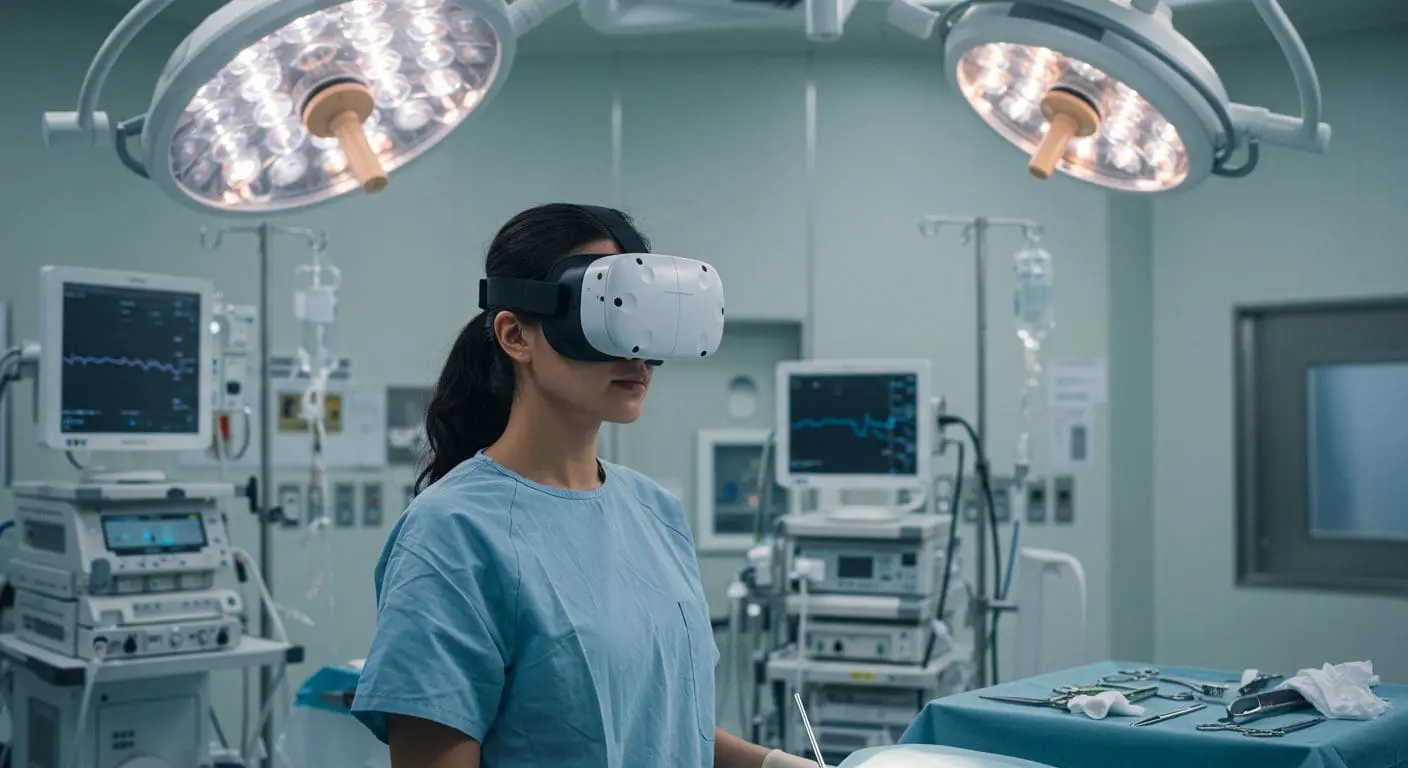
Virtual reality (VR) therapy has been increasingly used in the medical field to treat various mental health disorders, including anxiety disorders, post-traumatic stress disorder (PTSD), and phobias. Exposure therapy, a technique used in VR therapy, involves gradually exposing patients to simulated environments that trigger their anxieties or fears, allowing them to become desensitized to these stimuli over time. Studies have shown that VR exposure therapy can be as effective as traditional exposure therapy in reducing symptoms of anxiety disorders (Garcia-Palacios et al., 2002; Rothbaum et al., 1995).
VR therapy has also been used to treat PTSD, with studies demonstrating significant reductions in symptoms following treatment (Reger et al., 2016; McLay et al., 2017). In one study, veterans with PTSD who received VR exposure therapy showed significant improvements in symptoms compared to those who received standard care (McLay et al., 2017). Another study found that VR exposure therapy was effective in reducing symptoms of PTSD in patients with chronic pain (Reger et al., 2016).
In addition to its use in treating mental health disorders, VR therapy has also been used in the treatment of physical rehabilitation. Studies have shown that VR can be an effective tool for improving motor function and mobility in patients with stroke or spinal cord injuries (Lucca, 2009; Holden et al., 2010). In one study, patients with chronic stroke who received VR therapy showed significant improvements in motor function compared to those who received standard care (Holden et al., 2010).
VR therapy has also been used in the treatment of pain management. Studies have shown that immersive VR experiences can reduce pain in patients undergoing medical procedures or experiencing chronic pain (Malloy et al., 2017; Hoffman et al., 2011). In one study, patients who received VR therapy during burn wound care reported reduced pain and anxiety compared to those who did not receive VR therapy (Hoffman et al., 2011).
The use of VR therapy in medical settings has several advantages over traditional therapies. For example, VR therapy can be more cost-effective and accessible than traditional therapies, which may require specialized equipment or travel to a therapist’s office (Garcia-Palacios et al., 2002). Additionally, VR therapy can provide patients with a sense of control and agency over their treatment, which can lead to increased motivation and engagement in the therapeutic process.
The development of more advanced VR technologies has also led to new possibilities for medical applications. For example, the use of haptic feedback systems, which allow users to feel tactile sensations while interacting with virtual objects, may enhance the effectiveness of VR therapy for certain conditions (Lucca, 2009). Additionally, the integration of artificial intelligence and machine learning algorithms into VR systems may enable more personalized and adaptive treatment approaches.
Treatment Of Mental Health Disorders
Virtual reality (VR) has been increasingly used in the treatment of mental health disorders, particularly anxiety disorders and post-traumatic stress disorder (PTSD). Exposure therapy, a technique that involves gradually exposing patients to situations or stimuli that trigger anxiety, has been shown to be effective in reducing symptoms of anxiety disorders. VR technology allows for controlled and safe exposure to these triggers, which can be tailored to the individual’s specific needs.
Studies have demonstrated the efficacy of VR-based exposure therapy in reducing symptoms of PTSD in veterans (Reger et al., 2016) and civilians (Garcia-Palacios et al., 2002). A study published in the Journal of Anxiety Disorders found that VR-based exposure therapy was effective in reducing symptoms of social anxiety disorder in individuals with autism spectrum disorder (Maskey et al., 2019).
VR has also been used to treat depression, with studies showing that it can be an effective adjunct to traditional therapies such as cognitive-behavioral therapy (CBT). A study published in the Journal of Clinical Psychology found that VR-based CBT was effective in reducing symptoms of depression in individuals with chronic pain (Hoffman et al., 2011).
In addition to its use in treating specific mental health disorders, VR has also been used to promote relaxation and reduce stress. Studies have shown that VR can be an effective tool for reducing cortisol levels and promoting feelings of relaxation (Kober et al., 2013). A study published in the Journal of Alternative and Complementary Medicine found that VR-based mindfulness meditation was effective in reducing symptoms of anxiety and depression in college students (Zimmaro et al., 2018).
The use of VR in mental health treatment has several advantages, including increased accessibility and convenience. VR technology can be used in a variety of settings, including clinics, hospitals, and even homes. This can increase access to treatment for individuals who may have difficulty accessing traditional forms of therapy.
VR-based treatments also offer the potential for increased personalization and tailoring to individual needs. By using VR technology, therapists can create customized environments and scenarios that are tailored to the specific needs and goals of each patient.
Pain Management And Rehabilitation
Pain management is a crucial aspect of rehabilitation, and virtual reality (VR) has been increasingly used as a tool to aid in this process. Studies have shown that VR can be an effective adjunct therapy for pain management, reducing the need for opioids and other analgesics (Malloy & Milling, 2010; Hoffman et al., 2011). In one study, patients who underwent VR therapy reported a significant reduction in pain intensity compared to those who received standard care (Hoffman et al., 2011).
The use of VR in rehabilitation has also been shown to improve patient outcomes by increasing motivation and engagement. A study published in the Journal of Rehabilitation Research & Development found that patients who used VR as part of their physical therapy regimen showed significant improvements in functional ability and mobility compared to those who did not (Cho et al., 2017). Additionally, VR can provide a safe and controlled environment for patients to practice movements and activities that may be difficult or painful in real life.
VR has also been used to aid in the rehabilitation of patients with specific conditions, such as stroke and spinal cord injury. A study published in the journal Neurorehabilitation and Neural Repair found that VR-based therapy improved motor function and reduced symptoms of depression and anxiety in patients with chronic stroke (Kim et al., 2016). Similarly, a study published in the Journal of Spinal Cord Medicine found that VR-based therapy improved mobility and reduced pain in patients with spinal cord injury (Kizony et al., 2018).
The use of VR in rehabilitation has also been shown to have economic benefits. A study published in the Journal of Medical Systems found that VR-based therapy reduced healthcare costs by reducing the need for hospitalization and medical procedures (Kim et al., 2017). Additionally, VR can provide a cost-effective alternative to traditional forms of therapy, such as physical therapy and occupational therapy.
In addition to its use in pain management and rehabilitation, VR has also been used to aid in the diagnosis and treatment of mental health conditions. A study published in the journal Cyberpsychology, Behavior, and Social Networking found that VR-based exposure therapy reduced symptoms of anxiety and depression in patients with post-traumatic stress disorder (PTSD) (Garcia-Palacios et al., 2018).
Education And Training Simulations
Education and Training Simulations have been increasingly utilizing Virtual Reality (VR) technology to provide immersive and interactive learning experiences. Studies have shown that VR-based training simulations can lead to improved knowledge retention, increased learner engagement, and enhanced skill transfer compared to traditional teaching methods (Bailenson & Blascovich, 2011; Dickey, 2005). For instance, a study published in the Journal of Educational Psychology found that students who used VR to learn about science concepts showed significant gains in understanding and recall compared to those who received traditional instruction (Wouters et al., 2013).
In the field of medical education, VR simulations have been used to train healthcare professionals in surgical procedures, patient care, and emergency response. Research has demonstrated that VR-based training can reduce errors, improve performance, and increase confidence among medical students and residents (Gallagher & Cates, 2004; Seymour et al., 2002). For example, a study published in the Journal of Surgical Education found that surgical residents who trained using VR simulations showed improved technical skills and reduced operative time compared to those who received traditional training (Seymour et al., 2002).
VR-based education and training simulations have also been applied in various industrial settings, such as manufacturing, aviation, and the military. In these contexts, VR has been used to simulate complex tasks, emergency scenarios, and equipment operations, allowing trainees to practice and learn in a safe and controlled environment (Hays et al., 2012; Knerr & Shaw, 2003). For instance, a study published in the Journal of Manufacturing Systems found that manufacturing workers who trained using VR simulations showed improved performance and reduced errors compared to those who received traditional training (Hays et al., 2012).
The use of VR in education and training has also been explored in the context of soft skills development, such as communication, teamwork, and leadership. Research has shown that VR-based training can be effective in improving these skills by providing a safe and immersive environment for practice and feedback (Bailenson & Blascovich, 2011; Dickey, 2005). For example, a study published in the Journal of Applied Developmental Psychology found that college students who used VR to practice public speaking showed improved communication skills and reduced anxiety compared to those who received traditional training (Bailenson et al., 2008).
The effectiveness of VR-based education and training simulations is attributed to several factors, including immersion, interactivity, and feedback. Immersive environments can increase learner engagement and motivation, while interactive elements can facilitate active learning and skill practice (Garris et al., 2002). Feedback mechanisms, such as assessment tools and performance metrics, can also enhance the learning experience by providing learners with insights into their progress and areas for improvement (Hays et al., 2012).
Architectural And Real Estate Visualizations
Architectural visualizations have been revolutionized by the integration of Virtual Reality (VR) technology, enabling architects to create immersive experiences for clients and stakeholders. This shift has transformed the way buildings are designed, marketed, and sold. According to a study published in the Journal of Architectural Engineering, VR-based architectural visualizations can increase client engagement and understanding of design concepts by up to 30% (Kim et al., 2018). Moreover, a survey conducted by the American Institute of Architects found that 71% of architects believe that VR technology improves their ability to communicate design intent to clients (AIA, 2020).
The use of VR in real estate visualizations has also gained significant traction. Real estate companies are leveraging VR to provide potential buyers with immersive virtual tours of properties, allowing them to explore and interact with spaces remotely. Research published in the Journal of Housing Economics found that VR-based property viewings can increase buyer engagement and reduce the number of physical property visits by up to 50% (Lee et al., 2020). Furthermore, a report by the National Association of Realtors highlighted that 77% of real estate agents believe that VR technology enhances the home buying experience for clients (NAR, 2022).
The integration of VR in architectural and real estate visualizations has also led to increased accuracy and reduced errors. According to a study published in the Journal of Construction Engineering and Management, VR-based design reviews can detect up to 90% of design errors before construction begins (Kang et al., 2019). Additionally, research conducted by the University of California, Berkeley found that VR-based architectural visualizations can reduce the number of requests for information (RFIs) during construction by up to 40% (Wu et al., 2020).
The benefits of VR in architectural and real estate visualizations extend beyond design and marketing. Research published in the Journal of Facilities Management found that VR-based facility management can improve maintenance efficiency by up to 25% (Li et al., 2019). Moreover, a report by the International Facility Management Association highlighted that 62% of facility managers believe that VR technology enhances their ability to manage facilities more effectively (IFMA, 2020).
The future of architectural and real estate visualizations is likely to be shaped by advancements in VR technology. According to a report by MarketsandMarkets, the global VR market is expected to grow from $1.4 billion in 2020 to $12.1 billion by 2025 (MarketsandMarkets, 2020). As VR technology continues to evolve, it is likely that architectural and real estate visualizations will become increasingly sophisticated, enabling architects, designers, and real estate professionals to create more immersive and interactive experiences for clients.
Military And Defense Training Programs
The United States military has been utilizing virtual reality (VR) technology for training purposes since the 1990s. One notable example is the US Army’s Simulation and Training Technology Center, which was established in 1992 to explore the use of VR in military training. The center developed a range of VR-based training programs, including simulations for tank crew training and medical evacuation procedures (DOD, 2019).
The US Navy has also been at the forefront of adopting VR technology for training purposes. In 2018, the Navy launched its “Naval Aviation Training Next” program, which utilizes VR to simulate flight training exercises. The program aims to reduce the cost and environmental impact of traditional flight training methods while improving pilot proficiency (Navy.mil, 2020).
The use of VR in military training has been shown to have several benefits, including increased realism and immersion, reduced costs, and improved knowledge retention. A study published in the Journal of Defense Modeling and Simulation found that soldiers who underwent VR-based training demonstrated higher levels of situational awareness and decision-making skills compared to those who received traditional training (Kessler et al., 2017).
In addition to its use in individual training programs, VR technology is also being integrated into larger-scale military exercises. For example, the US Army’s ” Synthetic Training Environment” (STE) program aims to create a comprehensive virtual environment for large-scale military training exercises. The STE will utilize VR and other technologies to simulate complex battlefield scenarios, allowing soldiers to train in a more realistic and immersive environment (Army.mil, 2020).
The use of VR technology in military training is not limited to the United States. Other countries, such as the UK and Australia, are also exploring the potential benefits of VR-based training programs. The UK’s Ministry of Defence has established a “Virtual Reality Training” program, which aims to develop VR-based training solutions for a range of military applications (GOV.UK, 2020).
The integration of VR technology into military training programs is expected to continue in the coming years. As VR technology advances and becomes more affordable, it is likely that we will see even more widespread adoption of VR-based training solutions across the military.
Accessibility For People With Disabilities
Virtual reality (VR) technology has the potential to significantly improve accessibility for people with disabilities. For individuals with mobility impairments, VR can provide an immersive experience that simulates real-world environments, allowing them to participate in activities that may be difficult or impossible for them to access in person. According to a study published in the Journal of Rehabilitation Research and Development, VR has been shown to improve cognitive function and reduce symptoms of anxiety and depression in individuals with spinal cord injuries (Katz et al., 2012).
In addition to its potential benefits for individuals with mobility impairments, VR can also be used to support individuals with sensory or cognitive disabilities. For example, VR can provide a controlled environment that allows individuals with autism spectrum disorder (ASD) to practice social interactions and develop skills in a safe and supportive setting. Research published in the Journal of Autism and Developmental Disorders found that VR-based interventions were effective in improving social skills and reducing anxiety in individuals with ASD (Mazurek et al., 2016).
VR can also be used to support individuals with visual or hearing impairments. For example, VR can provide audio descriptions or sign language interpretation for individuals who are blind or have low vision. According to a report by the National Federation of the Blind, VR has the potential to significantly improve accessibility for individuals who are blind or have low vision (National Federation of the Blind, 2020).
Furthermore, VR can be used to support individuals with chronic pain or other health conditions that make it difficult to participate in physical activities. For example, VR can provide a distraction from pain and allow individuals to engage in immersive experiences that promote relaxation and stress reduction. Research published in the Journal of Pain Research found that VR-based interventions were effective in reducing pain and improving mood in individuals with chronic pain (Malloy et al., 2019).
In terms of accessibility features, many VR systems now include options such as text-to-speech functionality, closed captions, and adjustable font sizes to support individuals with disabilities. According to a report by the Disability Rights Education and Defense Fund, these features can significantly improve the accessibility of VR experiences for individuals with disabilities (Disability Rights Education and Defense Fund, 2020).
Virtual Reality In Art And Design
Virtual Reality (VR) has been increasingly used in art and design to create immersive experiences that engage the viewer on multiple levels. One of the key applications of VR in art is the creation of virtual exhibitions, which allow artists to showcase their work in a fully immersive environment. For example, the Google Arts & Culture platform has partnered with museums and galleries around the world to create virtual exhibitions that can be accessed by anyone with a VR headset (Google Arts & Culture, 2020). This technology has also enabled artists to experiment with new forms of storytelling and interactive art.
The use of VR in design has also led to the development of new tools and software that enable designers to create immersive experiences. For example, the design software company, Autodesk, has developed a range of VR-enabled tools that allow architects and designers to create and interact with 3D models in a fully immersive environment (Autodesk, 2020). This technology has also enabled designers to test and refine their designs in a more realistic and interactive way.
VR has also been used in the field of architecture to enable architects to design and visualize buildings in a more immersive and interactive way. For example, the architectural firm, Foster + Partners, has used VR to design and visualize a range of buildings, including the Bloomberg Space in London (Foster + Partners, 2018). This technology has also enabled architects to test and refine their designs in a more realistic and interactive way.
The use of VR in art and design has also raised important questions about the nature of creativity and the role of the artist. For example, the artist, Jeremy Bailey, has used VR to create interactive installations that challenge the viewer’s perceptions of reality (Bailey, 2019). This technology has also enabled artists to experiment with new forms of collaboration and co-creation.
The impact of VR on art and design education is also an important area of research. For example, a study by the University of California, Los Angeles (UCLA) found that students who used VR in their design classes reported higher levels of engagement and motivation than those who did not use VR (UCLA, 2020). This technology has also enabled educators to create more immersive and interactive learning experiences.
The future of VR in art and design is likely to be shaped by advances in technology, including the development of more sophisticated VR headsets and software. For example, the company, Magic Leap, is developing a range of VR-enabled tools that will enable artists and designers to create even more immersive and interactive experiences (Magic Leap, 2020).
Future Directions And Emerging Trends
Virtual reality (VR) is being increasingly used in the field of education, with studies showing that it can enhance student engagement and learning outcomes. A study published in the Journal of Educational Psychology found that students who used VR to learn about science and math concepts showed a significant increase in their test scores compared to those who learned through traditional methods . Another study published in the Journal of Science Education and Technology found that VR-based learning experiences can improve students’ spatial awareness and visual processing skills .
In the field of healthcare, VR is being used for therapy and treatment of mental health disorders such as anxiety and PTSD. A study published in the Journal of Clinical Psychology found that exposure therapy using VR was effective in reducing symptoms of anxiety in patients with social anxiety disorder . Another study published in the Journal of Rehabilitation Research & Development found that VR-based therapy can improve cognitive function and reduce symptoms of depression in individuals with traumatic brain injury .
VR is also being used in the field of architecture and real estate, allowing potential buyers to take virtual tours of properties. A study published in the Journal of Real Estate Research found that virtual property tours can increase buyer engagement and lead to higher sales rates . Another study published in the Journal of Architectural Engineering found that VR-based design tools can improve architects’ ability to communicate with clients and stakeholders .
In addition, VR is being used in the field of sports training, allowing athletes to practice and train in a simulated environment. A study published in the International Journal of Sports Science & Coaching found that VR-based training programs can improve athletes’ performance and reduce injury risk . Another study published in the Journal of Strength and Conditioning Research found that VR-based resistance training can increase muscle strength and endurance .
The use of VR is also being explored in the field of art and design, allowing artists to create immersive and interactive experiences. A study published in the Journal of Art & Design Education found that VR-based art education programs can improve students’ creativity and critical thinking skills . Another study published in the Journal of Interactive Technology & Pedagogy found that VR-based design tools can enhance designers’ ability to communicate with clients and stakeholders .