

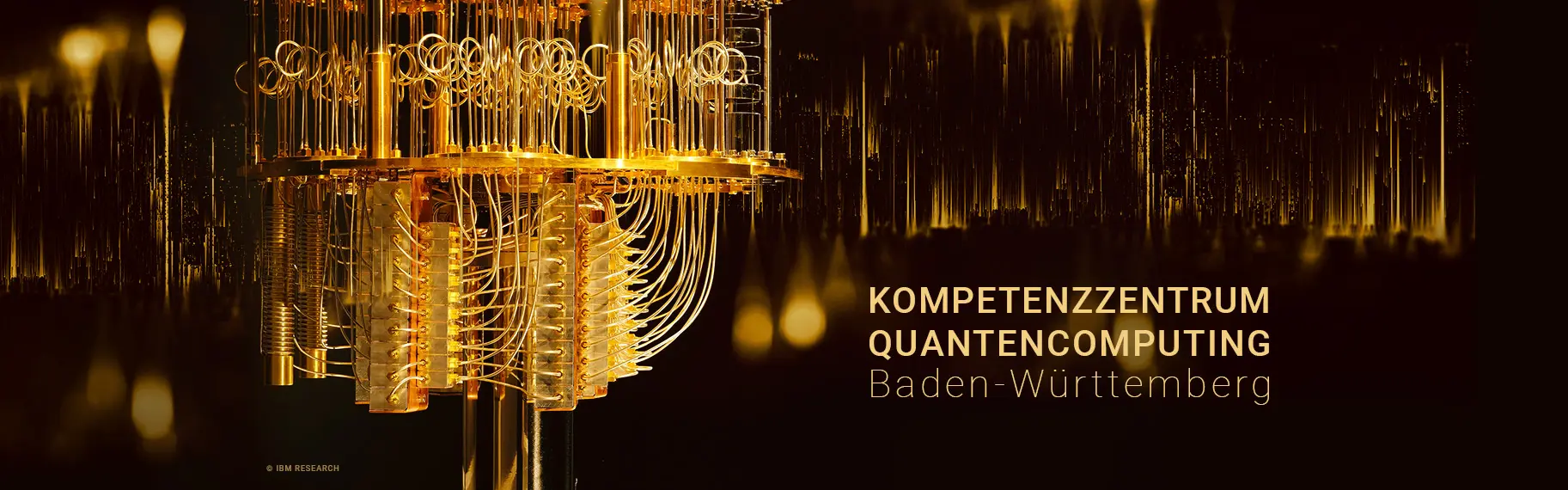
In Baden-Württemberg, Germany, pioneering research in quantum computing is advancing through the Competence Center Quantum Computing Baden-Württemberg (KQCBW). This initiative aims to unlock the application potential of quantum computers for industry, building on successful cooperation projects between science and industry partners. Under the leadership of the Fraunhofer IAF and IAO institutes, KQCBW is expanding its leading role in application-oriented quantum computing research.
The center’s mission is to develop alternative hardware platforms and targeted hardware/software co-design, with expertise ranging from quantum simulation in materials and natural sciences to powerful and reliable hardware environments. To achieve this, access to a state-of-the-art quantum computing infrastructure is crucial, which is provided through the Fraunhofer-Gesellschaft’s role as a quantum innovation center within the IBM Quantum Network.
Key partners involved include IBM Deutschland GmbH, EnBW Energie Baden-Württemberg AG, HQS Quantum Simulations GmbH, Kipu Quantum GmbH, Robert Bosch GmbH, and Classiq. The research results will be presented at this year’s Quantum Effects exhibition and conference in Stuttgart.
Advancing Quantum Computing in Baden-Württemberg: The Next Phase
The Competence Center Quantum Computing Baden-Württemberg (KQCBW) has been at the forefront of advancing quantum computing research in the region. After four years of successful cooperation projects, the center is now entering its next phase, building on the achievements of its partners from science and industry. The KQCBW aims to further expand its leading role in application-oriented quantum computing research, unlocking the potential of quantum computers for industrial applications.
The KQCBW’s mission is to advance the key technology of quantum computing, focusing on interdisciplinary and systemic approaches that include the development of alternative hardware platforms as well as targeted and application-oriented hardware/software co-design. The center’s expertise ranges from quantum simulation in materials and natural sciences to requirements for powerful and reliable hardware environments and the programming of quantum algorithms for industrial needs.
Building a Comprehensive Quantum Computing Infrastructure
Access to real quantum computers is essential for conducting application-oriented research into quantum computing. To this end, the Fraunhofer-Gesellschaft continues its role as a quantum innovation center within the IBM Quantum Network and with IBM Deutschland GmbH, providing access to state-of-the-art quantum computing infrastructure. The KQCBW partners will have access to the latest quantum computers from IBM installed in Ehningen, as well as IBM’s fleet of utility-scale quantum systems available over the cloud.
In addition to access to the IBM systems, the KQCBW also provides access to an NV-based quantum computer and the provision of the HPC simulation infrastructure as well as the virtual demonstrator platform for the simulation of quantum algorithms. This comprehensive quantum computing infrastructure offers ideal conditions for research work, enabling partners to explore the potential of quantum computing in various fields.
Achievements and Future Directions
Outstanding results were achieved in five joint projects during the previous phase of the KQCBW. These include significant increases in system efficiency and quality in quantum computer hardware design based on nitrogen color centers (NV) in diamonds, as well as more accurate simulations of complex molecules using variational quantum algorithms.
Other research highlights include the development of better tailored methods for characterizing and correcting errors occurring on the hardware of the superconducting IBM quantum computer, and the creation of end-to-end demonstrators based on eight use cases from various industries. These achievements demonstrate the KQCBW’s commitment to advancing the field of quantum computing and its potential applications.
The KQCBW partners will present their research results at this year’s Quantum Effects exhibition and conference in Stuttgart, showcasing software and hardware demonstrators and discussing future directions for the center.
The KQCBW: A Hub for Quantum Computing Research and Development
Under the management of the Fraunhofer Institutes for Applied Solid State Physics IAF and for Industrial Engineering IAO, the KQCBW brings together expertise from various research partners, including universities, non-university institutes, and corporate partners. The center focuses on key sectors such as information technology, medical technology, chemicals, finance, mechanical engineering, production, automotive, and logistics, which are particularly important in Baden-Württemberg.
The KQCBW is also actively involved in the development of Baden-Württemberg as a quantum technology location, working closely with the office of the state initiative QuantumBW. The transfer project KQCBW2024 paves the way for the continuation of the KQCBW from July 2025, involving 12 partners from university and non-university institutes as well as five associated corporate partners.
As the KQCBW enters its next phase, it is poised to continue advancing the field of quantum computing, driving innovation and economic growth in Baden-Württemberg and beyond.
External Link: Click Here For More


