

The increasing precision of experiments studying photon-photon interactions in ultraperipheral collisions demands increasingly accurate theoretical predictions, and researchers are now pushing beyond leading-order calculations. Hua-Sheng Shao and Lukas Simon, both from Laboratoire de Physique Théorique et Hautes Energies, have addressed this need by developing a new automated framework for calculating next-to-leading order corrections to these processes. This work represents a significant advance because it provides the first tool capable of generating precise theoretical predictions for photon-photon interactions in ultraperipheral collisions, paving the way for more detailed comparisons between theory and experiment at facilities like RHIC and the LHC. The new framework promises to refine our understanding of these fundamental interactions and improve the accuracy of future analyses.
Automating Electroweak Corrections for Ultraperipheral Collisions
This research details substantial work focused on automating Next-to-Leading Order (NLO) electroweak (EW) corrections for photon-photon processes in ultraperipheral collisions. The primary goal is to automate the calculation of NLO EW corrections, crucial for precise theoretical predictions that can be compared with experimental data. The work leverages advancements in automated calculation frameworks and a novel approach called Local Unitarity, which represents differential cross-sections in a way that avoids infrared singularities at any order of perturbation theory. The research utilizes UFO (Universal FeynRules Output), facilitating seamless integration of models into automated calculation tools, alongside established tools like FeynRules, MadGraph, Herwig++, and Pythia.
FeynRules is a powerful tool for generating Feynman diagrams and model files, while UFO serves as a standard output format, enabling interoperability with various automated calculation tools. MadGraph is an automated Monte Carlo event generator used for calculating matrix elements and simulating particle collisions. Local Unitarity offers a new method for representing differential cross-sections, addressing infrared singularities, and tools like Herwig++ and Pythia simulate the evolution of partons into hadrons, providing a realistic description of the final state. The Les Houches Accord (LHA) provides a standard format for exchanging event information between different Monte Carlo programs.
Related research includes extensive studies of light-by-light scattering and the Breit-Wheeler process, providing a sensitive probe of photon-photon interactions. Studying top quark production with photons offers insights into top quark properties and the strong coupling constant, and the automated tools can be used to search for axion-like particles. This research is directly relevant to data analysis from the CMS and ATLAS experiments at the LHC, particularly in the context of heavy-ion collisions. Efforts are underway to develop more automated frameworks for calculating EW corrections, reducing the need for manual intervention. This work represents a significant step towards automating complex EW corrections, enabling more precise theoretical predictions for a wide range of processes in high-energy physics, particularly in heavy-ion collisions.
NLO Calculations Unlock Ultra-Peripheral Collision Insights
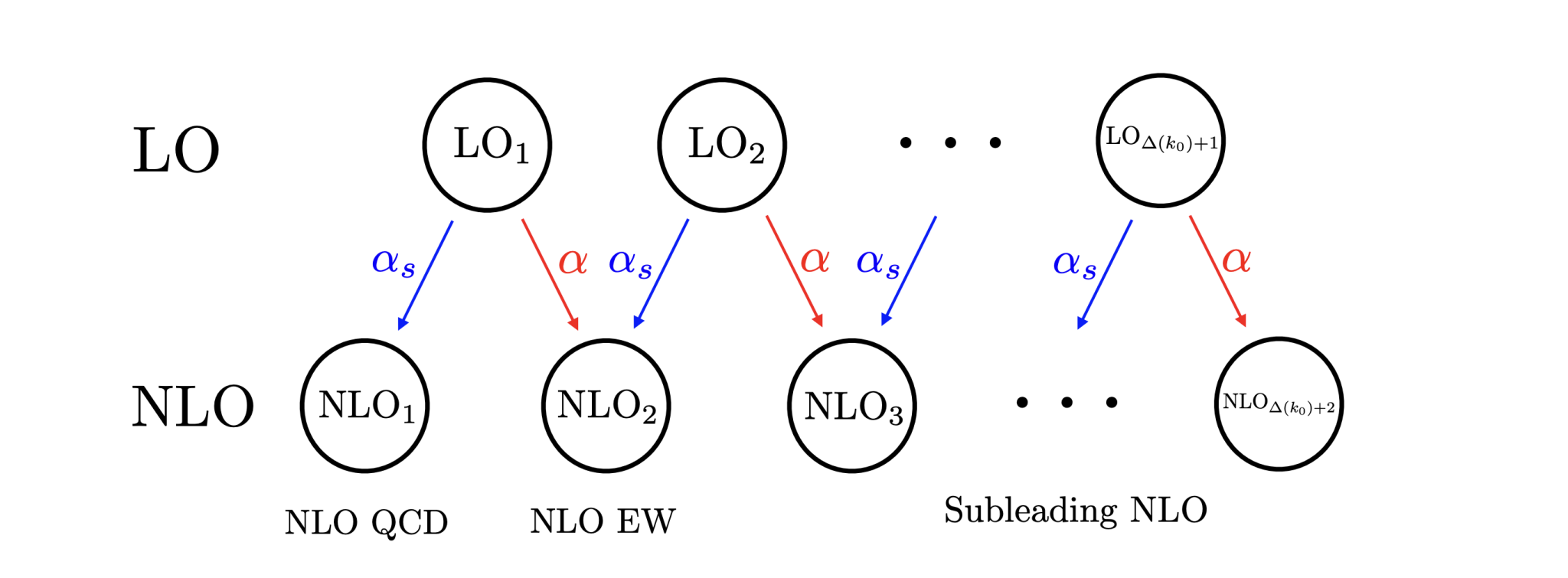
Researchers have developed a new automated framework for predicting particle collisions in ultraperipheral collisions with unprecedented accuracy. This breakthrough enables next-to-leading-order (NLO) calculations, which incorporate higher-order corrections to improve the precision of theoretical predictions, for the first time in these complex interactions. Previously, such calculations were impractical, limiting the ability to fully understand the underlying physics. The team focused on processes involving photons colliding to produce pairs of particles, specifically muons and tau leptons, and demonstrated the importance of NLO corrections by comparing predictions with experimental data from the Large Hadron Collider.
Results show that using only leading-order calculations falls short of accurately describing observed particle distributions, while incorporating NLO corrections significantly improves the agreement with measurements across a range of energies and kinematic regions. For muon-pair production in lead-ion collisions at 5. 02 TeV, NLO calculations demonstrate a marked improvement over leading-order predictions, aligning with experimental data within uncertainties. Further analysis of tau-pair production in proton-proton collisions at 14 TeV reveals the impact of these corrections on understanding fundamental particle properties. The framework allows for precise calculations of the interactions between photons and tau leptons, enabling a more robust determination of the anomalous magnetic moment of the tau lepton. This new framework delivers a substantial advancement, providing a powerful tool for exploring the intricacies of particle collisions and pushing the boundaries of our understanding of the strong and electroweak forces.
NLO Simulations Advance Ultra-Peripheral Collision Studies
The study successfully computed NLO QCD and QED corrections to photon-photon scattering, utilizing a novel multi-loop approach that demonstrates its potential for broader application. While the current implementation has limitations, NLO+parton shower simulations are presently restricted to pure QCD corrections and processes without jets, the work establishes NLO calculations as the new standard for theoretical predictions in this field and brings the accuracy of photon-photon collision modelling closer to that of standard parton-parton scattering. Future development will likely focus on extending the framework to include more complex corrections and processes, as well as incorporating bound states beyond elementary particles.
🗞 Progress in NLO Calculations for gamma-gamma Physics
🧠 ArXiv: https://arxiv.org/abs/2508.20775


