

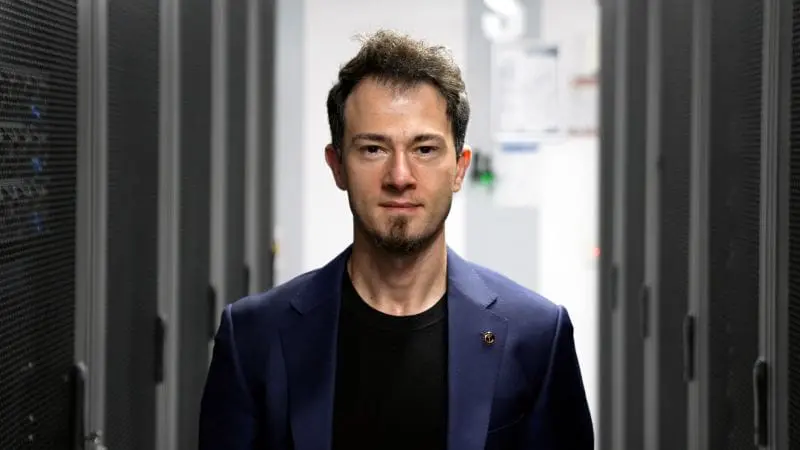
Australian researchers have been awarded the prestigious 2024 Gordon Bell Prize, considered the “Nobel Prize” of high-performance computing, for their breakthrough research in simulating biological systems at an unprecedented scale. Led by Associate Professor Giuseppe Barca from the University of Melbourne, the team developed software capable of accurately predicting the chemical behavior and physical properties of molecular systems comprising up to hundreds of thousands of atoms.
This achievement enables scientists to simulate drug behavior with an accuracy that rivals physical experiments, allowing for faster and cheaper development of new drugs for difficult-to-treat diseases.
To achieve this milestone, the team utilized the “exascale” power of the Frontier supercomputer at the Oak Ridge Leadership Computing Facility in Tennessee, USA. Collaborators included researchers from Advanced Micro Devices Inc., Oak Ridge National Laboratory, and the Australian National University, as well as Barca’s company QDX Technologies, which already uses high-performance quantum simulations to accelerate new therapeutics design.
Breakthrough in High-Performance Computing: Australian Researchers Win Prestigious Gordon Bell Prize
The 2024 Gordon Bell Prize, considered the “Nobel Prize” of high-performance computing (HPC), has been awarded to an Australian research team led by Associate Professor Giuseppe Barca from the University of Melbourne. This prestigious award recognizes their groundbreaking research in developing the first quantum-accurate simulation of biological systems at a scale necessary to model drug performance accurately.
The team’s achievement, announced in July 2024, enables scientists to simulate drug behavior with an accuracy that rivals physical experiments. By leveraging the “exascale” power of the Frontier supercomputer at the Oak Ridge Leadership Computing Facility in Tennessee, USA, they developed software capable of accurately predicting the chemical behavior and physical properties of molecular systems comprising up to hundreds of thousands of atoms.
This breakthrough in HPC and quantum chemistry has far-reaching implications for the development of new drugs. By simulating drug behavior with unprecedented accuracy, scientists can now observe not just the movement of a drug but also its quantum mechanical properties, such as bond breaking and formation, over time in a biological system. This is vital for assessing drug viability and designing new treatments.
The team’s software has already set a new benchmark in computational chemistry, delivering highly precise predictions of molecular behavior. The potential impact on healthcare is significant, enabling the development of new drugs faster and cheaper, particularly for diseases that have been difficult to treat.
Accurate Simulation of Biological Systems: A Game-Changer for Drug Development
The ability to simulate biological systems at a scale necessary to accurately model drug performance is a game-changer for the pharmaceutical industry. By leveraging high-performance computing and quantum chemistry, scientists can now design new treatments with unprecedented accuracy.
The team’s software enables the simulation of molecular behavior over time in a biological system, allowing researchers to observe quantum mechanical properties such as bond breaking and formation. This level of accuracy is critical for assessing drug viability and designing new treatments.
The potential impact on healthcare is significant, enabling the development of new drugs faster and cheaper. This could lead to breakthroughs in treating diseases that have been difficult or impossible to treat with current technologies.
The Power of Exascale Computing: Unlocking New Possibilities in Computational Chemistry
The team’s achievement was made possible by the “exascale” power of the Frontier supercomputer at the Oak Ridge Leadership Computing Facility in Tennessee, USA. This powerful computing resource enabled the development of software capable of accurately predicting the chemical behavior and physical properties of molecular systems comprising up to hundreds of thousands of atoms.
Exascale computing has unlocked new possibilities in computational chemistry, enabling researchers to simulate complex biological systems with unprecedented accuracy. The potential applications are vast, ranging from drug development to materials science and beyond.
Australian Research Excellence: A Testament to Innovation and Collaboration
The awarding of the 2024 Gordon Bell Prize to an Australian research team is a testament to the country’s excellence in innovation and collaboration. Associate Professor Barca’s team worked closely with American collaborators, demonstrating the power of international partnerships in driving scientific breakthroughs.
The University of Melbourne, where Associate Professor Barca is based, has a strong track record of innovation and research excellence. The Faculty of Engineering and Information Technology (FEIT) has played a critical role in supporting this research, highlighting the importance of interdisciplinary collaboration in driving scientific progress.
Commercial Applications: Accelerating New Therapeutics Design
The breakthrough research has already led to commercial applications, with Associate Professor Barca co-founding the company QDX Technologies in 2023. QDX is using high-performance quantum simulations to accelerate new therapeutics design and has secured commercial deals with pharmaceutical companies and tech start-ups in Australia, Singapore, and the US.
This highlights the potential for scientific breakthroughs to drive economic growth and improve healthcare outcomes. The development of new drugs faster and cheaper could have a significant impact on global health, particularly in areas where access to effective treatments is limited.
External Link: Click Here For More


