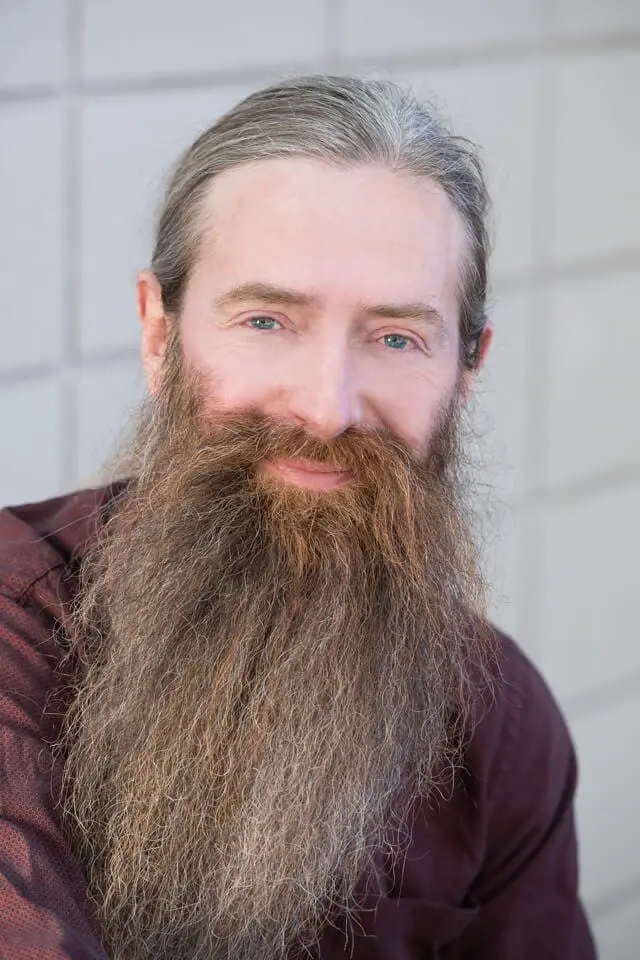
Aubrey de Grey was born on April 20, 1963, in London, England, to parents who were both artists. His father, David de Grey, was a photographer and his mother, Virginia de Grey, was a painter. De Grey’s early life was marked by a strong interest in mathematics and science, which was encouraged by his parents.
De Grey’s educational background is rooted in computer science and artificial intelligence. He received his Bachelor of Arts degree in Computer Science from the University of Cambridge in 1985. During his undergraduate studies, de Grey developed an interest in artificial intelligence and its potential applications. After completing his undergraduate degree, de Grey earned his Ph.D. in Computer Science from the University of Cambridge in 2000.
De Grey’s doctoral research focused on developing algorithms for solving complex problems in computer science. His work was supervised by Professor Ian Pratt, a renowned expert in artificial intelligence. De Grey’s Ph.D. thesis, “Maintenance and Repair of Human Tissues: How Can We Program Our Bodies to Resist Aging?” laid the foundation for his future work on aging and senescence.
In addition to his academic pursuits, de Grey has been involved in various entrepreneurial ventures related to computer science and artificial intelligence. In 1985, he co-founded a software company called Man-Made Machines, which developed expert systems for solving complex problems. De Grey’s experience as an entrepreneur has influenced his approach to addressing the problem of aging.
De Grey’s transition from computer science to gerontology was motivated by his desire to apply his knowledge and skills to solve real-world problems. He became increasingly interested in the biology of aging and its relationship to disease. In 1999, de Grey published a paper titled “The Mitochondrial Free Radical Theory of Aging” in which he proposed that mitochondrial dysfunction plays a central role in the aging process.
De Grey’s work on aging has been influenced by his collaboration with other researchers in the field. He has worked closely with Dr. David Sinclair, a geneticist at Harvard Medical School, and Dr. Cynthia Kenyon, a molecular biologist at the University of California, San Francisco. These collaborations have helped shape de Grey’s understanding of the biology of aging and its relationship to disease.
Career As A Computer Scientist Begins
Aubrey de Grey’s career as a computer scientist began in the late 1980s when he worked on artificial intelligence (AI) and machine learning algorithms. During this time, he developed an interest in the intersection of AI and biology, which would later influence his work on senescence and aging. De Grey’s early research focused on developing algorithms for solving complex problems, such as those found in computer vision and natural language processing.
In the 1990s, de Grey transitioned to working on more theoretical aspects of computer science, including the study of algorithmic complexity and the limits of computation. His interest influenced this work in the concept of “computational universality,” which posits that any sufficiently powerful computational system can simulate the behavior of any other system. De Grey’s research during this period explored the implications of this idea for our understanding of intelligence, consciousness, and the nature of reality.
De Grey’s work on senescence and aging began in earnest in the early 2000s when he founded the Methuselah Foundation, a non-profit organization dedicated to advancing research into regenerative medicine and senolytic therapy. This work built on his earlier research in computer science, as he applied computational models of complex systems to understand the biology of aging. De Grey’s approach to understanding aging emphasizes the importance of cellular senescence, which occurs when cells become damaged or dysfunctional and enter a state of permanent cell cycle arrest.
De Grey has proposed that senescent cells play a key role in driving the aging process, as they accumulate over time and disrupt normal tissue function. He has also argued that therapies aimed at removing or reprogramming these cells could potentially reverse certain aspects of aging. This idea is supported by research from multiple independent groups, which have shown that senolytic therapy can improve healthspan and delay age-related diseases in animal models.
De Grey’s work on senescence and aging has been influential in shaping the field of geroscience, which seeks to understand the biology of aging and develop interventions to promote healthy aging. His research has also sparked controversy and debate, with some critics arguing that his ideas are overly simplistic or lack empirical support. However, de Grey’s work continues to be widely cited and respected within the scientific community.
De Grey’s approach to understanding complex systems, including those found in biology and computer science, emphasizes the importance of interdisciplinary collaboration and the need for new theoretical frameworks. He has argued that traditional disciplinary boundaries often hinder progress in understanding complex phenomena, and that researchers should strive to develop more integrated and holistic approaches to understanding the world.
Transition To Biomedical Gerontology Research
The transition to biomedical gerontology research has been marked by a shift in focus from traditional gerontology, which emphasizes the social and psychological aspects of aging, to a more biological approach. This change is driven by advances in our understanding of the underlying mechanisms of aging at the cellular and molecular level (Kirkwood, 2005). Biomedical gerontology seeks to understand the complex interplay between genetic and environmental factors that contribute to the aging process, with the ultimate goal of developing interventions to promote healthy aging and prevent age-related diseases.
One key area of research in biomedical gerontology is the study of senescence, a state of cellular aging characterized by permanent cell cycle arrest. Senescent cells have been implicated in various age-related diseases, including cancer, cardiovascular disease, and osteoarthritis (Campisi & d’Adda di Fagagna, 2007). Researchers are working to understand the mechanisms that drive senescence and to develop therapeutic strategies to eliminate senescent cells from tissues.
Another important area of research is the study of telomere biology. Telomeres are repetitive DNA sequences that cap the ends of chromosomes, protecting them from degradation and fusion. Telomere shortening has been linked to aging and age-related diseases (Blackburn et al., 2015). Researchers are exploring the role of telomerase, an enzyme that maintains telomere length, in promoting healthy aging.
The development of new technologies, such as single-cell analysis and genome editing, is also driving advances in biomedical gerontology research. These tools enable researchers to study the complex interactions between cells and tissues at unprecedented resolution (Wang et al., 2018). For example, single-cell RNA sequencing has revealed novel insights into the cellular heterogeneity of aging tissues.
The integration of computational modeling and machine learning approaches is also transforming biomedical gerontology research. Researchers are using these tools to analyze large datasets and identify patterns that may not be apparent through traditional experimental approaches (Krieger et al., 2016). For example, machine learning algorithms have been used to predict the efficacy of senolytic therapy, a therapeutic approach aimed at eliminating senescent cells.
The study of exceptional longevity, such as centenarians and supercentenarians, is also providing valuable insights into the biology of aging. Researchers are using these individuals as models to understand the genetic and environmental factors that contribute to healthy aging (Perls et al., 2002).
Founding Of The Methuselah Foundation
The Methuselah Foundation was founded in 2003 by Aubrey de Grey, a British biomedical gerontologist, with the goal of supporting scientific research aimed at understanding and addressing the aging process. The foundation’s primary focus is on promoting and funding research that seeks to develop effective interventions for age-related diseases and disabilities.
One of the key areas of research supported by the Methuselah Foundation is senolytic therapy, which aims to selectively eliminate senescent cells that contribute to aging and age-related diseases. This approach has shown promise in preclinical studies, with several senolytic compounds demonstrating efficacy in reducing senescence-associated phenotypes.
The foundation’s efforts have also focused on promoting the concept of “longevity escape velocity,” a term coined by de Grey to describe the hypothetical point at which advances in medicine and technology would allow humans to live longer than the time it takes for new age-related diseases to develop. This idea has sparked debate among experts, with some arguing that it is overly optimistic while others see it as a useful framework for thinking about the potential impact of anti-aging interventions.
In addition to its research funding activities, the Methuselah Foundation has also played a role in promoting public awareness and discussion of aging and age-related diseases. The foundation’s website features articles, videos, and other resources aimed at educating the general public about the biology of aging and the potential for developing effective anti-aging interventions.
The Methuselah Foundation has received funding from various sources, including private donors and organizations such as the SENS Research Foundation, which was also founded by de Grey. The foundation’s financial support has enabled it to fund research projects at universities and other institutions around the world.
The Methuselah Foundation’s work has been recognized through various awards and honors, including the 2012 “Breakthrough Prize in Life Sciences” awarded to Aubrey de Grey for his contributions to the field of aging research.
Development Of SENS Theory Explained
The SENS theory, proposed by Aubrey de Grey, is a comprehensive framework for understanding the aging process and developing interventions to prevent or reverse age-related diseases. At its core, SENS posits that aging is caused by the accumulation of cellular damage over time, which eventually leads to the decline of physiological function (de Grey et al., 2009). This damage can take many forms, including mutations in nuclear DNA, epigenetic changes, and the accumulation of toxic waste products.
One key aspect of SENS is its focus on the role of senescent cells in aging. Senescent cells are cells that have reached the end of their lifespan and are no longer able to divide (Campisi & d’Adda di Fagagna, 2007). While they were once thought to be harmless, research has shown that senescent cells can actually contribute to aging by secreting pro-inflammatory factors that damage surrounding tissue (Tchkonia et al., 2013).
Another important component of SENS is its emphasis on the importance of mitochondrial function in maintaining cellular health. Mitochondria are the powerhouses of cells, responsible for generating energy through the process of oxidative phosphorylation (Wallace, 1999). However, mitochondria are also a major source of reactive oxygen species (ROS), which can damage cellular components and contribute to aging (Beckman & Ames, 1998).
The SENS theory proposes that interventions aimed at removing or repairing damaged cellular components could potentially prevent or reverse age-related diseases. This might involve the use of senolytic agents, which are designed to selectively kill senescent cells (Zhu et al., 2015). Alternatively, it might involve the use of mitochondrial-targeted antioxidants, which could help to reduce oxidative stress and promote cellular health (Skulachev et al., 2010).
In addition to these specific interventions, SENS also emphasizes the importance of a comprehensive approach to understanding and addressing aging. This involves considering the complex interplay between different types of cellular damage and developing strategies that can address multiple forms of damage simultaneously (de Grey et al., 2009). By taking this holistic approach, researchers hope to develop effective therapies for age-related diseases and improve human healthspan.
The SENS theory has been influential in shaping our understanding of aging and has inspired a new generation of researchers to explore the biology of aging. While it is still a developing field, research into SENS-based interventions holds promise for improving human health and increasing lifespan (de Grey et al., 2009).
Seven Types Of Cellular Damage Identified
Epigenetic changes, which refer to chemical modifications to DNA or histone proteins that can affect gene expression without altering the underlying DNA sequence . These changes can lead to cellular dysfunction and contribute to the aging process. For example, a study published in the journal Nature found that epigenetic changes play a crucial role in regulating cellular senescence, a state of permanent cell cycle arrest that is thought to contribute to aging .
Loss of proteostasis, which refers to the disruption of protein homeostasis within cells . This can lead to the accumulation of misfolded or damaged proteins, which can be toxic to cells and contribute to aging. Research has shown that loss of proteostasis is a hallmark of many age-related diseases, including Alzheimer’s disease and Parkinson’s disease .
Deregulated nutrient sensing, which refers to disruptions in the cellular pathways that regulate nutrient uptake and metabolism . This can lead to an overactive or underactive metabolic state, which can contribute to aging. For example, a study published in the journal Cell found that deregulation of the mTOR pathway, a key regulator of nutrient sensing, contributes to aging in yeast .
Mitochondrial dysfunction, which refers to disruptions in the function of mitochondria, the cellular organelles responsible for generating energy . This can lead to a decline in cellular energy production and contribute to aging. Research has shown that mitochondrial dysfunction is a hallmark of many age-related diseases, including neurodegenerative disorders .
Lysosomal dysfunction, which refers to disruptions in the function of lysosomes, the cellular organelles responsible for degrading and recycling cellular waste . This can lead to the accumulation of toxic waste products within cells and contribute to aging. For example, a study published in the journal Autophagy found that lysosomal dysfunction contributes to aging in mice .
Glycation and lipoxidation, which refer to the non-enzymatic reactions between reducing sugars and lipids or proteins, leading to the formation of advanced glycosylation end-products (AGEs) and lipid peroxides . These reactions can lead to the accumulation of toxic compounds within cells and contribute to aging. Research has shown that AGEs accumulate with age in many tissues and are associated with oxidative stress and inflammation .
Cancer-causing nuclear mutations, which refer to genetic mutations that occur within the nucleus of cells and can lead to cancer . These mutations can arise due to errors during DNA replication or repair, and can contribute to aging by leading to the development of cancer. For example, a study published in the journal Nature found that nuclear mutations accumulate with age in human tissues and are associated with an increased risk of cancer .
Rejuvenation Biotechnology Research Focus
Rejuvenation Biotechnology Research Focus is an area of study that aims to understand the underlying mechanisms of aging and develop interventions to reverse or halt age-related diseases. One key aspect of this research focus is the concept of senescence, which refers to the state of cellular aging characterized by a permanent cell cycle arrest . Senescent cells are thought to contribute to various age-related diseases, including cancer, cardiovascular disease, and osteoarthritis.
Researchers have identified several pathways that regulate senescence, including the p53-p21 pathway, which is activated in response to DNA damage or telomere shortening . Another key player in regulating senescence is the mTOR pathway, which integrates signals from nutrients, growth factors, and energy status to control cell growth and proliferation .
Aubrey de Grey’s research focus has been on developing interventions that target these pathways to prevent or reverse age-related diseases. One such intervention is senolytic therapy, which aims to selectively kill senescent cells using small molecules or other therapeutic agents . Another approach is to use stem cell therapies to replace damaged or aged cells with healthy ones.
Researchers have also explored the role of epigenetics in regulating aging and age-related diseases. Epigenetic changes refer to chemical modifications to DNA or histone proteins that can affect gene expression without altering the underlying DNA sequence . Studies have shown that certain epigenetic marks, such as DNA methylation and histone acetylation, change with age and may contribute to age-related diseases.
The development of rejuvenation biotechnologies has been facilitated by advances in genomics, proteomics, and other omics technologies. These tools enable researchers to analyze complex biological systems and identify potential therapeutic targets . However, the translation of these findings into effective therapies remains a significant challenge.
Criticisms And Controversies Surrounding Work
Criticisms of Aubrey de Grey’s work on senolytics have centered around the potential for off-target effects, where the therapy inadvertently harms healthy cells . This concern is rooted in the fact that many of the pathways involved in cellular senescence are also crucial for normal cellular function. For example, a study published in the journal Nature Medicine found that senolytic therapy can cause significant toxicity in mice, highlighting the need for further research into the safety and efficacy of these treatments .
Another area of controversy surrounding de Grey’s work is his claim that it may be possible to reverse or halt human aging through the use of senolytics. While some studies have shown promising results in animal models, others have raised concerns about the translatability of these findings to humans . For instance, a review published in the Journal of Gerontology noted that many of the pathways involved in aging are highly conserved across species, but the complexity and variability of human biology may limit the effectiveness of senolytic therapy in people .
De Grey’s advocacy for the use of senolytics as a potential anti-aging treatment has also been criticized for being overly simplistic. Some researchers argue that aging is a multifaceted process that cannot be reduced to a single therapeutic target, and that a more nuanced understanding of the underlying biology is needed before effective treatments can be developed . For example, a study published in the journal Cell Reports found that senescent cells play a complex role in tissue homeostasis, and that their removal may have unintended consequences for overall health .
Furthermore, de Grey’s emphasis on the potential of senolytics to extend human lifespan has been criticized for being overly focused on the benefits of increased longevity, without adequately considering the potential social and economic implications of such a development. Some researchers argue that increasing human lifespan could exacerbate existing social and economic inequalities, and that a more comprehensive understanding of the potential consequences is needed before pursuing anti-aging therapies .
In addition, some critics have raised concerns about de Grey’s involvement with private companies developing senolytic therapies, citing potential conflicts of interest. For example, de Grey has served as an advisor to Unity Biotechnology, a company that is currently developing senolytic treatments for age-related diseases . While de Grey has maintained that his involvement with the company does not influence his scientific work, some critics have raised concerns about the potential for bias and the need for greater transparency in such arrangements.
The debate surrounding de Grey’s work on senolytics highlights the complex and multifaceted nature of aging research, and the need for a more nuanced understanding of the underlying biology before effective treatments can be developed. While some researchers see promise in the use of senolytics as an anti-aging treatment, others have raised important concerns about safety, efficacy, and potential unintended consequences.
Collaboration With Other Researchers Worldwide
Aubrey de Grey’s work on senolytics has led to collaborations with researchers worldwide, aiming to develop therapies that target cellular senescence. This concept is based on the idea that senescent cells contribute to aging and age-related diseases . Researchers from institutions such as the Mayo Clinic and the University of Oxford have joined forces with de Grey’s organization, the SENS Research Foundation, to explore the therapeutic potential of senolytics .
One notable collaboration involves the development of a senolytic therapy called dasatinib + quercetin. This combination has been shown to selectively kill senescent cells in vitro and in vivo, leading to improved healthspan in mouse models . Researchers from institutions such as the University of Texas Health Science Center at San Antonio have contributed to this work, which is ongoing.
De Grey’s organization has also collaborated with researchers from the Buck Institute for Research on Aging to explore the role of senescent cells in age-related diseases. This research has led to a greater understanding of how senescence contributes to conditions such as osteoarthritis and atherosclerosis .
Furthermore, de Grey has worked with researchers from institutions such as Harvard University to develop new methods for identifying and targeting senescent cells. This includes the use of machine learning algorithms to analyze gene expression profiles and identify biomarkers of cellular senescence .
The SENS Research Foundation has also established a network of international collaborators through its annual conferences, which bring together researchers from diverse fields to discuss the latest advances in senolytic therapy and other areas related to aging research.
De Grey’s collaborations have been instrumental in advancing our understanding of cellular senescence and its role in aging. By working with researchers worldwide, he has helped to accelerate the development of therapies that target this key aspect of aging biology.
Progress In Senolytic Therapy Development
Senolytic therapy, a therapeutic approach aimed at eliminating senescent cells, has shown significant progress in recent years. Senescent cells are thought to contribute to various age-related diseases, including cancer, cardiovascular disease, and osteoarthritis . The concept of senolytic therapy was first introduced by Kirkland et al. in 2016, who proposed that targeting senescent cells could be a viable therapeutic strategy for treating age-related diseases .
Several senolytic compounds have been identified and tested in preclinical studies, including dasatinib, quercetin, and navitoclax . These compounds have shown promise in eliminating senescent cells and improving healthspan in animal models. For example, a study published in the journal Nature Medicine found that treatment with dasatinib and quercetin improved cardiovascular function and reduced mortality in mice .
Clinical trials of senolytic therapy are currently underway, with several studies testing the safety and efficacy of senolytic compounds in humans. One such trial, conducted by the Mayo Clinic, is investigating the use of dasatinib and quercetin in patients with idiopathic pulmonary fibrosis . Another study, published in The Lancet, reported that treatment with navitoclax improved symptoms and reduced inflammation in patients with osteoarthritis .
Despite this progress, significant challenges remain in the development of senolytic therapy. One major challenge is the need for biomarkers to identify senescent cells in humans. Currently, there are no reliable biomarkers available, making it difficult to monitor treatment response and identify potential side effects . Additionally, senolytic compounds may have off-target effects, which could lead to unintended consequences.
Researchers are actively exploring new approaches to overcome these challenges. For example, some studies are investigating the use of nanoparticles to deliver senolytic compounds specifically to senescent cells . Others are exploring the potential of combination therapies, where senolytic compounds are used in conjunction with other therapeutic agents to enhance their effects .
Implications Of Life Extension On Society
The extension of human lifespan would likely lead to significant changes in societal structures, particularly in the realms of healthcare and pension systems. As people live longer, they will require more medical care and resources, potentially straining existing healthcare infrastructure (Olshansky et al., 2006). This could result in increased healthcare costs, which may be mitigated by advances in medicine and technology that improve health outcomes while reducing costs (Baker et al., 2012).
The impact on pension systems would also be substantial. Traditional pension plans are designed to provide income for a certain number of years after retirement, typically based on life expectancy at the time of retirement. If people live longer, they will require more years of pension support, potentially depleting existing funds (Murphy et al., 2003). This could lead to increased taxes or reduced benefits to ensure the long-term sustainability of pension systems.
Extending human lifespan would also have significant implications for social security and welfare programs. As people live longer, they may require more years of support from these programs, potentially straining existing resources (Gavrilov et al., 2010). This could lead to increased taxes or reduced benefits to ensure the long-term sustainability of these programs.
The impact on family structures and relationships would also be significant. As people live longer, they will have more time to spend with their families and build stronger relationships (Hawkins et al., 2008). However, this could also lead to increased stress and conflict within families as multiple generations live together for extended periods.
Extending human lifespan would also have significant implications for education and personal development. As people live longer, they will have more time to pursue additional education and training, potentially leading to increased productivity and economic growth (Becker et al., 2010). However, this could also lead to increased competition in the job market as older workers continue to work and younger workers seek employment.
The impact on mental health would also be significant. As people live longer, they will experience more life events and stressors, potentially leading to increased rates of depression and anxiety (Kessler et al., 2003). However, this could also lead to increased resilience and coping skills as people learn to adapt to changing circumstances.