A team of researchers has developed a cloud-accessible quantum computing prototype that uses single photons. The device, named Ascella, uses a high-efficiency quantum-dot single-photon source and a universal linear optical network on a reconfigurable chip. The system can perform computations via logic gates or direct photonic operations. The team demonstrated the device’s capabilities by calculating the energy levels of a hydrogen molecule with chemical accuracy and implementing a classifier algorithm using a three-photon-based quantum neural network. The researchers believe Ascella represents a step towards large-scale fault-tolerant quantum computing.
Quantum Computing: A Photonic Approach
Quantum computing is a rapidly evolving field that aims to harness quantum phenomena to perform computations currently unfeasible for even the most powerful classical supercomputers. Among the various technological approaches explored, photonic quantum computing has emerged as a promising candidate. This approach offers several advantages, including low decoherence, modest cryogenic requirements, and easy integration with classical and quantum networks.
Single-Photon-Based Quantum Computing Prototype
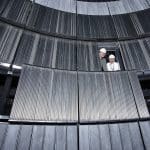
A recent study published in Nature Photonics reports the development of a cloud-accessible, versatile quantum computing prototype based on single photons. The device, named Ascella, comprises a high-efficiency quantum-dot single-photon source that feeds a universal linear optical network on a reconfigurable chip. The hardware errors of this chip are compensated by a machine-learned transpilation process. The device’s full software stack allows remote control to perform computations via logic gates or direct photonic operations.
Benchmarking and Applications of Ascella
Ascella’s performance was benchmarked using one-, two-, and three-qubit gates, achieving state-of-the-art fidelities of 99.6 ± 0.1%, 93.8 ± 0.6%, and 86 ± 1.2%, respectively. The device was also used to implement a variational quantum eigensolver, which was used to calculate the energy levels of the hydrogen molecule with chemical accuracy. For photon native computation, a classifier algorithm was implemented using a three-photon-based quantum neural network. A six-photon boson sampling demonstration was also conducted on a universal reconfigurable integrated circuit.
Future Directions and Improvements
The Ascella platform represents a significant step towards large-scale fault-tolerant quantum computing. In the near term, the six-photon rate demonstrated by Ascella can be further increased to 12 photons by optimizing each hardware component. In the mid-term, the current single-photon source efficiency can be increased, the number of modes in the photonic chip can be expanded, and the interconnection losses can be drastically reduced through the heterogeneous integration of different components.
Conclusion
The development of Ascella marks a significant milestone in the field of quantum computing. By demonstrating high-fidelity multiphoton interference and entanglement generation on an integrated platform, this study provides key insights into the potential of photonic quantum computing. The next steps in this research will involve shifting to a measurement-based paradigm that relies on the generation of large graph states, paving the way for the realization of large-scale fault-tolerant quantum computing.
External Link: Click Here For More