Quantum communication and sensing promise revolutionary advances in secure data transmission and precision measurement, but realising their full potential requires overcoming significant practical hurdles. Jiaxin Xu, Lechen Xu, Jingyang Liu, and colleagues are investigating how artificial intelligence can address these challenges, offering powerful new tools for optimising and enhancing both technologies. Their work demonstrates that AI techniques improve the performance and security of quantum communication networks through intelligent parameter adjustment and real-time threat detection, while simultaneously boosting the sensitivity and accuracy of quantum sensors. By leveraging AI’s data processing capabilities, this research paves the way for more robust, efficient, and versatile quantum systems, bringing these transformative technologies closer to widespread application.
Quantum Communication, Networks and Repeaters
This extensive research covers a broad range of topics in Quantum Communication, Quantum Sensing, and related Quantum Technologies. Investigations focus on Quantum Key Distribution (QKD), a method for secure communication, and explore ways to extend its range using quantum repeaters. Scientists are also building larger-scale quantum communication infrastructure, developing network architectures and integrating them with existing classical networks. Significant progress is being made in satellite-based quantum communication, which extends the reach of quantum signals beyond the limitations of fiber optic cables.
Researchers are also miniaturizing quantum communication components using integrated photonics, aiming for cost-effective and scalable systems. Promising approaches like Twin-Field QKD and Measurement-Device-Independent QKD are extending communication distances and enhancing security. Investigations also encompass Quantum Sensing, utilizing Nitrogen-Vacancy (NV) Centers in diamond to detect magnetic, electric, and temperature changes. Atomic clocks and quantum imaging techniques are being refined, and quantum sensors are being explored for gravitational wave detection and high-precision magnetometry.
Underlying these advancements are crucial technologies like integrated photonics, single-photon sources and detectors, and quantum memories. Cryogenics and control systems maintain the necessary conditions for quantum devices, and machine learning algorithms are being used to optimize performance. The field is shifting from demonstrating the possibility of quantum technologies to building real-world systems that can solve important problems.
AI Optimizes Quantum Communication and Sensing
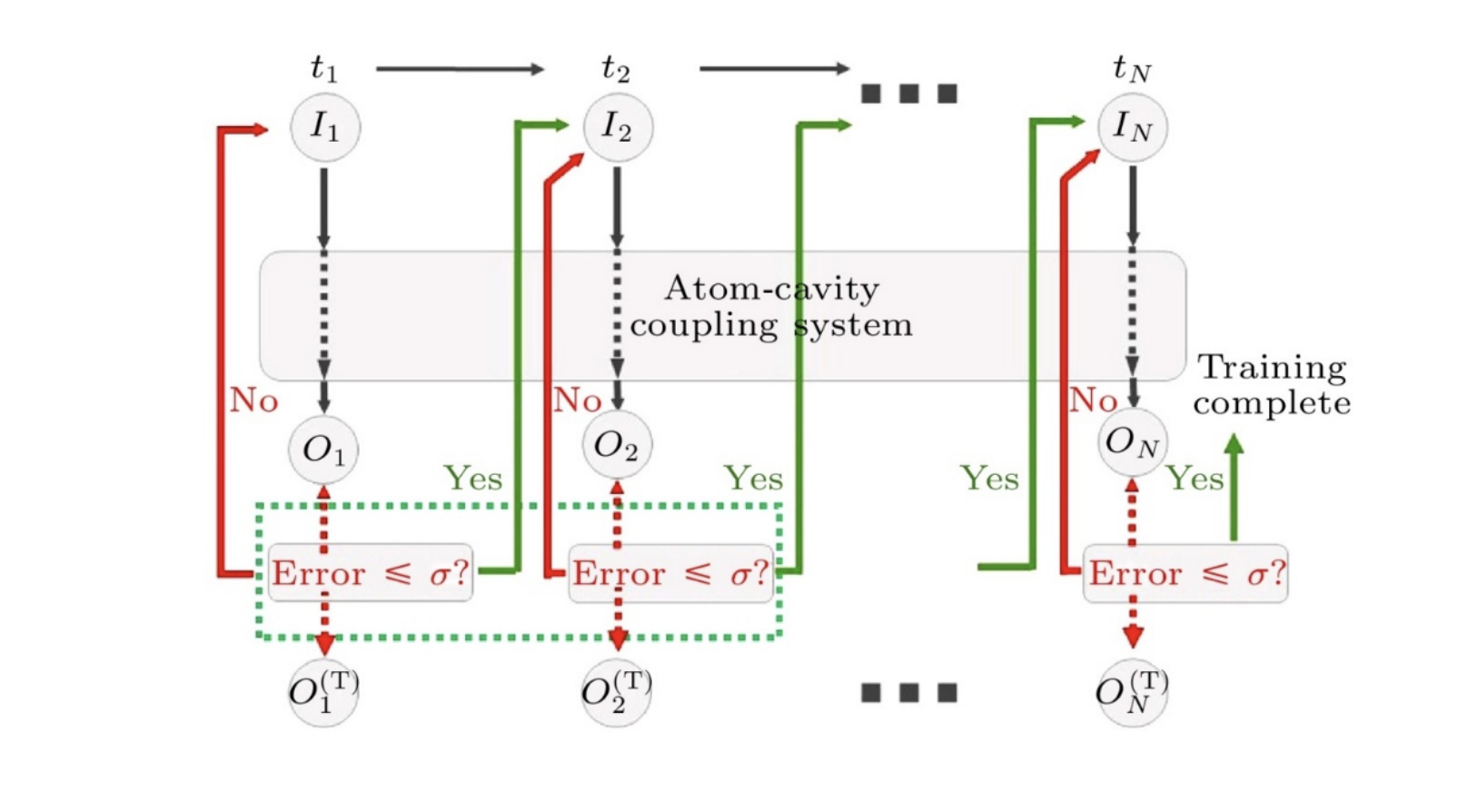
This work pioneers the integration of artificial intelligence with quantum communication and sensing, establishing a new paradigm for enhancing system performance and overcoming practical limitations. Researchers focused on leveraging AI’s data processing capabilities to address challenges inherent in both fields, specifically those related to system calibration, noise interference, and resource allocation. The study demonstrates how machine learning algorithms enable computer systems to autonomously learn from data, continuously optimizing performance without explicit programming. Scientists developed methods to employ AI for real-time system calibration and parameter optimization within quantum communication networks, significantly reducing the time and complexity traditionally required for manual calibration.
Furthermore, the team engineered AI-driven attack detection systems, capable of identifying potential security breaches and equipment defects in real-time, bolstering the security of quantum key distribution. These systems utilize data analysis to discern anomalies and proactively mitigate threats, improving the reliability of secure communication. In quantum sensing, the research team implemented AI algorithms to enhance measurement accuracy and sensitivity, effectively filtering out noise and improving the signal-to-noise ratio. This approach enables ultra-high sensitivity detection of physical quantities like time and magnetic fields, surpassing the limitations of traditional calibration methods. The study highlights the potential for AI to provide efficient, adaptive, and resource-conscious solutions for calibrating large-scale quantum sensor networks, paving the way for more precise measurements.
Machine Learning Boosts Quantum Key Distribution Performance
Researchers are achieving significant advancements by integrating artificial intelligence into communication and sensing technologies. Specifically, the study focuses on quantum key distribution (QKD), a core technology for unconditionally secure communication, and explores how machine learning algorithms can improve its efficiency and practicality. Within QKD systems, researchers have successfully employed the random forest algorithm as a replacement for traditional, computationally intensive search algorithms. This innovative approach constructs a general model applicable to both measurement-device-independent QKD and BB84-QKD protocols, directly predicting optimal parameters based on system conditions with limited data.
Numerical simulations reveal this method achieves an optimal secure key rate exceeding 99% compared to conventional search methods. Further advancements involve the application of neural networks to directly predict optimal QKD parameters, offering increased speed and reduced computational demands. A novel back propagation neural network (BPNN) has been developed that not only predicts these parameters efficiently but also addresses system calibration challenges in large-scale measurement-device-independent QKD networks, utilizing partially discarded data generated during communication for real-time calibration. Additionally, the extreme gradient boosting algorithm has been successfully applied to optimize parameters within twin-field QKD systems, demonstrating further potential for enhancing performance and expanding the capabilities of secure communication technologies.
AI Advances in Quantum Communication and Sensing
Recent advances demonstrate the successful integration of artificial intelligence techniques into both quantum communication and quantum sensing, significantly enhancing the capabilities of these emerging technologies. In quantum communication, the application of AI, through methods like parameter optimisation and real-time feedback control, improves the performance and security of key distribution, storage, and network systems. Similarly, in quantum sensing, AI facilitates high-precision and high-sensitivity measurements of physical quantities such as time and magnetic fields, pushing detection limits to the atomic scale by optimising sensor performance and refining data analysis. Despite these advancements, challenges remain in fully realising the potential of AI-enhanced quantum systems, including the lack of interpretability in current AI algorithms and the difficulty of acquiring sufficient data for effective algorithm training. Future work could explore the benefits of quantum artificial intelligence algorithms to overcome these limitations, while ongoing research focuses on miniaturisation and chip integration to enable broader applications.
🗞 Research progress of artificial intelligence empowered quantum communication and quantum sensing systems
🧠 ArXiv: https://arxiv.org/abs/2511.09069