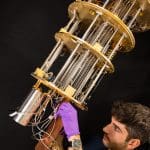
A new artificial “nose” inspired by our sense of smell could revolutionize disease detection, hazardous gas identification, and food spoilage monitoring. Researchers at NTNU in Gjøvik have developed a sensor technology that combines antennas with sensing capabilities to recognize different smells. Led by Professor Michael Cheffena, the team has created an electronic nose that can detect volatile organic compounds with 96.7% accuracy, rivaling the performance of existing electronic noses.
The antenna sensor, which consists of only one antenna with a single type of coating, is more power-efficient and cost-effective than previous attempts. PhD research fellow Yu Dang reports that the technology has already proven capable of detecting spoiled fruit and meat and may also be able to detect diseases by identifying unique gas patterns. The researchers believe their technology could have far-reaching applications, leveraging existing antenna infrastructure in mobile phones, computers, and TVs.
Artificial ‘Nose’ Technology Inspired by Human Sense of Smell
The human sense of smell has played a crucial role in detecting diseases throughout history, but its limitations have hindered its use as a reliable diagnostic tool. However, researchers at NTNU in Gjøvik have developed an artificial ‘nose’ inspired by our sense of smell, which can detect undiagnosed diseases, hazardous gases, and spoiled food.
Combining Sensors with Antenna Technology
The new technology combines sensors with antenna technology to recognize different smells. This innovative approach leverages existing infrastructure, making it a cost-effective solution. Professor Michael Cheffena, a telecommunications expert at NTNU in Gjøvik, believes that this technology can be used for far more than just communication. By giving antennas sensor functions, the existing infrastructure can be utilized in new areas of application.
Advantages over Traditional Electronic Noses
Previous attempts to create electronic noses have been hindered by the need for multiple sensors, each coated with different materials, making them power-intensive and expensive to manufacture. In contrast, the antenna sensor consists of only one antenna with a single type of coating, reducing material consumption and operational costs.
High Accuracy in Detecting Gases
PhD research fellow Yu Dang reports that the sensor they have developed distinguishes between different gases with an impressive 96.7% accuracy. This is on par with the performance of the best electronic noses to date, and in some areas, it even surpasses them. The antenna nose works by transmitting radio signals at multiple frequencies into the surroundings, analyzing how they are reflected back, and creating unique patterns that can be linked to specific volatile organic compounds.
Volatile Organic Compounds: The Key to Detection
Volatile organic compounds (VOCs) are gases commonly found in the air, characterized by a low boiling point. They are emitted by all living organisms, including plants, as a means of protecting themselves from pests or communicating with one another. VOCs are also present in many products and materials we use daily. The unique ‘fingerprints’ of these compounds can be detected by the antenna sensor, allowing it to distinguish significant gases from insignificant ones.
Overcoming the Challenge of Isomers
Isomers are chemical compounds that have the same molecular formula but differ in their atomic bonding patterns. They pose a significant challenge for electronic nose technology, as even sophisticated sensors struggle to differentiate them. However, the researchers’ antenna sensor performs well on these difficult compounds, demonstrating its potential for detecting diseases.
Potential Applications in Disease Detection
The researchers believe that their technology may be able to detect diseases by adjusting the algorithms that detect the unique ‘fingerprints’ of VOCs. This is based on the principle that trained dogs can detect health-threatening changes in blood sugar and diseases like cancer through VOCs. Unlike dogs, however, the antenna sensor does not require months of training or specialized handlers to be used.
The basic technology behind this artificial nose is something we already have in our living rooms, making it a promising solution for disease detection and other applications.
External Link: Click Here For More