

SandboxAQ, an enterprise SaaS company leveraging AI and quantum technology, has reached a significant milestone in advancing battery shelf-life testing and predictive maintenance for the US Army. In collaboration with the Army’s Command, Control, Communications, Computers, Cyber, Intelligence, Surveillance and Reconnaissance (C5ISR) Center, SandboxAQ has compiled a comprehensive dataset of over 2 million hours of lab and simulated testing of lithium-ion batteries. This data will train Large Quantitative Models to predict battery performance and maintenance requirements, reducing the time required for shelf-life testing while enabling precise predictions.
The traditional method of estimating battery shelf-life involves proxy tests, which may not accurately predict real-world performance. SandboxAQ’s approach, led by Technical Lead Ang Xiao, aims to significantly reduce the time required for shelf-life testing while providing critical insights into battery performance and maintenance needs. This technology has far-reaching implications, with potential applications in electric vehicles, robotic platforms, communications, and other portable devices.
Advancing Battery Shelf-Life Testing and Predictive Maintenance for the U.S. Army
SandboxAQ, an enterprise SaaS company, has reached a significant milestone in advancing battery shelf-life testing and predictive maintenance for the U.S. Army Combat Capabilities Development Command (DEVCOM). By compiling a comprehensive dataset of battery performance and predictive AI processes, SandboxAQ aims to improve inventory and quality control processes, ensuring optimal mission performance and readiness.
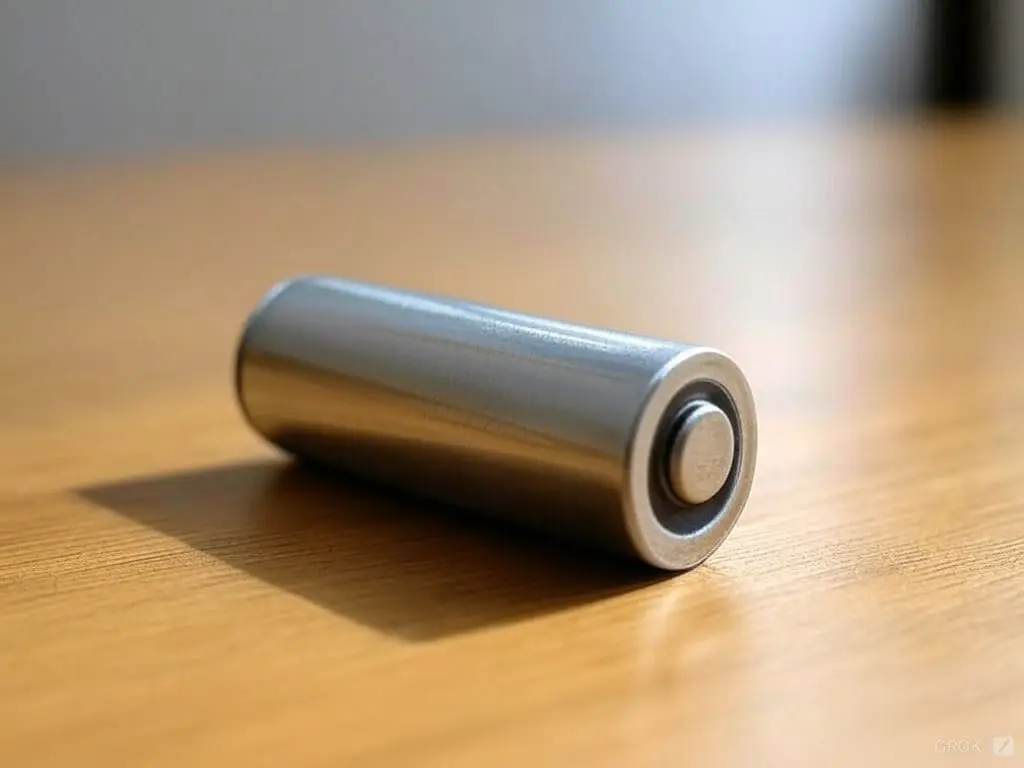
The dataset, created in collaboration with the Army’s Command, Control, Communications, Computers, Cyber, Intelligence, Surveillance and Reconnaissance (C5ISR) Center, consists of over 2 million hours of lab and simulated testing of 18650 cylinder cells. This extensive data collection will train SandboxAQ’s Large Quantitative Models (LQMs) to predict lithium-ion battery performance and maintenance requirements with high accuracy. The LQMs will significantly reduce the time required for shelf-life testing, enabling precise predictions of battery performance and maintenance needs.
Traditional methods of estimating battery shelf-life involve conducting proxy tests on batteries at various states of charge and using extrapolation to estimate shelf-life across the Army’s vast inventory of batteries. However, these proxy methods may not always accurately predict real-world battery performance, especially after long periods of storage or non-use. Inaccurate shelf-life predictions could result in the premature disposal of good batteries, increasing material costs and complexity, or the fielding of inferior batteries, which could compromise mission objectives or jeopardize soldiers and equipment.
The Significance of Large Quantitative Models in Battery Testing
SandboxAQ’s LQMs will revolutionize battery testing by providing rapid and accurate predictions of battery performance. In storage, the Army can use LQMs to test new batteries to ensure they meet quality and shelf-life requirements. In the field, future battery chargers could send data to the AI model to provide information on battery performance, remaining life-span, maintenance needs, and other details directly to the warfighter or unit.
The comprehensive battery dataset compiled by SandboxAQ and C5ISR Center will add a new predictive capability to LQMs, enabling customers and partners to benefit from previously unavailable insights. This milestone has significant implications for the development of advanced battery chemistries and sourcing materials, as most commercial battery applications do not have the same rigorous performance or shelf-life requirements as those intended for military use.
The Impact of Large Quantitative Models on the Battery Industry
The results achieved by SandboxAQ’s LQMs are impressive, with a 95% reduction in the time needed to predict lithium-ion battery end-of-life (EOL) and 35x greater accuracy. These advancements have the potential to shave years off of a new cell’s development and commercialization timeline, saving cell manufacturers millions of dollars in R&D costs.
The adoption of LQM-informed predictive lifetime models could accelerate the advancement of battery technology across multiple industries, enabling faster innovation cycles and meeting the growing demand for high-performance energy storage. The impact of Large Quantitative Models on the battery industry is substantial, with far-reaching implications for various sectors, including life sciences, financial services, navigation, cyber, and others.
About SandboxAQ
SandboxAQ is a B2B company delivering AI solutions that address some of the world’s greatest challenges. The company emerged from Alphabet Inc. as an independent, growth capital-backed company in 2022, funded by leading investors including T. Rowe Price, Eric Schmidt, Breyer Capital, Guggenheim Partners, Marc Benioff, Thomas Tull, Section32, and others. For more information, visit http://www.sandboxaq.com.
External Link: Click Here For More


