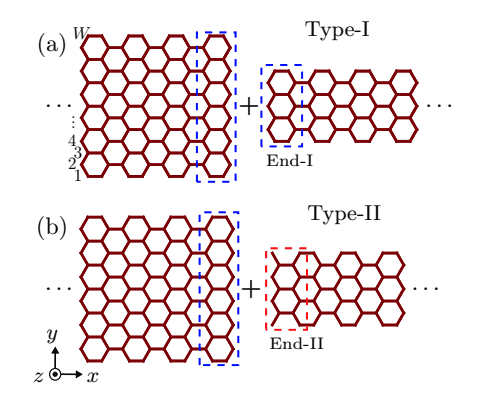
The behaviour of electrons at the junctions of graphene nanoribbons presents a significant challenge for designing the next generation of nanoscale electronic devices, and recent research addresses this problem by predicting how these interfaces influence electronic and magnetic properties. Sofia Sanz and Daniel Sánchez-Portal, both from the Centro de Física de Materiales CSIC-UPV/EHU, lead a study demonstrating that simply classifying the ribbon’s topology is insufficient to accurately predict the number of interface states that emerge when ribbons of differing widths connect. The team’s theoretical analysis reveals that the precise width difference and bonding configuration at the junction critically determine these states, and they further show how applied strain alters these topological properties. By employing a mean-field Hubbard model, the researchers investigate the resulting spin states, establishing clear relationships between the number of localized electrons and the magnetic behaviour at the interface, ultimately providing practical guidelines for engineering desirable electronic and magnetic properties in these nanoscale structures.
Excitation Energy Varies With Bond Number
This document presents a comprehensive investigation into the electronic and magnetic properties of graphene nanoribbon (GNR) junctions, focusing on how the number of carbon-carbon bonds at the junction influences electronic structure, spin polarization, and excitation energies. Graphene nanoribbons, essentially strips of graphene, exhibit size-dependent electronic properties, making them promising materials for nanoelectronics. The team explored various GNR widths and junction configurations to understand these relationships, employing computational modelling to simulate the behaviour of these nanoscale structures. A central finding is that the excitation energy, the energy difference between the ground state and the first excited state, does not simply increase with the number of bonds at the junction, but exhibits complex, often non-monotonic behaviour. This suggests a nuanced relationship between bonding and electronic structure, and calculations reveal that local spin moments at the junction correlate with both the number of bonds and the electronic structure of the individual nanoribbons.
Researchers propose a relationship between the local spin moment and the edge states of the nanoribbons, recognising that the electronic structure at the edges of GNRs significantly influences their properties. Edge states, arising from the termination of the periodic lattice, can be either metallic or semiconducting depending on the edge reconstruction, specifically, whether the edge is ‘zigzag’ or ‘armchair’. The team observes a correlation between the number of bonds at the interface and the total spin moment, noting that increasing the number of bonds does not necessarily lead to a proportional increase in magnetism. This non-monotonic behaviour of the excitation energy is observed across different combinations of GNR widths, indicating it is a general phenomenon, not limited to specific configurations. The edge states of the individual nanoribbons play a crucial role in determining spin polarization and excitation energies, as the coupling of these states at the junction dictates the overall electronic and magnetic characteristics. The document details these findings through supplemental materials demonstrating the spin density distribution for partially joined junctions, correlating the number of bonds with the total spin moment, and presenting the magnetic ground state and first excited states for various junction configurations.
The calculations are based on density functional theory (DFT), a computational method used to describe the electronic structure of materials by approximating the many-body Schrödinger equation. DFT allows researchers to determine the ground state electronic structure and, subsequently, excited state properties. Researchers used open boundary conditions to accurately simulate finite-length nanoribbons and junctions, avoiding artificial constraints imposed by periodic boundary conditions which assume infinite systems. This is crucial for accurately modelling edge effects and junction behaviour. They included a Hubbard U parameter to account for electron interactions, which are important for understanding the magnetic properties of the GNRs, as standard DFT often underestimates the strength of electron correlation. The Hubbard U parameter effectively introduces a penalty for double occupancy of orbitals, promoting localized magnetic moments. The team employed a tight-binding model as a basis for the DFT calculations, simplifying the computational complexity while retaining essential physics. This approach represents a balance between accuracy and computational feasibility, allowing for the investigation of relatively large GNR junctions.
The observed non-monotonicity in excitation energy has significant implications for the design of nanoscale electronic devices. Understanding how bonding affects the electronic structure is critical for controlling the behaviour of these junctions, particularly in spintronic applications. Spintronics exploits the spin of electrons, in addition to their charge, to create novel devices with enhanced functionality. GNR junctions with tunable excitation energies could serve as building blocks for spin filters, spin transistors, and other spintronic components. The ability to control the spin polarization at the junction through the number of bonds offers a pathway to engineer devices with specific magnetic properties. Furthermore, the findings contribute to a broader understanding of the relationship between structure, bonding, and electronic properties in nanoscale carbon materials, informing the development of new materials with tailored functionalities.
The research builds upon previous work demonstrating the sensitivity of GNR electronic properties to edge structure and ribbon width. Earlier studies established that the edge termination, whether zigzag or armchair, dictates the electronic band structure and, consequently, the conductivity of the ribbon. This work extends these findings by investigating the behaviour of junctions between GNRs, introducing additional complexity and opportunities for tuning the electronic properties. The team’s detailed analysis of the spin density distribution provides valuable insights into the origin of magnetism at the junction, revealing the interplay between edge states and bonding configurations. Future research will focus on exploring the effects of defects and impurities on the junction properties, as well as investigating the dynamic behaviour of electrons at the interface. This will require more sophisticated computational techniques and experimental validation, but promises to unlock the full potential of GNR junctions for nanoscale electronics.
👉 More information
🗞 Predicting interface and spin states in armchair graphene nanoribbon junctions
🧠 DOI: https://doi.org/10.48550/arXiv.2507.14065