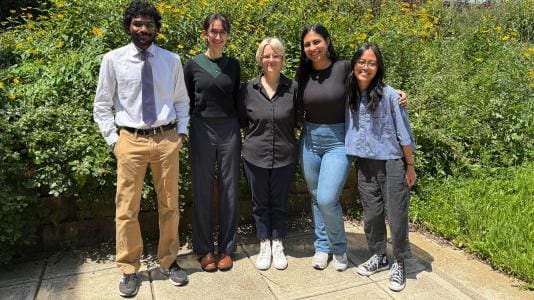
Argonne National Laboratory hosted 27 undergraduate students as part of the 2025 Open Quantum Initiative (OQI) Undergraduate Fellowship, advancing quantum information science research. Five fellows at Argonne contributed to projects—including work at Q-NEXT—focused on developing quantum technologies like qubits and quantum networks. This experience broadened the students’ perspectives on the interconnectedness of the growing quantum field.
Argonne’s 2025 OQI Fellowship Supports Quantum Workforce Development
Fellows like Cece DiSibio from the Colorado School of Mines designed and built specialized equipment—an optical scanning microscope—to study crystal defects potentially usable as qubits. This work involved not only hardware development but also computational automation, demonstrating a need for diverse skillsets in the emerging field. The OQI fellowship broadened students’ understanding of quantum technologies beyond theoretical concepts, exposing them to real-world applications in both academic and industrial settings. Valeria Diaz Moreno, for example, programmed devices to study quantum materials using more affordable technology, while Krist Ha focused on detecting signals from nitrogen vacancy centers as potential qubits. This exposure helped students refine career goals, with several planning to pursue graduate studies in areas like quantum engineering and experimental physics.
Valeria Diaz Moreno Programs Open-Source Control for Erbium Crystals
Valeria Diaz Moreno, a physics and data science student at the University of Wisconsin–Madison, focused her OQI fellowship on programming control systems for erbium-doped crystals. These crystals are being investigated as potential quantum materials for use in future quantum networks. Instead of relying on costly, complex radio-frequency devices typically used to measure crystal properties, Moreno programmed an open-source alternative, significantly reducing experimental costs. This work aimed to study the crystals’ properties at a lower price point, broadening research possibilities. Moreno’s experience highlighted the interconnectedness of quantum information science and the applicability of skills across various research areas—from academia to industry. She anticipates pursuing experimental research in graduate school, reinforced by the mentorship and collaborative environment provided during the fellowship.
Cece DiSibio Constructs Microscope to Analyze Crystal Vacancy Qubits
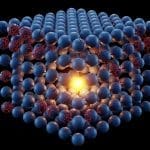
Cece DiSibio, an engineering physics student, constructed a specialized optical scanning microscope at Argonne National Laboratory. This microscope was designed to analyze crystal materials, specifically focusing on identifying and measuring “vacancies”—structural defects within the crystal lattice. These vacancies are considered promising candidates for use as qubits, the fundamental building blocks of quantum computers, enabling the potential for advanced computation. DiSibio’s work extended beyond hardware construction to include computational automation of the measurement process. By visualizing the photoluminescent features of these crystals, she gathered data on the characteristics of vacancy qubits. The ability to precisely measure these defects is crucial for assessing their viability and improving the performance of future quantum technologies.
Krist Ha Detects Signals from Nitrogen Vacancy Center Qubits
The research involved using a microscope to detect changes in the magnetic fields surrounding these centers, specifically looking for signals generated by microwave or smaller magnetic fields. Measurements were taken to analyze these signals, contributing to the understanding of how these defects could function within quantum devices. The work at Argonne expands knowledge of this qubit type, adding to the diverse range of approaches being explored for quantum computing. Ha’s experience also broadened their graduate school options, considering both physics and potentially quantum-focused electrical engineering programs.
OQI Experience Broadens Student Perspectives on Quantum Fields
The OQI fellowship exposed students to the expansive nature of quantum information science (QIS), moving beyond specific qubit types like superconducting systems. Fellows like Valeria Diaz Moreno discovered the interconnectedness of research areas, realizing skills gained in one area—such as simulations—can be applied across academic, national lab, and industrial settings. This broadened understanding included learning about spin and photonic qubits, illustrating that multiple approaches exist for building quantum computers. Students also gained insight into the practical realities of QIS through company visits to firms like PsiQuantum and Applied Materials.
Cece DiSibio observed the startup environment within the quantum computing industry, recognizing the emerging landscape. Furthermore, the program fostered consideration of diverse graduate pathways, with some students like Krist Ha now exploring electrical engineering alongside traditional physics programs to further specialize in QIS.
If you’re interested in science – whether through reading, movies or just asking questions – you shouldn’t feel intimidated. Scientists sometimes make it seem like there’s a huge barrier to entry, but it’s just like anything else: It takes hard work.