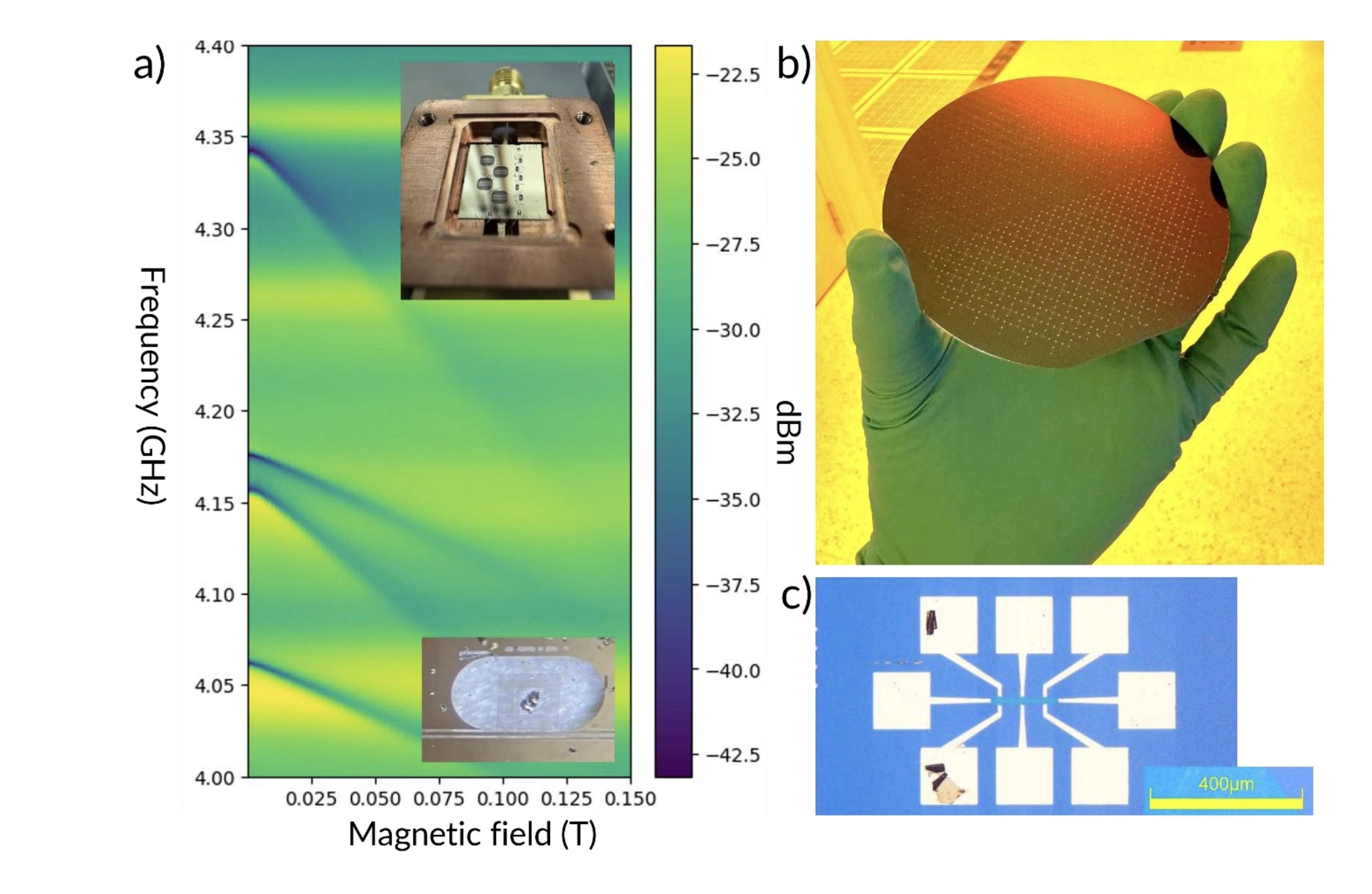
Archer Materials Limited, an Australian semiconductor company, has made a significant breakthrough in quantum technology by developing two proof-of-concept electrical devices that improve the readout of its 12CQ quantum chip spin material. The devices consist of up to eight superconducting resonators, each capable of simultaneously reading out separate electron spin material. This development brings the company closer to enabling quantum computing for use in mobile applications.
The achievement builds on Archer’s recently developed next-generation film-based spin material, which improves manufacturability and potentially provides longer spin lifetimes. Greg English, Executive Chair of Archer, commented that the devices bring the company closer to reading out electron quantum spin information and bolster the manufacturability of the qubit material. The development is a result of collaboration with academic researchers at The University of New South Wales and US-based software company Sonnet Precision Electromagnetics.
Improving Quantum Chip Spin Detection: Archer’s Breakthrough
Archer Materials Limited has made significant strides in advancing its 12CQ quantum chip spin material by manufacturing and characterizing two proof-of-concept electrical devices. These devices are designed to improve the readout of the spin material, a crucial step towards developing functional quantum computing technology for mobile applications.
The two complementary superconducting spin readout circuits consist of up to eight resonators, each capable of simultaneously reading out separate electron spin material. This development builds on Archer’s recently developed next-generation film-based spin material, which enhances manufacturability and potentially provides longer spin lifetimes. The devices demonstrate sufficient resilience to high magnetic fields at extremely low temperatures of -269 degrees Celsius.
The quantum team at Archer utilized simulation software developed by Sonnet Precision Electromagnetics to optimize the resonator design and performed measurements over three campaigns. These tests involved evaluating superconducting readout circuits at temperatures below -269 degrees Celsius and at magnetic fields of up to 1.5 Tesla. The collaboration with academic researchers at The University of New South Wales further solidified the results.
This breakthrough provides the necessary groundwork for future measurement of very small quantities of Archer’s quantum spin material, potentially down to a single CNO (Carbon-Nitrogen-Oxygen). The ability to detect and read out electron quantum spin information is a critical component in developing functional quantum computing technology. Archer’s Executive Chair, Greg English, emphasized that this development brings the company closer to achieving control and readout capabilities, essential for the 12CQ project.
Enhancing Manufacturability: Next-Generation Film-Based Spin Material
Archer’s next-generation film-based spin material is a significant advancement in improving manufacturability. This new material enables enhanced precision alignment markers, allowing for nanometer-level precision during device fabrication. The material also exhibits significantly decreased electrical resistance and potentially increased spin lifetimes.
The proof-of-concept devices fabricated from this material demonstrate the potential for scalable manufacturing of the 12CQ quantum chip. By leveraging this technology, Archer aims to enable quantum computing for mobile applications. The company’s focus on developing functional quantum computing technology is driven by its commitment to advancing the field and unlocking its vast potential.
Overcoming Technical Challenges: Superconducting Circuits
The development of superconducting spin readout circuits is a critical component in overcoming technical challenges associated with quantum computing. Archer’s devices demonstrate sufficient resilience to high magnetic fields at extremely low temperatures, a crucial requirement for functional quantum computing technology.
The use of simulation software and collaboration with academic researchers enabled the optimization of resonator design and precise measurement of superconducting readout circuits. This rigorous testing process ensured that the devices can operate effectively in extreme conditions, paving the way for future advancements in quantum computing.
Collaborative Research: Driving Innovation
Archer’s partnership with The University of New South Wales and its collaboration with Sonnet Precision Electromagnetics demonstrate the company’s commitment to driving innovation through collaborative research. By working together with experts from academia and industry, Archer is able to leverage cutting-edge technology and expertise to advance its 12CQ project.
This collaborative approach enables the development of novel solutions to complex technical challenges, ultimately accelerating the advancement of quantum computing technology. As Archer continues to push the boundaries of what is possible, its partnerships will play a critical role in driving innovation and realizing the vast potential of quantum computing.
External Link: Click Here For More