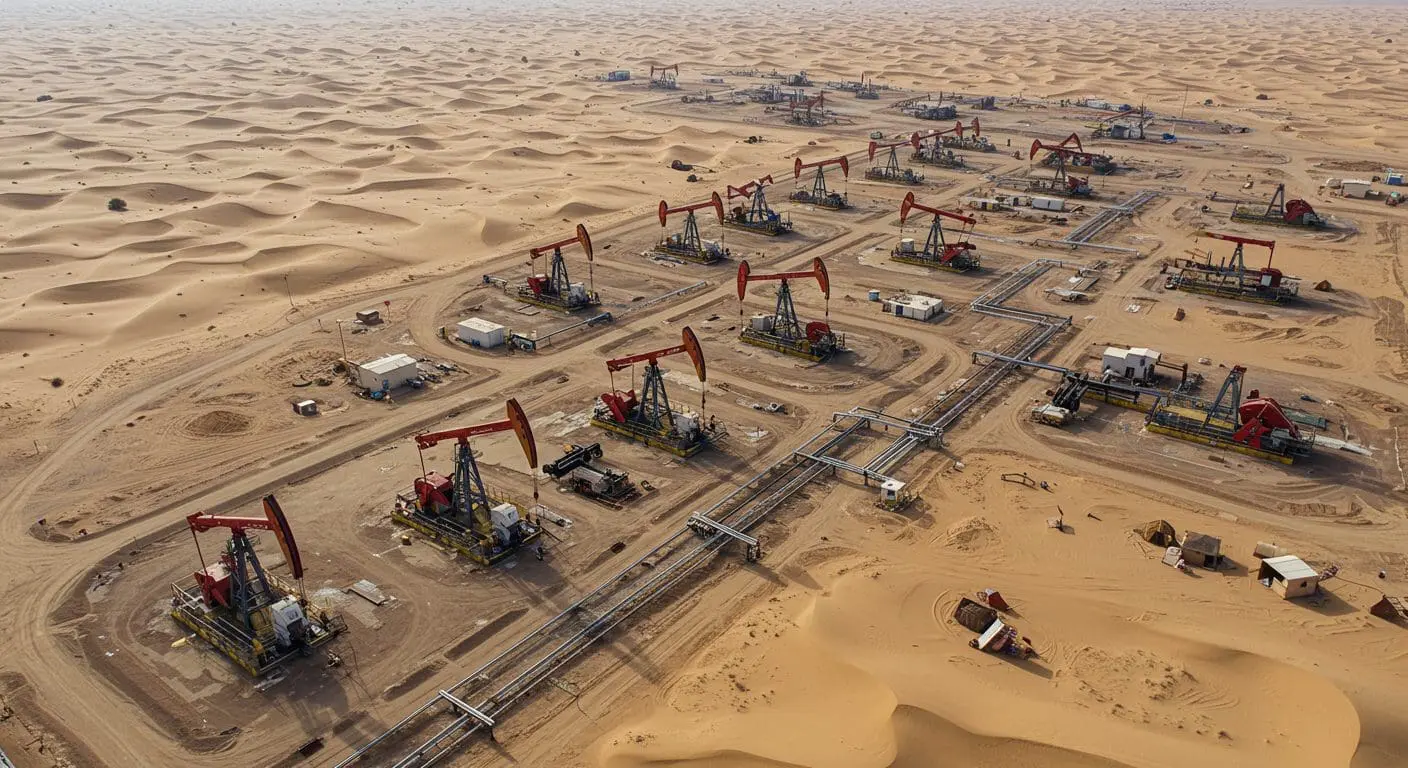
In a strategic move to harness the power of artificial intelligence in optimizing downstream products, Aramco, a global leader in integrated energy and chemicals, has partnered with SandboxAQ, a pioneering company at the forefront of AI and quantum techniques. This collaboration aims to leverage SandboxAQ’s cutting-edge Large Quantitative Models (LQMs) platform, which seamlessly integrates AI and physics to accelerate the design, optimization, and manufacturing of new materials and chemicals.
By applying LQMs, which encompass a range of innovative techniques including large-scale quantum chemistry and generative chemistry AI, Aramco seeks to enhance the value of its downstream products while reducing its carbon footprint, underscoring the potential for AI-driven solutions to transform the energy and chemicals industry.
Introduction to the Agreement between Aramco and SandboxAQ
The recent agreement between Aramco, a major integrated energy and chemicals company, and SandboxAQ, a company specializing in the application of artificial intelligence (AI) and quantum techniques, marks a significant collaboration aimed at enhancing the value of downstream products. This partnership follows a meeting during the FII8 conference in Riyadh, highlighting the growing interest in leveraging advanced technologies to improve efficiency and productivity in the energy sector. The agreement focuses on the development of a multi-GPU enabled differentiable computational fluid dynamics solver for application in oil and gas processing facilities, which could potentially lead to more efficient and optimized processes.
The collaboration between Aramco and SandboxAQ is built around the latter’s Large Quantitative Models (LQMs) platform, which integrates AI and physics to enhance the speed and accuracy of designing, optimizing, and manufacturing new materials and chemicals. Traditionally, these processes have been challenging, time-consuming, and costly. By applying LQMs, which encompass a range of techniques including large-scale quantum chemistry, generative chemistry AI, multi-parameter optimization, and high-throughput quantitative data extraction, the companies aim to accelerate product development and improve performance.
The application of AI and quantum computing in the energy sector is an area of growing interest due to its potential for solving complex problems more efficiently than traditional methods. SandboxAQ’s approach, by combining computational methods with real-world results, aims to bridge the gap between theoretical models and practical applications, potentially leading to breakthroughs in materials science and chemical engineering that could benefit Aramco’s operations.
The Role of Large Quantitative Models (LQMs) in Enhancing Efficiency
Large Quantitative Models (LQMs) are at the heart of SandboxAQ’s technology, offering a unique approach to problem-solving by leveraging both AI and physics. These models are designed to sample outside the known data space, allowing for the exploration of new possibilities that might not be immediately apparent through traditional analysis. By doing so, LQMs can help in identifying novel materials or chemical processes that could significantly improve the efficiency and sustainability of operations in the energy sector.
The use of LQMs in the context of Aramco’s operations could lead to several potential benefits, including the development of more efficient refining processes, the creation of new, high-performance materials for use in extreme environments, and the optimization of chemical reactions to minimize waste and reduce environmental impact. Furthermore, by integrating AI with quantum computing techniques, SandboxAQ’s platform can handle complex simulations that are beyond the capabilities of classical computers, potentially unlocking new insights into the behavior of materials at the molecular level.
The application of LQMs is not limited to the energy sector; these models have the potential to drive innovation across various industries, including life sciences, financial services, and navigation. However, in the context of Aramco’s business, the focus on improving downstream products through advanced materials and processes could have a direct impact on the company’s bottom line, as well as its environmental footprint.
The Potential Impact on Sustainability and Efficiency
One of the key aspects of the agreement between Aramco and SandboxAQ is the potential for reducing the carbon footprint of energy production and processing. By developing more efficient processes and materials, the companies aim to minimize waste, reduce energy consumption, and lower emissions. This aligns with the growing global emphasis on sustainability and the need for industries to adopt more environmentally friendly practices.
The integration of AI and quantum computing in this context can lead to more precise control over chemical reactions and physical processes, allowing for the optimization of conditions to achieve better outcomes with less resource usage. Additionally, the development of new materials through LQMs could lead to the creation of more efficient catalysts, better insulation materials, or novel composites that enhance performance while reducing environmental impact.
The collaboration also underscores the importance of technological innovation in addressing the challenges faced by the energy sector. As the world transitions towards cleaner and more sustainable forms of energy, companies like Aramco are looking to advanced technologies to help them navigate this transition. The partnership with SandboxAQ is a step in this direction, highlighting the potential for AI and quantum computing to play a critical role in shaping the future of the energy industry.
The Broader Implications of AI and Quantum Computing in Industry
The agreement between Aramco and SandboxAQ reflects a broader trend towards the adoption of AI and quantum computing across various industries. These technologies have the potential to transform sectors by enabling faster, more accurate, and more efficient solutions to complex problems. In the energy sector, this could mean better optimization of existing processes, the discovery of new materials with unique properties, and more effective management of resources.
The application of AI and quantum computing is not without its challenges, however. These technologies require significant computational power and sophisticated algorithms to operate effectively. Moreover, the integration of these technologies into existing industrial processes will require careful planning, investment in infrastructure, and training for personnel. Despite these challenges, the potential benefits are substantial, making the collaboration between Aramco and SandboxAQ a noteworthy development in the energy sector.
As companies continue to explore the possibilities offered by AI and quantum computing, it is likely that we will see more partnerships and collaborations aimed at leveraging these technologies to drive innovation and improve efficiency. The success of such endeavors will depend on the ability of companies to adapt and integrate new technologies into their operations, as well as the development of regulatory frameworks that support innovation while ensuring safety and environmental responsibility.
External Link: Click Here For More