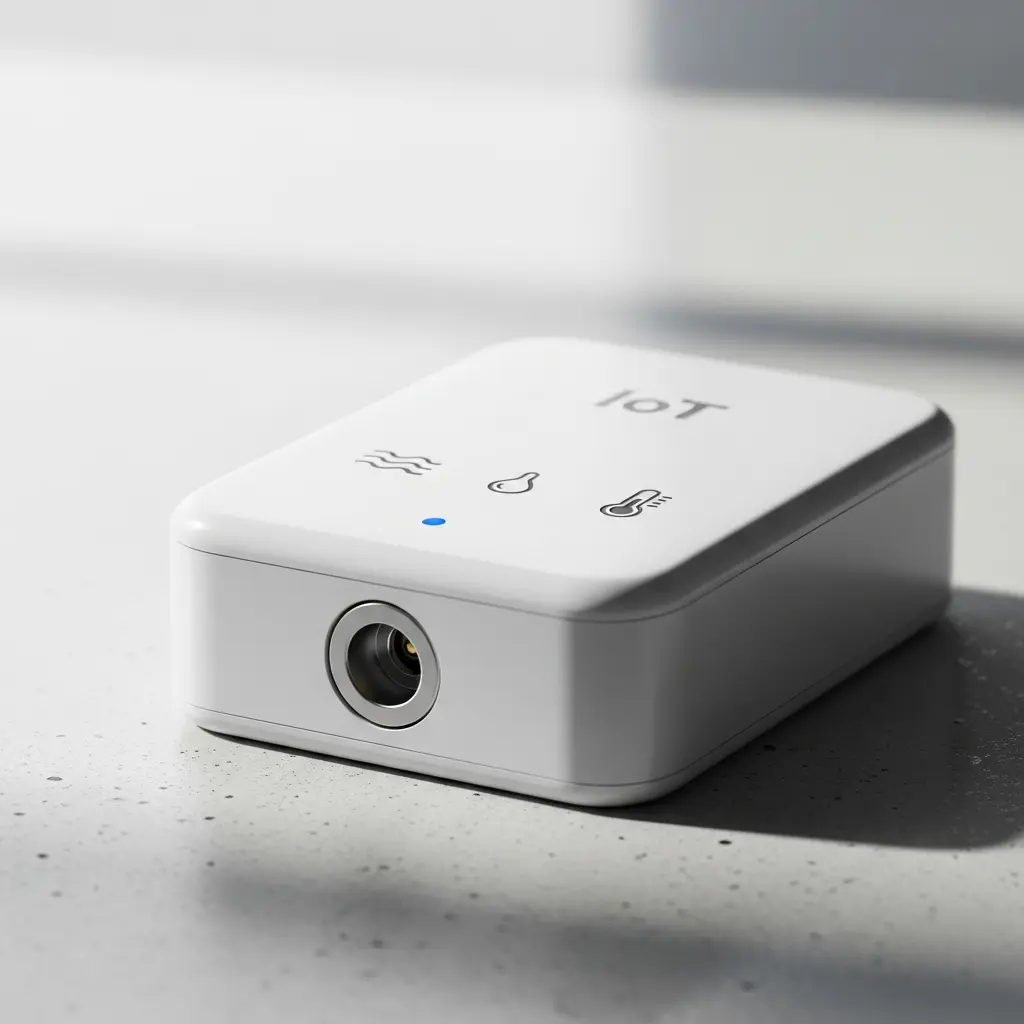
Motion capture technology, traditionally expensive and confined to specialist facilities, now takes a significant step towards accessibility thanks to new research led by Poojan Vanani, Darsh Patel, and Danyal Khorami, from their respective institutions. The team, alongside Siva Munaganuru, Pavan Reddy, and Varun Reddy, introduces Mesquite, a low-cost, open-source system that captures movement using a network of small, body-worn sensors and a standard smartphone. This innovative approach bypasses the need for complex and costly equipment, delivering accuracy comparable to commercial systems while operating at a fraction of the price. By harnessing the power of web-based technologies, Mesquite streams motion data directly to a browser, enabling real-time visualisation and recording and opening up possibilities for a wide range of applications, from entertainment and healthcare to biomechanics and virtual reality.
Low-Cost Wearable Motion Capture with Web Technologies
This document describes the development of a low-cost, wearable motion capture system called Mescap, created as an accessible alternative to expensive professional motion-capture systems such as OptiTrack. The main objective is to enable affordable motion tracking using readily available hardware and web-based technologies. By relying on WebSockets, WebXR, and WebGL, the system allows real-time data streaming and visualization directly in a web browser, removing the need for specialized software or complex setups. The system is intended for use in human activity recognition, gesture recognition, virtual and augmented reality applications, rehabilitation and healthcare monitoring, and sports performance analysis.
Mescap is built around inertial measurement units that combine accelerometers, gyroscopes, and magnetometers to track movement and orientation. The system supports sensors such as the Bosch Sensortec BNO08x and the TDK InvenSense ICM-20948, paired with a microcontroller that processes sensor data and transmits it wirelessly using Bluetooth Low Energy. On the software side, the Web Serial API is used for direct communication with the microcontroller, while WebSockets enable real-time, bidirectional data streaming between the server and the browser. WebXR provides integration with VR and AR environments, and WebGL is used for rendering 3D motion visualizations. The system is designed as a Progressive Web App, allowing it to run across devices and support limited offline use. Data accuracy and stability are improved through sensor fusion techniques, including Kalman filtering and quaternion-based rotation curves.
The document compares Mescap with existing solutions such as OptiTrack, Kinect, Rokoko Smartsuit Pro, other IMU-based systems, and smartphone-based tracking approaches. While professional systems offer high accuracy, they are costly and require dedicated setups. Vision-based systems like Kinect can be affected by lighting and occlusions. Wearable inertial systems exist but are often more expensive. Mescap emphasizes its low cost, wireless operation, web-based accessibility, real-time streaming, VR and AR integration, and portability as its key advantages.
Future and related work discussed in the document includes wearable sensor networks, fog and edge computing for reduced latency, improved activity recognition algorithms, enhanced sensor calibration methods, advanced data smoothing and filtering, expanded spatial tracking through WebXR, and support for standard motion-capture formats such as BVH. The system supports real-time 3D visualization, customizable avatars, immersive VR and AR experiences, remote monitoring, gesture-based interaction, and motion data logging and analysis.
The research also presents Mesquite, a low-cost inertial motion-capture system designed to further improve accessibility. It uses 15 body-worn IMU nodes, each containing a 9-axis ICM-20948 sensor, an ESP32 microcontroller, and a lithium-polymer battery housed in a 3D-printed enclosure. These nodes attach to the body using elastic straps and sample sensor data at high frequency, with processed quaternion data transmitted wirelessly to reduce bandwidth requirements. To mitigate drift and spatial reference issues, the system combines inertial tracking with computer vision by using a hip-mounted Android smartphone and WebXR world mapping to establish a global reference frame. Joint orientations are tracked using the IMUs, and forward kinematics is applied to reconstruct full-body motion.
Data is transmitted to a Raspberry Pi Zero acting as a local server, achieving high packet delivery rates and low latency. The system supports real-time visualization at 30 frames per second with end-to-end latency below 15 milliseconds. Benchmark comparisons show joint-angle errors of 2–5 degrees while operating at a fraction of the cost of commercial systems. Motion data can be exported in BVH format, and raw sensor data is logged for further analysis.
Low-Cost Wireless Motion Capture with IMUs
The research team engineered Mesquite, a low-cost inertial motion-capture system designed to overcome the limitations of traditional, expensive setups, and enable broader access to motion tracking technology. The system employs a network of 15 body-worn inertial measurement unit (IMU) sensor nodes, each containing a 9-axis ICM20948 IMU, an ESP32 microcontroller, and a 400mAh lithium-polymer battery housed within a 3D-printed enclosure. These compact nodes attach to the user’s body using adjustable elastic straps, facilitating comfortable and secure data capture. Each IMU samples data at 1000Hz, but the ESP32 processes this information at 100Hz, leveraging its integrated Digital Motion Processor to generate quaternion orientation data, minimizing wireless transmission requirements., To address the inherent challenges of inertial tracking, particularly drift and the need for spatial references, the study pioneered a hybrid approach, combining IMU data with computer vision techniques.
A hip-mounted Android smartphone anchors the user’s position using WebXR World Mapping, a form of simultaneous localization and mapping (SLAM), establishing an absolute spatial frame of reference. The remaining 15 IMUs track the orientation of the body’s joints, and forward kinematics are then used to estimate joint positions, reducing the need for full-body positional tracking, and simplifying the computational load. This innovative design allows the system to accurately reconstruct motion with only the hip position and bone orientations, significantly improving practicality and cost-effectiveness., Data from the IMUs is transmitted via a low-power wireless link to a Raspberry Pi Zero acting as a USB dongle and local server, achieving a packet delivery rate of at least 99.7% in standard indoor environments.
The system sustains 30 frames per second with end-to-end latency under 15ms, enabling real-time visualization and recording through a browser-based application built on modern web technologies, Progressive Web Apps. Benchmarks against a commercial system demonstrate that Mesquite achieves mean joint-angle error of 2-5 degrees, while operating at approximately 5% of the cost, representing a substantial improvement in accessibility and performance. The resulting motion data is exported in the widely-used BVH format, and raw sensor data is also logged for detailed analysis.
Low-Cost, Accurate Inertial Motion Capture System
Scientists present Mesquite, a new low-cost inertial motion-capture system designed to overcome the limitations of traditional, expensive setups. The system utilizes a network of 15 Inertial Measurement Unit (IMU) sensor nodes worn on the body, coupled with an Android smartphone positioned at the hip for position tracking, and streams data wirelessly to a USB dongle. Experiments demonstrate that Mesquite achieves a mean joint-angle error of between 2 and 5 degrees when benchmarked against a commercial motion-capture system, representing a significant level of accuracy for a system of its type. This performance was achieved while operating at approximately 5% of the cost of comparable commercial solutions, dramatically lowering the barrier to entry for motion capture technology., The team measured a sustained frame rate of 30 frames per second with end-to-end latency consistently under 15 milliseconds, ensuring real-time performance crucial for interactive applications.
Data transmission proved highly reliable, with a packet delivery rate of at least 99.7% recorded in standard indoor environments, confirming the robustness of the wireless link. Mesquite’s software operates entirely within a web browser, leveraging technologies like WebGL, WebXR, WebSerial, and WebSockets, enabling cross-platform compatibility and ease of deployment., Researchers successfully integrated Mesquite with existing animation and motion capture software by exporting both raw data and the Biovision Hierarchy (BVH) format, facilitating seamless data transfer and analysis. The system employs Simultaneous Localization and Mapping (SLAM) techniques, utilizing WebXR World Mapping to establish a global spatial frame, and combines this with data from the 15 body-worn IMUs to track both orientation and joint positions via forward kinematics. This breakthrough delivers a versatile, open-source platform with broad potential across entertainment, biomechanics, healthcare, and virtual reality applications, and the hardware designs, firmware, and software are all released under an open-source license.
Low-Cost, High-Precision Motion Capture System
Mesquite represents a significant advance in motion capture technology, delivering a low-cost, open-source system that rivals the performance of commercial alternatives. The team successfully developed a network of fifteen inertial measurement units, paired with a smartphone, to track movement and position with mean joint-angle errors of only two to five degrees. This achievement lowers the financial and logistical barriers to motion capture, making it accessible to a wider range of users and applications, including entertainment, biomechanics research, healthcare monitoring, and virtual reality development., The system operates at a sustained rate of thirty frames per second with minimal latency, and maintains a high degree of data reliability, exceeding ninety-nine point seven percent packet delivery in typical indoor settings. Researchers acknowledge that, like all inertial systems, Mesquite is susceptible to drift over extended periods, a common challenge in accurately tracking position without external references. Future work may focus on mitigating drift and enhancing the system’s capabilities in more complex and dynamic environments, but the current implementation provides a robust and readily adaptable platform for a variety of motion tracking needs. The release of all hardware designs, firmware, and software under an open-source license further ensures the system’s longevity and encourages community-driven innovation.
🗞 Mesquite MoCap: Democratizing Real-Time Motion Capture with Affordable, Bodyworn IoT Sensors and WebXR SLAM
🧠 ArXiv: https://arxiv.org/abs/2512.22690