Excitons, bound pairs of electrons and holes, underpin the optical properties of many materials, yet their underlying symmetries have remained largely unexplored despite advances in calculating their energies. Muralidhar Nalabothula, Davide Sangalli, and Fulvio Paleari, working with colleagues at the University of Luxembourg and CNR institutes, now present a comprehensive analysis of exciton symmetries using established group-theory methods. Their work establishes a robust framework for classifying excitonic states and predicting their behaviour, including how they interact with vibrations within a crystal. This detailed understanding not only clarifies selection rules governing light absorption and emission, but also significantly enhances the efficiency of calculations used to model these crucial quantum phenomena, with applications ranging from lithium fluoride to layered materials like molybdenum diselenide and hexagonal boron nitride.
Exciton-Phonon Interactions in Two-Dimensional Materials
Scientists conduct detailed theoretical investigations of how excitons, bound pairs of electrons and holes, interact with lattice vibrations, known as phonons, in two-dimensional materials. This research focuses on understanding and predicting the optical properties of these materials, particularly hexagonal boron nitride, and utilizes advanced computational methods to model these interactions. The work explores how these interactions influence the relaxation of excited states and offers potential avenues for manipulating material properties through external stimuli. The research employs many-body perturbation theory to accurately determine exciton energies and optical spectra, utilizing computational tools like Quantum ESPRESSO and Yambo. A key aspect of the methodology involves analyzing the symmetry of both excitons and phonons, revealing how these symmetries govern their coupling and influence optical selection rules.
Exciton Symmetry Classification via Group Theory
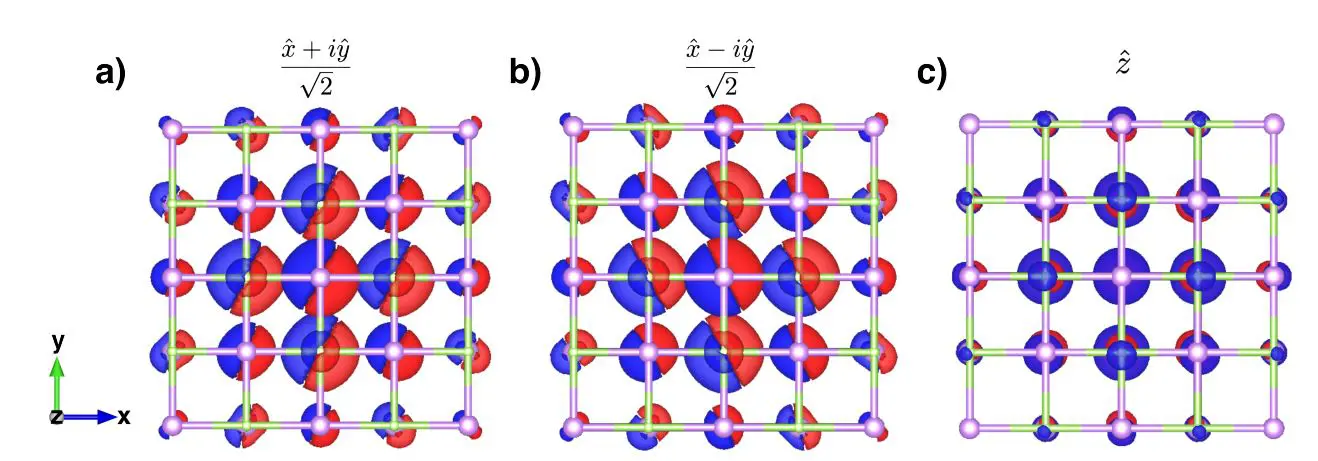
Scientists developed a novel methodology to analyze the symmetry properties of excitons, crucial to optical processes in low-dimensional materials and wide-bandgap insulators. The study harnesses rigorous group-theory methods to examine how excitonic states transform under crystal symmetry operations, building upon the inherent symmetry of the Bethe-Salpeter equation. Researchers demonstrate a practical approach to assign symmetry labels to excitonic states, enabling symmetry classification without detailed analysis of real-space wavefunctions, and providing a state-of-the-art framework for understanding selection rules governing exciton behavior. The team extended this symmetry classification by introducing the concept of total crystal angular momentum for excitons, particularly in materials exhibiting rotational symmetries.
This innovative approach allows the derivation of conservation laws analogous to those found in the hydrogen atom, providing deeper insight into exciton interactions and behavior. To validate their methodology, scientists applied it to three prototypical systems, beginning with LiF, where they performed a complete symmetry analysis of the entire excitonic dispersion and examined selection rules for optical absorption. Further investigations focused on monolayer MoSe2, where the team demonstrated how the conservation of total crystal angular momentum governs exciton-phonon interactions, successfully explaining observed resonant enhancement in Raman spectra. Finally, the study analyzed bulk hBN, revealing the role of symmetries in coupling finite-momentum excitons to finite-momentum phonons and their manifestation in phonon-assisted luminescence spectra. This comprehensive work establishes a general and robust framework for understanding exciton symmetry in crystals, providing a foundation for future studies of light-matter interactions in advanced materials.
Exciton Symmetries Dictate Optical Material Properties
Scientists have established a comprehensive framework for understanding the symmetries of excitons, bound electron-hole pairs crucial to the optical properties of materials. This work details how to classify excitonic states based on their symmetry properties under various crystal symmetries, providing a foundation for predicting and controlling their behavior. The team developed a method to assign labels representing symmetry to these excitonic states, offering a state-of-the-art approach for analyzing selection rules governing interactions, such as those between excitons and phonons. The research demonstrates that the symmetries of excitons are deeply connected to the symmetries of the underlying crystal structure.
By analyzing how excitons transform under symmetry operations, scientists can derive conservation laws related to total crystal angular momentum. This concept proves vital in understanding how excitons interact with vibrations within the crystal lattice, specifically in resonant Raman spectra of monolayer MoSe2, where conservation of total crystal angular momentum governs exciton-phonon interactions and leads to observed resonant enhancement. Applying this methodology to three distinct materials, LiF, monolayer MoSe2, and bulk hexagonal boron nitride (hBN), reveals the role of symmetry in different contexts. In hBN, the team examined how symmetries influence the coupling of excitons to phonons, manifesting as phonon replicas in luminescence spectra. The results confirm that the framework accurately predicts the behavior of excitons in diverse materials, establishing a robust foundation for future studies of optical scattering processes in two- and three-dimensional crystals.
Exciton Symmetry, Angular Momentum, and Selection Rules
This work establishes a comprehensive framework for understanding the symmetry properties of excitons in crystalline materials. Researchers developed a method to classify excitons based on their symmetry, assigning labels that accurately describe their behaviour under various crystal symmetry operations without requiring detailed analysis of real-space wavefunctions. Furthermore, the team introduced the concept of total crystal angular momentum, demonstrating that this quantity is conserved during exciton scattering and dictates selection rules governing interactions with other particles. The methodology was validated through calculations on lithium fluoride, monolayer molybdenum diselenide, and hexagonal boron nitride, demonstrating its broad applicability to materials hosting different types of excitons. The researchers also showed how exploiting crystal symmetries can improve the efficiency of calculations used to determine exciton properties. This advancement offers a precise understanding of exciton symmetries and the resulting optical and phonon selection rules, providing a foundation for future work aimed at tailoring material properties through symmetry considerations.