Amazon AWS has developed a prototype quantum computing chip called Ocelot, designed to test its innovative quantum error correction architecture. This architecture is significantly more resource-efficient than traditional approaches. It potentially enables smaller, cheaper, and more reliable quantum computers. These computers could accelerate breakthroughs in fields like drug discovery, material science, and financial modeling.
Ocelot Quantum Computing Chip
Ocelot is a prototype quantum computing chip developed by AWS to evaluate its quantum error correction architecture. It comprises two silicon microchips, each measuring approximately 1cm², stacked, and electrically connected. The surface of these chips features thin layers of superconducting materials forming quantum circuits.
The chip’s core components include five cat qubits for storing quantum states, five buffer circuits to stabilize these qubits, and four additional qubits for error detection. Cat qubits utilize oscillators made from Tantalum films, processed by AWS to enhance performance, which is crucial for maintaining stable quantum states during computation.
Quantum computers differ from classical ones by using qubits, which can exist as both 0 and 1 simultaneously. This enables faster problem-solving on specific tasks compared to classical systems. This capability underscores the potential of quantum computing in advancing fields like cryptography and material science.
Quantum Error Correction Architecture
Ocelot, developed by Amazon AWS, is a prototype quantum computing chip designed to evaluate their quantum error correction architecture. It comprises two silicon microchips stacked and electrically connected, each measuring approximately 1cm². The chips feature superconducting materials forming quantum circuits, crucial for maintaining low noise and long coherence times.
The chip’s core components include five cat qubits for storing quantum states and five buffer circuits to stabilize these qubits. Additionally, there are four error-detection qubits.
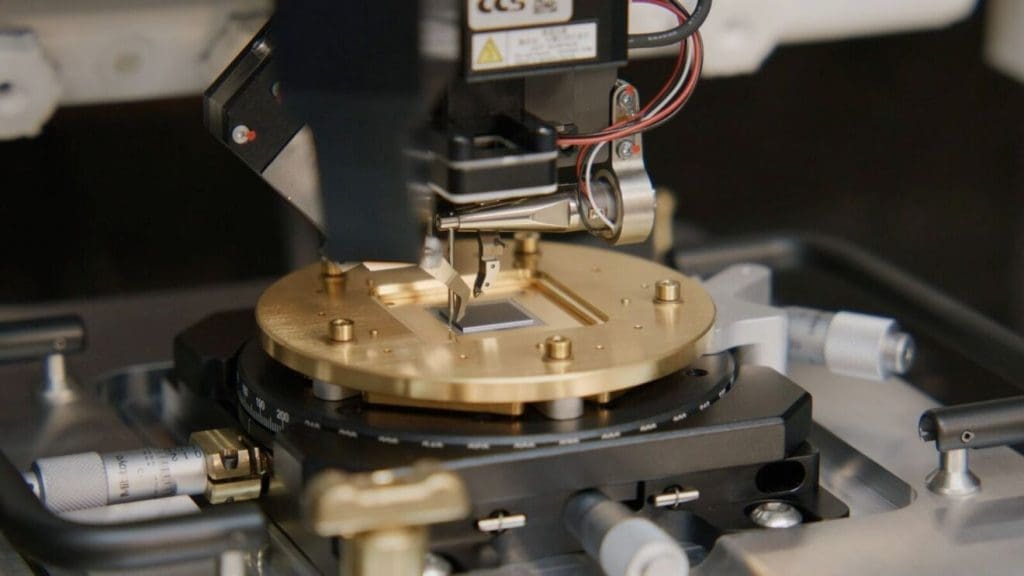
Now A Quantum Computer From Amazon. Really, ‘The Everything Store’
Ocelot is a prototype quantum computing chip developed by AWS to evaluate its quantum error correction architecture. It comprises two silicon microchips, each measuring approximately 1cm², stacked, and electrically connected. The surface of these chips features thin layers of superconducting materials forming quantum circuits.
The chip’s core components include five cat qubits for storing quantum states, five buffer circuits to stabilize these qubits, and four additional qubits for error detection.
Quantum computers differ from classical ones by using qubits, which can exist as both 0 and 1 simultaneously. This enables faster problem-solving on specific tasks compared to classical systems. This capability underscores the potential of quantum computing in advancing fields like cryptography and material science.
Ocelot represents AWS’ commitment to continuous improvement in quantum computing, using feedback from their stack to refine architecture. This development aims to advance practical error correction methods, potentially leading to more reliable and scalable quantum systems capable of solving complex problems beyond classical capabilities.
Quantum Computing: What is it?
Quantum computers leverage quantum bits, or qubits, which differ fundamentally from classical bits. Unlike classical bits that are either 0 or 1, qubits can exist simultaneously in a superposition of both states. This property allows quantum computers to process multiple possibilities simultaneously, significantly accelerating certain computations compared to classical systems.
The AWS Ocelot chip exemplifies this principle by using cat qubits, which employ oscillators made from Tantalum films. These cat qubits are designed for error correction, a critical challenge in quantum computing. The chip aims to enhance reliability and scalability by maintaining stable quantum states during computation.
Ocelot’s architecture features two stacked silicon microchips with superconducting materials forming its quantum circuits. This design supports low noise and long coherence times, which are essential for maintaining qubit stability. Including buffer circuits and error-detection qubits further underscores AWS’s focus on practical error correction methods, aiming to develop more robust quantum systems capable of tackling complex problems beyond classical capabilities.

- Ocelot is a prototype quantum computing chip designed to test the effectiveness of AWS’s quantum error correction architecture.
- It consists of two integrated silicon microchips, each roughly 1cm2 in area, bonded one on top of the other in an electrically connected chip stack.
- On the surface of each silicon microchip are thin layers of superconducting materials that form the quantum circuit elements.
- The Ocelot chip includes 14 core components. There are five data qubits known as cat qubits. The chip also has five ‘buffer circuits’ for stabilizing the data qubits. Additionally, there are four more qubits for detecting errors on the data qubits.
- The cat qubits store the quantum states used for computation. To do so, they rely on components called oscillators, which generate a repetitive electrical signal with steady timing. Ocelot’s high-quality oscillators are made from a thin film of superconducting material called Tantalum.
- AWS material scientists have developed a specific way of processing Tantalum on the silicon chip to boost oscillator performance.
More information
External Link: Click Here For More