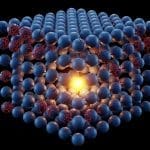
QuEra’s Aquila, a powerful 256-qubit quantum computer, has made history as the first and only publicly accessible neutral atom computer. This innovative technology uses programmable arrays of neutral Rubidium atoms, trapped in vacuum by tightly focused laser beams, to solve complex problems. By operating in analog quantum processing mode, Aquila overcomes one of the key issues faced by today’s gate-based computers: the compounding of gate errors.
QuEra’s computer is now accessible via Amazon Braket, a service that enables users to explore the capabilities of this cutting-edge technology. With its flexible programmability and robustness to noise, Aquila is poised to revolutionize quantum simulation, optimization, and machine learning applications.
Neutral Atom Computing: A New Frontier in Quantum Processing
Aquila, a 256-qubit quantum computer developed by QuEra, is a pioneering system that leverages programmable arrays of neutral Rubidium atoms trapped in a vacuum by tightly focused laser beams. This innovative approach enables the solution of complex problems by mapping them into the flexible programmable geometry of 256 neutral atoms.
One key advantage of Aquila’s analog quantum processing mode is its ability to perform continuous temporal control over its qubits, thereby mitigating one of the major issues plaguing today’s gate-based computers: the compounding of gate errors. Furthermore, entanglement is generated and manipulated via direct design of Aquila’s natural atomic Hamiltonian.
Robustness to Noise: A Critical Advantage
Aquila’s operating mode provides a robust solution to the noise problem that has long plagued quantum computing systems. By performing continuous temporal control over its qubits, Aquila effectively eliminates the compounding of gate errors, a major noise source in traditional gate-based computers.
This feature is particularly significant because it enables the development of more reliable and efficient quantum algorithms. Moreover, the direct design of Aquila’s natural atomic Hamiltonian allows for generating and manipulating entanglement, further enhancing the system’s robustness to noise.
Flexible Programmability: Unlocking New Possibilities
Aquila’s flexible programmability is a key feature that differentiates it from other quantum computing systems. With customer-defined qubit layout and connectivity, Aquila enables unique strategies for algorithm development. This flexibility allows users to explore diverse problem-solving possibilities, including deploying applications in quantum simulation, optimization, and machine learning.
The system’s Field Programmable Qubit Array (FPQA™) feature is particularly noteworthy, as it permits the reconfiguration of qubit positions and management of their interconnections. This capability opens up many problem-solving possibilities that can be mapped onto Aquila’s native Hamiltonian.
Best Practices for Analog Quantum Programming
QuEra recommends several best practices to maximize the benefits of Aquila’s analog mode operation. These include leveraging parallel processing to improve overall throughput, harnessing the power of the FPQA feature to build diverse lattices and encode gauge constraints, thinking analog to sidestep errors that often accompany compounded gates, and accounting for interaction tails when utilizing the Rydberg blockade.
By following these guidelines, users can unlock the full potential of Aquila’s analog quantum processing mode and develop innovative applications that efficiently harness the power of large quantum systems.
Accessing Aquila: A Comprehensive Guide
Aquila is now accessible via Amazon Braket, a fully managed service that provides a development environment for quantum computing. Users can get started with Aquila by following a comprehensive guide to neutral atom computing, which provides an in-depth explanation of the system’s capabilities and features.
Additionally, QuEra offers top-tier support and early access to new features for its customers and partners. The company also provides technical specifications, white papers, and user forums to facilitate the development of innovative applications on Aquila.
External Link: Click Here For More