
In pursuing practical quantum computing, Alice & Bob has made significant strides with their bet on cat qubits, an emerging technology that promises efficient error correction at scale. By focusing on quality over quantity, they aim to avoid massive hardware setups and create powerful yet efficient fault-tolerant quantum computers.
With the collective efforts of the community, especially the team at Alice & Bob and their academic partners, cat qubits are no longer just a bet. They’ve made tremendous progress, with reliable manufacturing and control, and have set a world record for bit-flip protection on their single-qubit device, Boson 4, launched on Google Cloud. Theoretical breakthroughs include showing that a quantum computer using cat qubits could run Shor’s algorithm with up to 60 times fewer qubits than other approaches.
Quantum computers will scale further, to thousands of logical qubits at lower error rates, revolutionizing the way humans innovate.
Alice & Bob
The Quest for Practical Quantum Computing
Quantum computing has emerged as one of the most ambitious challenges in modern science and engineering. Achieving “useful” quantum computers, capable of solving real-world problems, requires years of innovation, problem-solving, and relentless work. In this pursuit, researchers have been exploring various approaches to develop practical, fault-tolerant quantum computing.
The Bet on Cat Qubits
One such approach is using cat qubits, an emerging technology that promises to provide a strong foundation for efficient error correction at scale. By focusing on quality over quantity, researchers can avoid massive hardware setups and build robust and efficient quantum computers using well-controlled cat qubits. This approach depends on demonstrating that cat qubits are indeed protected from a whole class of quantum errors, as theory predicts.
The principles behind cat qubits are intricate, even by quantum standards. However, the payoff is worth it: with the proper control, cat qubits provide a pathway to efficient error correction at scale. A single, well-controlled cat qubit is a strong building block for fault-tolerant quantum computers that are both powerful and efficient.
The Journey So Far
Thanks to collective efforts, cat qubits are no longer just a bet. Researchers have made tremendous progress, with much of it now testable on the cloud. Cat qubits can be reliably manufactured and controlled; scaling up to 16 cat qubits is underway. On Boson 4, a single-qubit device, researchers set a world record for bit-flip protection, far beyond other superconducting quantum systems.
Theoretical breakthroughs are equally exciting. For example, researchers have shown that a quantum computer using cat qubits could run Shor’s algorithm with up to 60 times fewer qubits than other approaches, and 200 times fewer when employing advanced error correction schemes. A few hundred thousand cat qubits could crack RSA encryption methods, whereas 20 million would be needed for competing architectures.

The Roadmap to Practical Quantum Computing
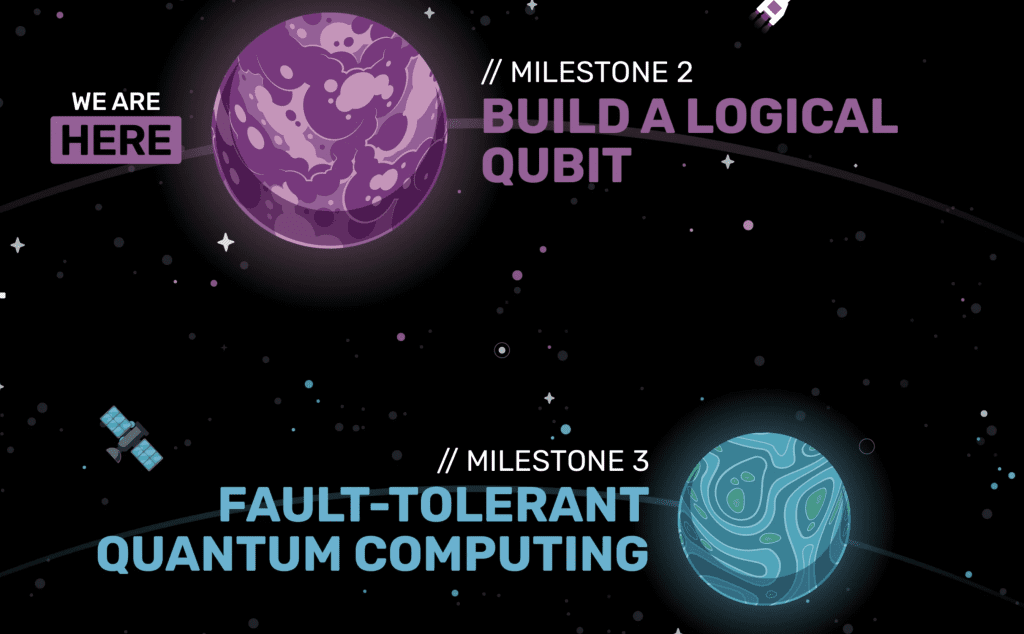
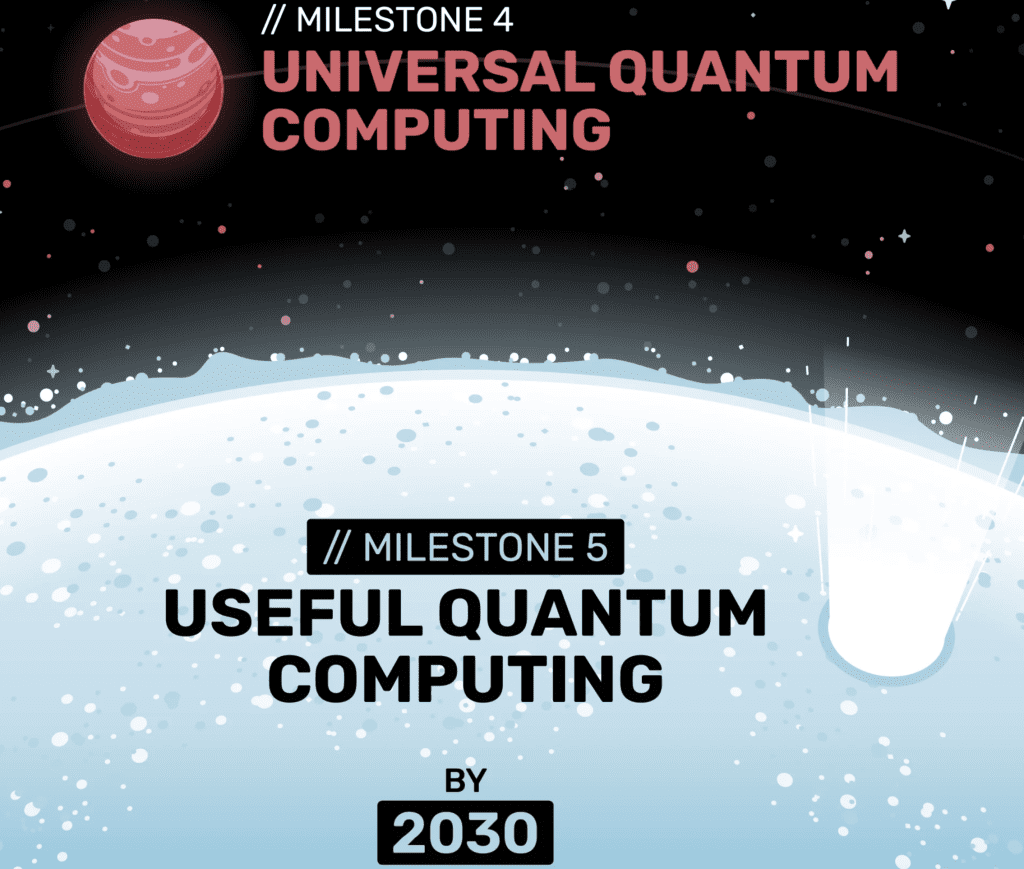
With this solid foundation, the strategy gets clearer, and researchers are able to share their roadmap to build a useful quantum computer by 2030. This roadmap outlines five key milestones that will bring us closer to achieving the first fault-tolerant quantum computer capable of solving real-world problems.
The five key milestones include:
- Mastering the cat qubit
- Building a logical qubit
- Achieving fault-tolerant quantum computing
- Universal quantum computing
- Useful quantum computing
The roadmap provides a detailed, technical overview of the cat qubit-based quantum processing units that await us along the way.
Toward Practical Quantum Computing
As researchers continue to develop a useful quantum computer, their primary focus is on practicality. While the promise of quantum computing is widely recognized, the real challenge is making it achievable in terms of cost, energy efficiency, footprint, and timelines.
To accurately understand the strategy and appreciate the real challenges facing the field, getting familiar with key concepts such as qubits, quantum error correction, and universality is essential. This is why a comprehensive whitepaper, “THINK INSIDE THE BOX: QUANTUM COMPUTING WITH CAT QUBITS,” was published to help anyone grasp the most crucial aspects of quantum computing.
The full whitepaper is available in both illustrated and audiobook formats, making it accessible to a broad audience. By focusing on hardware efficiency with cat qubits, researchers are reducing the resources needed to achieve quantum advantage and enhancing the impact of every new, scaled-up solution the superconducting qubit community delivers. These combined actions are necessary to make quantum computing viable for industries and society at large.
The current phase of this journey focuses on understanding cat qubit properties at scale and refining approaches to logical qubits and gates to achieve fault-tolerance and universality. By 2030, the goal is to deliver a quantum computer that solves real-world problems – a vision that is transforming into a practical, achievable goal, one milestone at a time.
External Link: Click Here For More