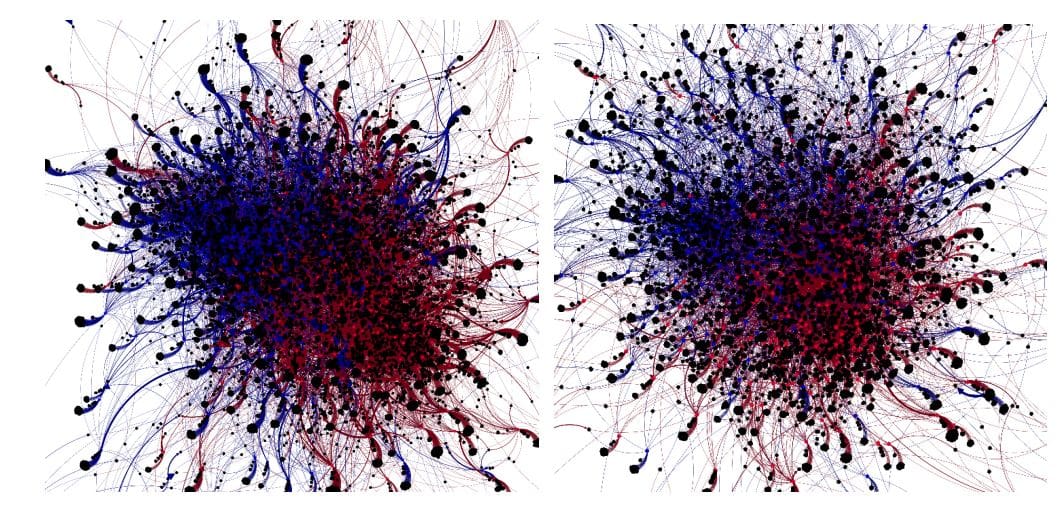
The mechanisms by which social media algorithms shape what users see are increasingly under investigation, and new research reveals how these systems influenced visibility on the platform formerly known as Twitter. Alexandros Efstratiou, Kayla Duskin, and Kate Starbird, all from the University of Washington, alongside Emma S. Spiro, investigate how algorithmic curation impacted account exposure before the platform’s rebranding. Their work replicates earlier findings showing increased visibility for right-leaning accounts, but importantly, goes further to pinpoint the factors driving this effect. The team demonstrates that increased exposure stems not simply from political leaning, but from behaviours that appear to be rewarded by the algorithm, such as posting provocative content and attracting attention from the platform’s owner, suggesting a complex interplay between content strategy and algorithmic amplification, and also reveals that established, legacy-verified accounts experienced reduced visibility compared to newer or subscription-verified accounts.
Twitter Algorithm, Political Viewpoint Exposure, Content Characteristics
This research investigates how Twitter’s (now X’s) algorithmic feed differs from the chronological feed in terms of exposure to different political viewpoints and content characteristics. Scientists aimed to understand how the algorithm shapes the information environment experienced by users. The study employed a novel approach by directly comparing algorithmic and reverse-chronological feeds from the same users, allowing for a precise assessment of algorithmic amplification effects. Researchers leveraged a dataset collected from 806 US residents between February 11th and 27th, 2023, a critical period just before the public release of Twitter’s recommendation algorithm code.
This timing ensures observations reflect the algorithm’s intended function before potential modifications. The team meticulously analyzed data from these paired feeds, examining how content visibility differed between the algorithmic “For You” feed and the chronological stream. They investigated how factors like political leaning and network proximity to central accounts correlated with exposure within the algorithmic feed. Researchers identified the platform owner as the most central network account and assessed its influence on content visibility. This approach overcomes limitations of prior work that relied on automated audits or lacked direct comparisons between feed types.
Algorithmic Versus Chronological Twitter Feed Analysis
The analysis showed a substantial centralization of influence within algorithmic feeds, largely driven by disproportionate exposure to the platform owner, Elon Musk. Accounts receiving replies or retweets from Musk enjoyed significantly higher gains in algorithmic visibility. Further investigation revealed that posting more “agitating” content correlated with increased visibility, while posting more political content, being legacy-verified, and leaning left politically correlated with decreased visibility. Legacy-verified accounts, such as those belonging to businesses and government officials, received less exposure in algorithmic feeds compared to unverified or Twitter Blue-verified accounts. Importantly, when controlling for attention from Elon Musk, verification status, and posting styles, the initial gains in visibility observed for right-leaning accounts disappeared. These findings challenge the notion that the algorithm inherently amplifies right-leaning content due to political stance, suggesting that behavioural factors and network interactions play a more significant role in determining visibility.
Algorithm Boosted Right-Leaning Political Accounts Visibility
This research investigated how Twitter’s algorithm impacted the visibility of political content prior to the platform’s rebranding to X. The results indicate that increased exposure correlated with posting more agitating content and receiving direct attention from the platform’s owner, Elon Musk. Conversely, accounts posting more political content, those with legacy verification, and left-leaning accounts experienced reduced visibility. The study demonstrated that when controlling for attention from Elon Musk, verification status, and posting styles, the initial gains in visibility observed for right-leaning accounts disappeared.
These findings suggest that algorithmic amplification may be driven by behavioural incentives rather than inherent political bias. The authors acknowledge that this research describes user experience under algorithmic conditions and does not establish strict causal relationships. They highlight the need for continued scrutiny of exposure mechanisms, particularly given subsequent changes to the platform that introduced monetization. The increased prominence of potentially problematic content and the concentration of algorithmic influence raise questions about the platform’s stated goal of serving as a neutral public forum.
👉 More information
🗞 Rabble-Rousers in the New King’s Court: Algorithmic Effects on Account Visibility in Pre-X Twitter
🧠 ArXiv: https://arxiv.org/abs/2512.06129