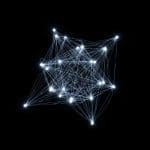
The challenge of determining whether two complex networks, or graphs, are structurally identical, a problem known as graph isomorphism, has long occupied mathematicians and computer scientists, and now attracts attention from the emerging field of quantum computing. Innes L. Maxwell, Stefan N. van den Hoven, and Jelmer J. Renema, all from the MESA+ Institute for Nanotechnology at the University of Twente, investigate a quantum-inspired approach to this problem, developing a new method that leverages the principles of quantum sampling. Their work addresses the limitations of current quantum technology by focusing on algorithms suitable for today’s noisy quantum devices, and importantly, establishes a verifiable condition for determining if graphs cannot be isomorphic, offering a significant step towards practical applications of quantum-inspired techniques in network analysis and computational problem-solving. This research demonstrates a pathway to harness the power of quantum concepts even before fully-fledged quantum computers become a reality, potentially accelerating progress in fields reliant on complex network comparisons.
Researchers have critically assessed a quantum algorithm designed to address this problem, implementing it on a photonic quantum device. Inspired by the algorithm’s structure, they formulated a necessary condition for determining if two graphs are isomorphic, and created a classical algorithm to test this condition.
Graph Isomorphism via Gaussian Boson Sampling
This work explores a method for potentially achieving quantum computational advantage using Gaussian Boson Sampling (GBS) to solve the graph isomorphism problem. Graph isomorphism involves determining if two graphs have the same structure, regardless of how their nodes are labeled, a problem long considered difficult to solve efficiently with classical computers. The authors propose using GBS, a photonic quantum computation technique, as a potential solution due to its scalability. The method involves encoding the graph’s structure into the GBS setup, influencing the parameters of a network of beam splitters.
The GBS output then relates to properties of the graph, specifically the number of perfect matchings, which are sets of edges connecting every node in the graph. Calculating the number of perfect matchings is linked to the Hafnian of a matrix derived from the graph, a computationally manageable generalization of the determinant. Scientists calculate correlation functions from the GBS output, directly relating them to the Hafnian and the number of perfect matchings. A classical verification process is then used to confirm the reliability of the GBS result, essential for demonstrating a true quantum advantage.
Successful implementation could demonstrate a practical quantum advantage, with applications in chemistry, computer vision, social network analysis, and cryptography. The paper provides a detailed technical explanation of the GBS setup, graph encoding, and mathematical connections, emphasizing the importance of verification. While building and controlling large-scale GBS machines and mitigating errors present significant challenges, this approach offers a valuable contribution to the field of quantum computation.
Quantum Algorithm Distinguishes Graph Structures Efficiently
Scientists have developed a new method to assess graph isomorphism by implementing a quantum algorithm on a photonic quantum device. The research focuses on determining a necessary condition for graph isomorphism for graphs encoded within Gaussian boson samplers, and a classical algorithm to test this condition. This classical algorithm utilizes efficiently computable statistical properties of the quantum sampling system to analyze pairs of graphs and determine if they meet the criteria for potential equivalence. Experiments demonstrated the algorithm’s ability to identify instances where graphs failed to satisfy the necessary condition for isomorphism, definitively proving they were not structurally identical.
The team calculated first-order correlations, comparing sorted lists of values to immediately identify non-isomorphic graphs. When initial correlations matched, the algorithm used a permutation matrix to logically eliminate potential vertex mappings, reducing the number of possibilities to consider. Analysis of the permutation matrix categorized it as invalid, valid, or indeterminate, based on its structure. An invalid matrix immediately confirmed non-isomorphism, while a unique matrix signified a definitive mapping between the graphs. Approximating the number of valid permutations within the matrix, using methods like Glynn’s method, allowed scientists to determine if it fell below a defined threshold, enabling a more efficient evaluation.
Classical Algorithm Mimics Quantum Graph Isomorphism
This research presents a new classical algorithm for the graph isomorphism problem, inspired by principles used in quantum computation with Gaussian boson samplers. The team formulated a necessary condition for determining if two graphs, encoded for use with a quantum sampler, could be identical, and developed a method to test this condition using readily calculable statistical properties. This classical algorithm operates entirely within the classical realm, translating a quantum-inspired approach into a conventional computational process. The significance of this work lies in its contribution to the search for quantum advantage, a demonstration of quantum computers solving problems intractable for classical machines. By developing a classical analogue to a quantum algorithm, the researchers provide a benchmark against which future quantum approaches to graph isomorphism can be measured. While determining a sufficient condition for graph isomorphism remains a challenge, this new method offers a distinct approach, differing from existing techniques like the Weisfeiler-Leman test, and may prove superior for specific graph types.
👉 More information
🗞 A Quantum-Inspired Algorithm for Graph Isomorphism
🧠 ArXiv: https://arxiv.org/abs/2512.24423