

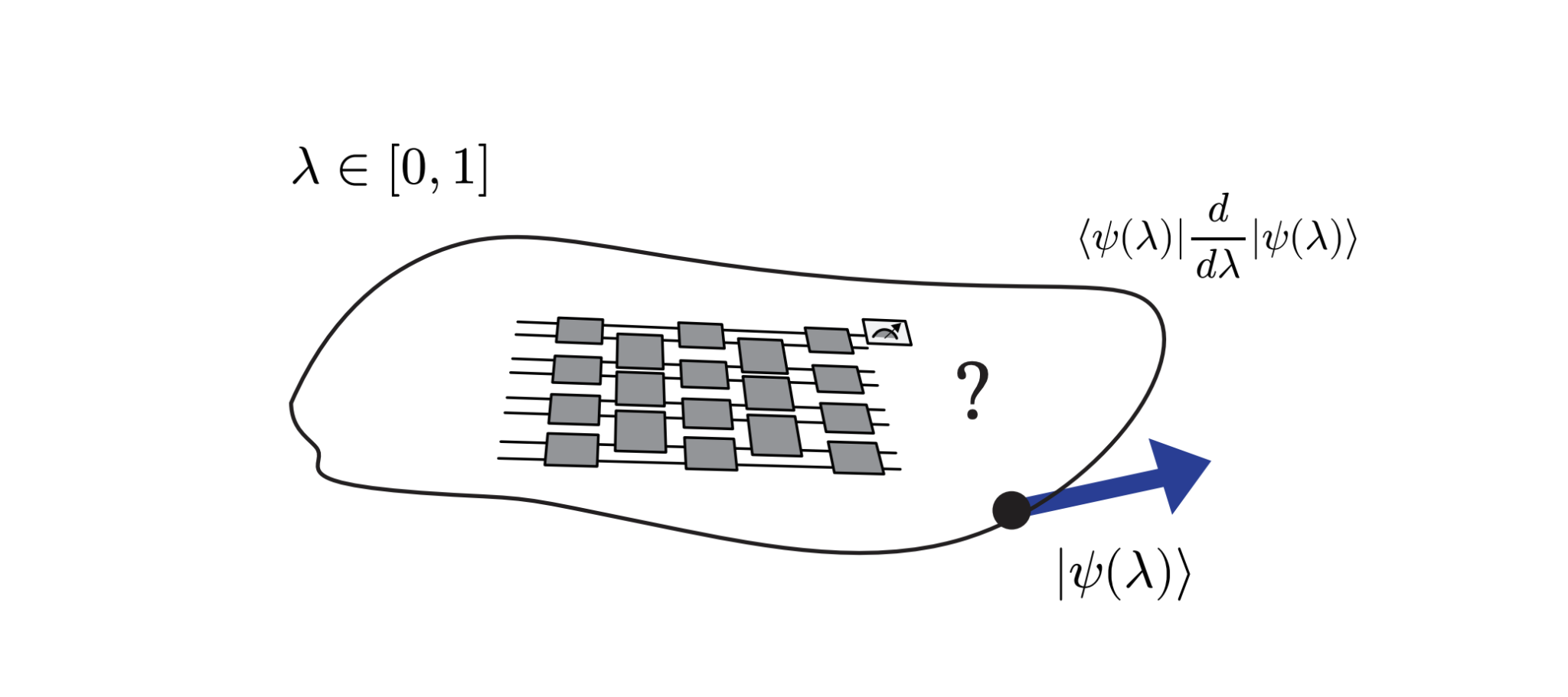
The accurate determination of Berry phase, a crucial property for classifying different states of matter, presents a significant computational challenge, and researchers are continually seeking more efficient methods for its estimation. Ryu Hayakawa, Kazuki Sakamoto, and Chusei Kiumi, from institutions including Kyoto University and The University of Osaka, now demonstrate substantial progress in this field by developing a novel algorithm and rigorously analysing its computational complexity. Their work establishes an exponential speedup for Berry phase estimation when a suitable starting point is known, and importantly, identifies a new problem that bridges two important complexity classes, offering insights into the fundamental link between the complexity of calculations and the properties of materials. These results not only advance our understanding of topological phases of matter, but also pave the way for exploring the broader relationship between physics and computational complexity.
Quantum Algorithm for Berry Phase Estimation
Scientists have developed a novel quantum algorithm for estimating the Berry phase, a fundamental quantity in quantum mechanics with applications in materials science and quantum computing. This work overcomes limitations present in previous methods, enabling more accurate and versatile characterization of quantum systems. The algorithm leverages the principles of adiabatic evolution and quantum phase estimation to isolate and measure the Berry phase, a geometric property acquired by a quantum system as its parameters change slowly. This advancement is crucial for understanding topological materials and designing robust quantum technologies.
Previous approaches relied on specific symmetries and limited the range of measurable Berry phases. This new algorithm removes these restrictions, allowing for full-range estimation without requiring time-reversal symmetry. The team achieves this by comparing two adiabatic evolutions, carefully rescaling the dynamical phase to isolate the Berry phase contribution. This allows for precise determination of the Berry phase using quantum phase estimation, a powerful technique for extracting eigenvalues from quantum operators. The algorithm efficiently prepares the initial quantum state, paving the way for polynomial-depth computation of the Berry phase.
The team rigorously investigated the computational complexity of this problem, demonstrating its containment within several important complexity classes, including BQP, dUQMA, and PPGQMA[log]. This establishes a theoretical foundation for understanding the potential and limitations of quantum computers in solving this problem. Furthermore, they constructed a novel Hamiltonian to demonstrate the inherent difficulty of Berry phase estimation, proving its BQP-hardness and dUQMA-hardness. This analysis confirms that accurately estimating the Berry phase is a computationally challenging task, even for quantum computers.
The potential applications of this research are broad and impactful. Accurate Berry phase estimation is crucial for characterizing topological materials, such as topological insulators and superconductors, which exhibit unique electronic properties. It also plays a vital role in developing robust quantum gates and protecting quantum information from errors. In quantum chemistry, calculating Berry phases is essential for understanding the electronic structure of molecules and predicting their properties. This work establishes a theoretical foundation for exploring quantum advantages in classifying topological phases of matter and clarifies the connection between topological phases and computational complexity.
Berry Phase Estimation Achieves Quantum Speedup
Scientists have achieved a breakthrough in understanding the computational complexity of estimating the Berry phase, a fundamental quantity in classifying topological phases of matter. This work introduces a new quantum algorithm and establishes several complexity-theoretic results for Berry phase estimation problems, advancing the role of quantum computing in condensed matter physics. Experiments demonstrate BQP-completeness for Berry phase estimation when a guiding state with large overlap with the ground state is provided, establishing an exponential quantum speedup for estimating the Berry phase. Furthermore, the research proves dUQMA-completeness when an a priori bound for ground state energy is known, introducing a new complexity class, dUQMA, which precisely captures the complexity of Berry phase estimation without a known guiding state.
This problem is the first natural problem contained in both UQMA and co-UQMA, signifying a significant theoretical advancement. Measurements confirm that in the absence of additional assumptions, the Berry phase estimation problem is PdUQMA[log]-hard and resides within the PPGQMA[log] complexity class. These results demonstrate that estimating the Berry phase is fundamentally different from estimating ground state energy, as it is independent of the energy properties of the eigenstates. The team’s work establishes a theoretical foundation for exploring quantum advantages in classifying topological phases of matter and clarifies the connection between topological phases and computational complexity.
Berry Phase Estimation Achieves Quantum Completeness
This research presents significant advances in understanding the computational complexity of estimating the Berry phase, a fundamental quantity in classifying phases of matter. Scientists developed a new algorithm for Berry phase estimation that functions in a broader range of scenarios than previously established methods, accompanied by rigorous theoretical guarantees. Through detailed complexity analysis, the team demonstrated that estimating the Berry phase achieves completeness in a quantum computational framework, highlighting a potential quantum advantage for this task. Further investigation revealed nuanced complexity results depending on available information.
When provided with a guiding state closely aligned with the ground state, or an a priori bound on ground state energy, the problem exhibits completeness within specific complexity classes. Even without these assumptions, the problem remains computationally challenging, demonstrating PdUQMA[log]-hardness. The authors acknowledge limitations in the current work, noting that the computational complexity of other topological invariants remains an open question. These findings not only refine the theoretical understanding of Berry phase estimation but also establish a clearer link between phases of matter and computational complexity. Future research directions include exploring the potential for improving hardness results and investigating connections to other complexity classes, potentially leading to a deeper understanding of the fundamental limits of quantum computation in the context of condensed matter physics.
🗞 Computational complexity of Berry phase estimation in topological phases of matter
🧠 ArXiv: https://arxiv.org/abs/2509.13423


