

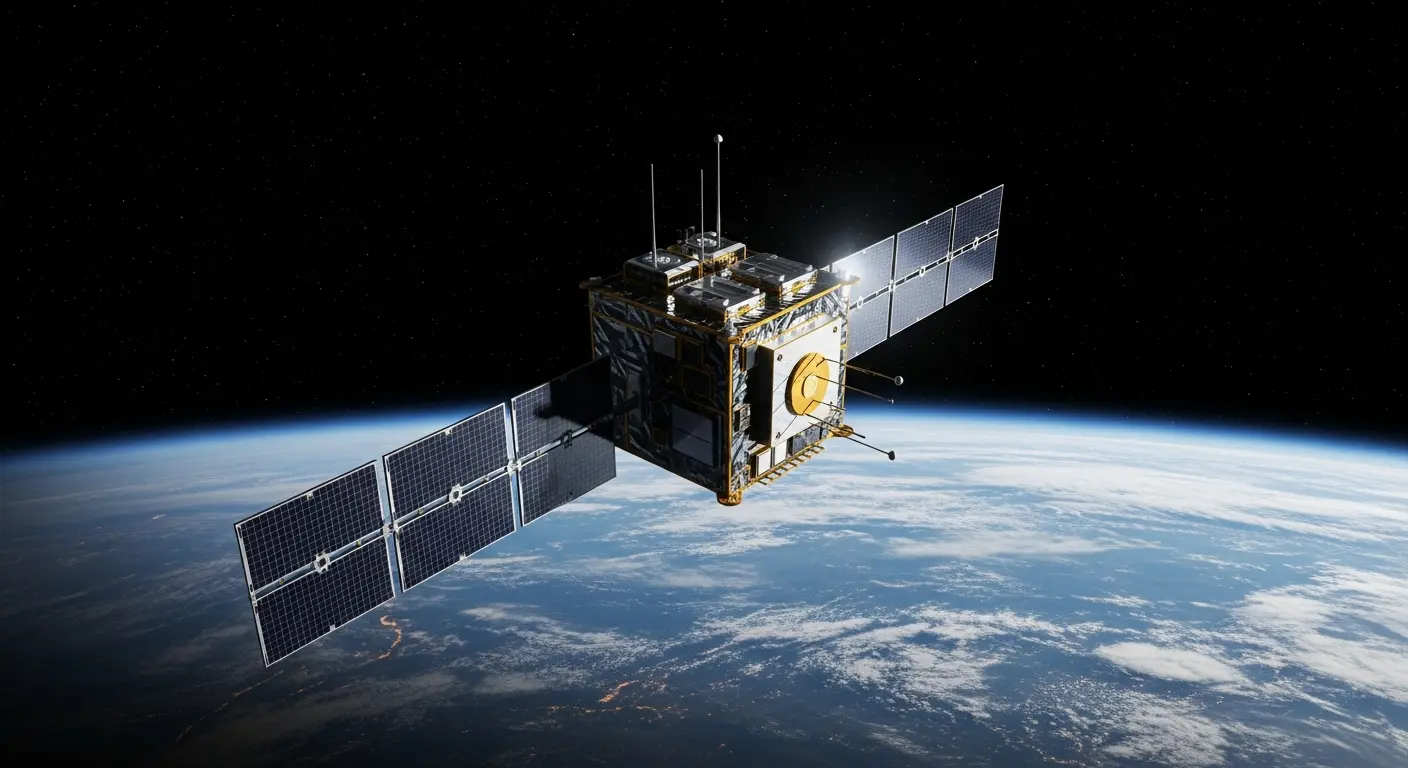
Airbus is set to dramatically enhance Earth observation capabilities with the launch of its first Pléiades Neo Next satellite in early 2028. Departing from the European Spaceport in Kourou, French Guiana, aboard an Avio’s Vega C rocket, this new satellite will boast an impressive 20-cm-class native resolution – a significant leap in geospatial technology. Airbus aims to reinforce its position at the forefront of the field with this programme, offering enhanced services to sectors ranging from defence and intelligence to disaster response and urban planning. “The Pléiades Neo Next programme builds on the success of our existing Pléiades Neo constellation which serves government and commercial customers around the world,” said Eric Even, Head of Space Digital at Airbus Defence and Space. This advancement promises higher revisit rates and improved image delivery for mission-critical applications globally.
Pléiades Neo Next Launch: Early 2028 from Kourou
This programme will introduce new satellite assets capable of delivering 20-cm-class native resolution imagery, significantly enhancing Earth observation capabilities. Airbus is funding, manufacturing, and operating the entire system, ensuring full image capacity for diverse sectors including defence, agriculture, and disaster response. Users will maintain the ability to directly task satellites with image requests just minutes before overpass, receiving data via Direct Receiving Stations or the OneAtlas platform. Combining the Pléiades Neo and Neo Next constellations will enable revisit rates of several times per day, alongside market-leading spatial resolution and geolocation accuracy. The development will also optimise image request processing and delivery times.
20cm Resolution & Enhanced OneAtlas Platform Capabilities
The forthcoming Pléiades Neo Next programme is poised to deliver imagery with 20-cm-class native resolution, a significant leap in detail for Earth observation. This advancement extends beyond simply sharper pictures; Airbus is simultaneously upgrading ground infrastructure and the OneAtlas platform to handle the increased data flow. Development will “further improve the ground segment, the DRS and the OneAtlas platform,” resulting in a higher capacity for imagery requests and faster turnaround times between request, capture, and reception.
The Pléiades Neo Next programme builds on the success of our existing Pléiades Neo constellation which serves government and commercial customers around the world.
Eric Even, Head of Space Digital at Airbus Defence and Space


