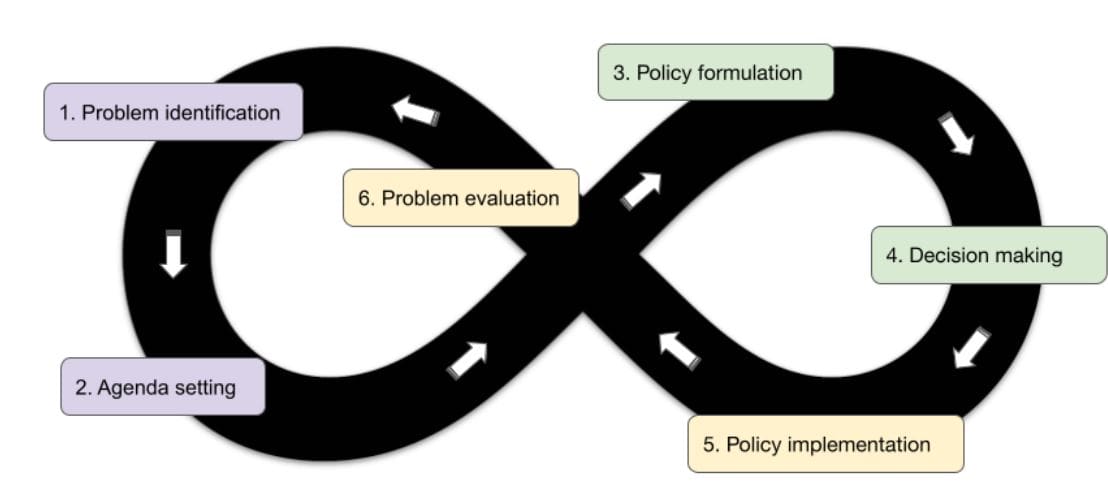
The increasing complexity of global challenges demands proactive strategies for shaping a sustainable future, and responsible foresight offers a crucial framework for policymakers navigating uncertainty. Maria Perez-Ortiz from University College London, along with co-authors, investigates how artificial intelligence can enhance this process, coining the term “responsible computational foresight” to describe the ethical application of AI to future design. This research establishes foundational principles for the field and presents AI-driven tools that empower policymakers to anticipate risks, evaluate opportunities, and develop resilient strategies. Importantly, the team argues that AI should complement, not replace, human judgment, fostering a collaborative approach to long-term decision-making and enabling the proactive creation of ethically sound futures for the 21st century.
The research demonstrates that AI offers powerful tools for foresight, enhancing activities by processing vast datasets to identify trends, generating and evaluating multiple future scenarios, improving prediction accuracy, creating complex simulations of socio-environmental systems, and facilitating citizen engagement. Specific techniques, such as Large Language Models for scenario generation and simulation intelligence combining physics-based modeling with machine learning, are highlighted. However, the research also acknowledges challenges, including potential bias in AI models, data quality dependence, and the need for explainability and transparency.
The document establishes responsible AI principles for foresight, emphasizing human oversight, participatory design. Ultimately, the research argues that AI is a powerful tool, but must be used responsibly and ethically to create desirable futures, emphasizing human-AI collaboration, transparency, fairness, and participatory design. It’s a call for a proactive and thoughtful approach to leveraging AI for shaping the future, rather than simply predicting it.
Shaping Sustainable Futures with Responsible Foresight
This study pioneers a methodology for responsible computational foresight, establishing principles and tools to proactively shape sustainable and ethically sound futures. Researchers focused on integrating human values with artificial intelligence to enhance policymaking, moving beyond simple prediction towards informed, adaptable governance. The work emphasizes a structured approach grounded in methodological rigor, high-quality data, and scientifically sound analyses, while prioritizing inclusivity and transparency. Researchers advocate for the precautionary principle, minimizing risks and preventing harm through careful evaluation of potential dangers, particularly with emerging technologies.
The study champions ethical considerations, assessing future scenarios for moral implications to avoid harming vulnerable populations. Scientists stress the importance of inclusivity, actively involving diverse stakeholders in shaping visions of the future to mitigate bias. This participatory approach extends to empowerment and capacity-building, enabling citizens and organizations to proactively engage with foresight processes. Accountability and transparency are central, requiring governments to remain answerable for the futures they help create. Researchers also emphasize systems thinking, urging consideration of the interdependence between economic, environmental, technological, and social systems. Policies are designed for adaptability and responsiveness, acknowledging the dynamic nature of global challenges. This integrated approach provides a roadmap for navigating complexities and building more inclusive, sustainable, and resilient futures.
AI Foresight Improves Policy Decision Making
This work details a new field, responsible computational foresight, and demonstrates how artificial intelligence enhances policymakers’ ability to navigate uncertainty and shape sustainable futures. Researchers established foundational principles and developed AI-driven tools currently impacting foresight practices. The study highlights that algorithms, when carefully designed, can significantly improve decision-making throughout the policymaking cycle, from identifying societal needs to evaluating outcomes. Experiments reveal that AI applications can rapidly synthesize large datasets and detect emerging patterns, enabling more agile responses to complex challenges.
For example, a “syndromic surveillance” program implemented by the Victoria State Government in Australia identified and addressed six distinct public health issues within four months. Similarly, the United Nations Global Pulse initiative in Uganda utilized a radio content analysis tool to capture public concerns, directly informing the planning and prioritization of development projects. The research distinguishes between prediction and foresight, noting that while prediction focuses on estimating a single likely outcome, foresight explores a range of potential futures, crucial for issues like climate change and geopolitical shifts. This work reviews a series of tools demonstrating how computational modeling plays a vital role in responsible foresight, showcasing how AI applications can synthesize over 90% of online data, including the challenging task of processing approximately 80% of unstructured data.
AI Empowers Ethical Foresight and Planning
This work establishes the concept of responsible computational foresight, exploring how artificial intelligence and computational modelling can support proactive and ethically grounded future planning. Researchers demonstrate that AI tools, particularly those employing simulations and scenario analysis, enhance policymakers’ capacity to address uncertainty and develop strategies for sustainable futures. The core argument presented is that AI should serve as a supportive instrument, complementing rather than replacing human judgement in the foresight process, thereby empowering informed decision-making. The study further highlights the importance of integrating participatory approaches, such as participatory futures and futures literacy, with AI-driven tools.
These methods actively involve communities and diverse stakeholders in shaping future visions, mitigating bias and promoting inclusive strategies. Researchers also demonstrate the potential of AI co-writing tools and large language models to lower barriers to participation in scenario planning, enabling broader engagement in envisioning potential futures and generating valuable scenarios for critical thinking. While acknowledging the nascent stage of research at the intersection of futures literacy and AI, the work suggests that futures literacy can help to understand the implications of AI and its broader impacts on society. Future work should focus on further exploring this intersection and developing more robust frameworks for integrating human and artificial intelligence in foresight practices. This research provides a foundation for responsible innovation in AI-driven foresight, advocating for thoughtful integration to empower policymakers and communities as they navigate the challenges of the 21st century.
👉 More information
🗞 From Prediction to Foresight: The Role of AI in Designing Responsible Futures
🧠 ArXiv: https://arxiv.org/abs/2511.21570