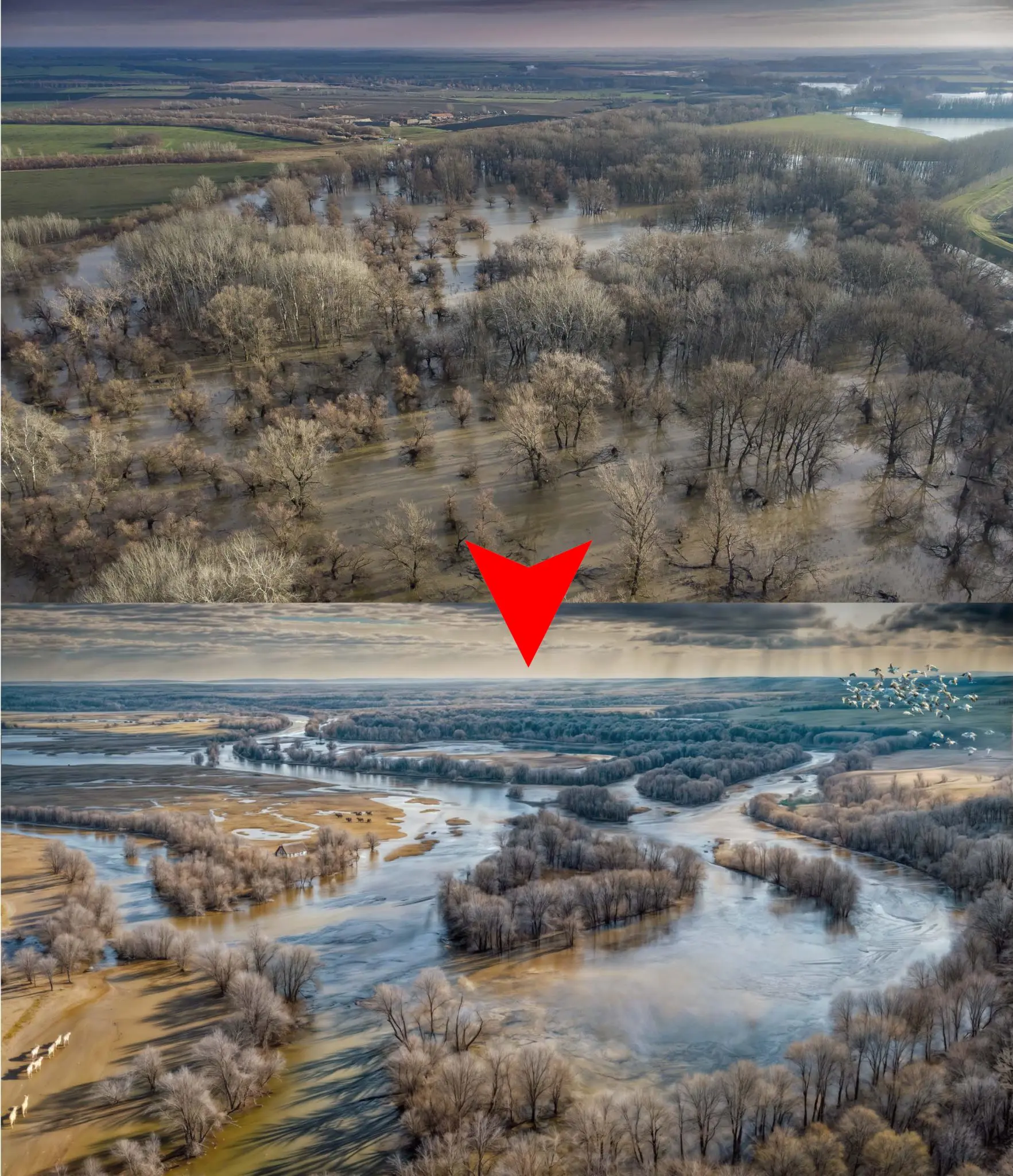
Researchers at Eötvös Loránd University are deploying artificial intelligence to reconstruct historical landscapes, offering a novel tool for land-use planning. Led by Gusztv Jakab, the team generated photorealistic drone footage depicting the Hungarian Great Plain as it existed 200-250 years ago, utilising publicly available AI applications. The project, detailed in Land, aims to inform water retention strategies in the drought-prone region and could ultimately support investment decisions related to landscape restoration, with preliminary results demonstrating verifiable accuracy when compared against historical maps and contemporary satellite imagery.
Historical Landscape Reconstruction
The reconstruction of past landscapes increasingly relies on computational methods, with recent work at Eötvös Loránd University demonstrating a novel application of artificial intelligence to generate realistic visualisations. This approach moves beyond traditional cartographic representation by producing simulated drone footage depicting historical conditions, offering a compelling means of understanding pre-existing environmental characteristics. The methodology centres on the creation of prompts for publicly available AI applications – including ChatGPT, Krea AI, Adobe Firefly, and Lightroom CC – directing the software to generate landscapes consistent with historical records.
A crucial element of this process is the rigorous exclusion of anachronistic features present in contemporary aerial imagery. Elements such as roads, power lines, and modern agricultural patterns are systematically removed from the generated visuals, ensuring the reconstruction accurately reflects the past environment. Conversely, the algorithm incorporates landscape features known to have existed historically, including specific flora and fauna, based on archival data and ecological records. This careful balancing act requires substantial expert knowledge to maintain the authenticity of the final visualisation.
Furthermore, the research explores the potential of historical maps – including those commissioned during the reign of Joseph II and earlier local engineering surveys – as source material for landscape reconstruction. By applying the AI-driven algorithm to these historical cartographic documents, researchers can generate visualisations of past landscapes and subsequently verify their accuracy through comparison with contemporary drone imagery or satellite data. This iterative process of generation and verification provides a robust methodology for ensuring the reliability of the reconstructed landscapes.
The resultant historical landscape visualisation is not merely an aesthetic exercise; it serves a practical purpose in supporting contemporary land management decisions. Specifically, the ability to realistically depict the pre-regulation landscape of the Great Hungarian Plain facilitates a broader understanding of its original hydrological functioning and informs strategies focused on enhancing water retention in this drought-prone region.
AI-Driven Visualisation Methodology
The methodology extends beyond simply recreating visual aesthetics; it offers a quantifiable means of assessing landscape change. By generating visuals from both modern and historical maps and subsequently comparing the resulting datasets, researchers can identify specific areas where significant alterations have occurred, quantifying the extent of landscape transformation over time. This analytical capability provides valuable insights for ecological assessments and environmental impact studies.
Crucially, the verification process is not limited to visual comparison. The research team is developing metrics to assess the accuracy of the generated landscapes based on quantifiable environmental factors. These include estimations of vegetation cover, water body extent, and topographical features, all derived from both the reconstructed visuals and contemporary data sources. This allows for a more objective evaluation of the algorithm’s performance and enhances the reliability of the historical landscape visualisation.
The potential applications of this technology extend beyond the Great Hungarian Plain. The adaptable nature of the workflow, utilising readily available AI tools and data sources, allows for its deployment in a variety of geographical contexts and historical periods. This scalability makes it a valuable tool for reconstructing landscapes globally, supporting research in fields such as archaeology, paleoecology, and environmental history.
Practical Applications and Verification
Beyond the quantifiable assessment of landscape change, the methodology offers a means of testing hypotheses regarding past environmental conditions. By generating multiple visualisations based on varying interpretations of historical data, researchers can explore different scenarios and assess their plausibility based on contemporary environmental evidence. This iterative process of visualisation and validation allows for a more nuanced understanding of past landscapes and the factors that shaped them.
The research team acknowledges the inherent limitations of relying solely on visual data for historical reconstruction. The generated landscapes, while realistic, represent interpretations based on available information and are subject to uncertainties regarding the accuracy of historical records and the performance of the AI algorithms. To address these limitations, the team is exploring the integration of additional data sources, such as pollen records and soil analyses, to further refine the accuracy and reliability of the reconstructions.
The adaptability of the workflow extends to its capacity for incorporating diverse historical cartographic materials. Beyond large-scale surveys, the algorithm can accommodate local engineering maps and estate plans, providing a higher resolution reconstruction of specific areas. This capability is particularly valuable for investigating localised environmental changes and understanding the impact of past land management practices.
Importantly, the generated historical landscape visualisation is not limited to static imagery. The research team is developing techniques to create animated visualisations, simulating landscape changes over time and providing a dynamic representation of past environmental conditions. This capability enhances the communicative power of the reconstructions and facilitates a more immersive understanding of historical landscapes.
More information
External Link: Click Here For More