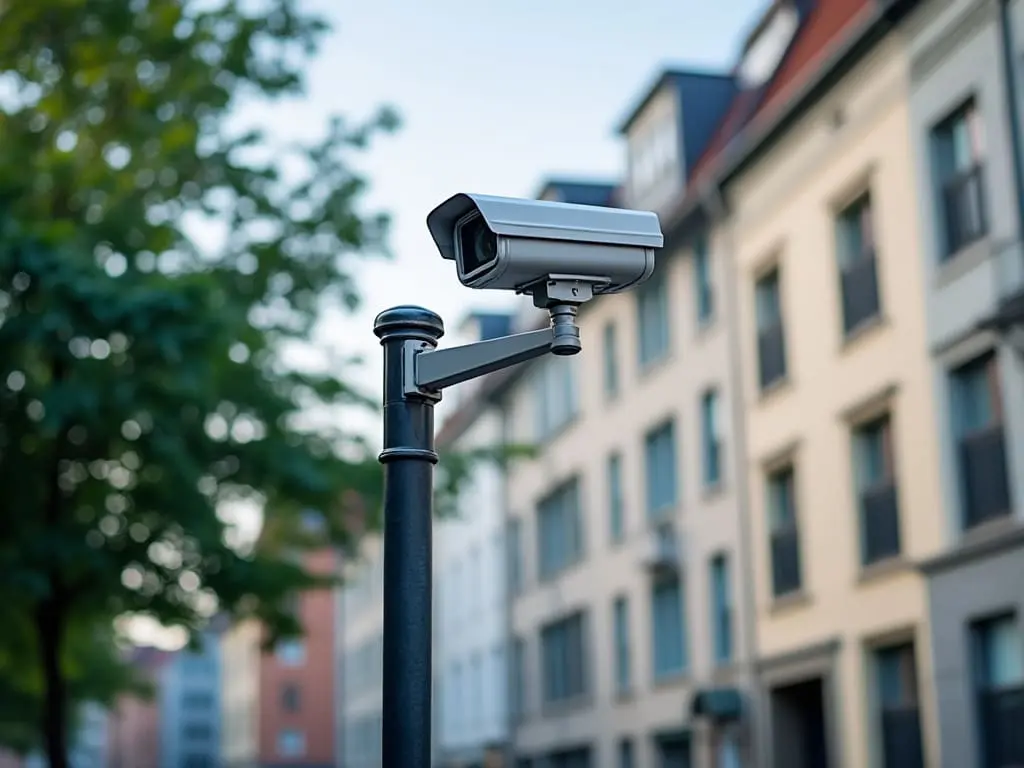
As crime rates continue to rise globally, maintaining safety and security in public and private spaces has become a pressing concern. Traditional surveillance systems have limitations, failing to identify threats in real-time. Researchers are now exploring the potential of artificial intelligence (AI) and machine learning algorithms to create more effective and intelligent surveillance systems.
One promising approach is the use of multimodal large language models (LLMs), which can process images in real-time, similar to human analytical abilities. These LLMs have been trained on vast amounts of data, enabling them to recognize patterns and make predictions based on input. In the context of security systems, multimodal LLMs can detect potential threats by analyzing visual data from cameras.
The use of multimodal LLMs in security systems offers several advantages over traditional methods, including real-time threat detection, improved accuracy, customizable training, and cost-effectiveness. A system called AutoWatcher has been proposed to monitor a place using a camera in real-time and detect humans, with an accuracy rate of up to 90%. The system’s design ensures alertness of people who can proactively protect their lives and valuable assets on time before a security breach occurs.
The future of multimodal LLMs in security systems is exciting, with many potential applications and integrations with other AI technologies. As these models continue to improve, we can expect to see more effective and intelligent surveillance systems that detect threats in real-time.
Can Artificial Intelligence Enhance Public Safety?
Maintaining safety and security in public and private places is a paramount concern, especially with growing burglary and crime rates in residential and commercial spaces across the world. The increasing use of technology has led to the development of various surveillance systems that can record multiple locations at once. However, these traditional systems lack the ability to identify potential threats in real-time, leaving victims unaware until it’s too late.
The need for a more proactive approach to security has given rise to innovative solutions that leverage artificial intelligence (AI) and machine learning algorithms. One such solution is the use of multimodal large language models (LLMs), which can process images similar to humans and detect potential threats in real-time. These models have been shown to be smaller, faster, more accurate, and cost-effective, making them suitable for use in security systems.
The AutoWatcher system, proposed by researchers at the University of Arizona, is a prime example of how AI can enhance public safety. This system uses a camera to monitor a place in real-time, detect humans, and assess potential threats using LLMs. The system has two levels of alerts: one when a person is detected, and another when the LLM declares them as suspicious. This enables residents to proactively protect their lives and valuable assets before a security breach occurs.
The AutoWatcher system has been successfully tested with
The AutoWatcher system has been successfully tested with an accuracy rate of up to 90%, and in some cases, it achieved 100% accuracy. The code for this system is available on GitHub, making it accessible to researchers and developers who can further improve and refine the technology.
What are Large Language Models (LLMs) and How Do They Work?
Large language models (LLMs) are a type of artificial intelligence that can process and analyze vast amounts of data, including images. These models have been trained on large datasets to learn patterns and relationships between different pieces of information. In the context of security systems, LLMs can be used to detect potential threats by analyzing images from cameras.
The AutoWatcher system uses multimodal LLMs that can process both text and image data simultaneously. This allows the system to analyze images from cameras and identify potential threats in real-time. The LLMs used in this system have been shown to be highly accurate, with an accuracy rate of up to 90%.
LLMs work by using a complex algorithm that analyzes patterns in the data it is trained on. In the case of image analysis, the model looks for specific features such as shapes, colors, and textures. When these features are detected, the LLM can identify potential threats and alert the relevant authorities.
The use of LLMs in security systems has several advantages over traditional surveillance systems. Firstly, LLMs can analyze images in real-time, allowing for prompt action to be taken when a threat is identified. Secondly, LLMs can learn from experience and improve their accuracy over time, making them more effective at detecting potential threats.
How Does the AutoWatcher System Work?
The AutoWatcher system is designed to monitor a place using a camera in real-time. The system uses multimodal LLMs to analyze images from the camera and detect potential threats. When a person is detected, the system alerts the relevant authorities, enabling residents to proactively protect their lives and valuable assets.
The system has two levels of alerts: one when a person is detected, and another when the LLM declares them as suspicious. This ensures that residents are alerted in time before a security breach occurs at their home or workspace.
The AutoWatcher system has been successfully tested with an accuracy rate of up to 90%, and in some cases, it achieved 100% accuracy. The code for this system is available on GitHub, making it accessible to researchers and developers who can further improve and refine the technology.
What are the Advantages of Using AI in Security Systems?
The use of artificial intelligence (AI) in security systems has several advantages over traditional surveillance systems. Firstly, AI can analyze images in real-time, allowing for prompt action to be taken when a threat is identified. Secondly, AI can learn from experience and improve its accuracy over time, making it more effective at detecting potential threats.
The AutoWatcher system uses multimodal LLMs that can
The AutoWatcher system uses multimodal LLMs that can process both text and image data simultaneously. This allows the system to analyze images from cameras and identify potential threats in real-time. The use of LLMs in security systems has several advantages over traditional surveillance systems, including:
- Real-time analysis: AI can analyze images in real-time, allowing for prompt action to be taken when a threat is identified.
- Improved accuracy: AI can learn from experience and improve its accuracy over time, making it more effective at detecting potential threats.
- Cost-effectiveness: AI-powered security systems are often more cost-effective than traditional surveillance systems.
What are the Limitations of Using AI in Security Systems?
While AI has several advantages over traditional surveillance systems, there are also some limitations to consider. Firstly, AI is only as good as the data it is trained on. If the training data is biased or incomplete, the AI system may not be effective at detecting potential threats.
Secondly, AI can be vulnerable to cyber attacks and hacking. If an attacker gains access to the AI system’s code or data, they may be able to manipulate the system and evade detection.
Finally, AI-powered security systems require significant computational resources and infrastructure to operate effectively. This can be a challenge for organizations with limited resources or infrastructure.
What are the Future Directions for AI-Powered Security Systems?
The use of AI in security systems is an exciting area of research that has several future directions. Firstly, researchers are working on improving the accuracy and effectiveness of AI-powered security systems by developing more advanced algorithms and models.
Secondly, there is a growing interest in using AI to detect potential threats in real-time, enabling prompt action to be taken when a threat is identified. This includes the use of multimodal LLMs that can process both text and image data simultaneously.
Finally, researchers are exploring ways to make AI-powered security systems more cost-effective and accessible to organizations with limited resources or infrastructure. This includes the development of cloud-based AI platforms and edge AI solutions that can operate on low-power devices.
Overall, the use of AI in security systems has several advantages over traditional surveillance systems, including real-time analysis, improved accuracy, and cost-effectiveness. However, there are also some limitations to consider, such as bias in training data, vulnerability to cyber attacks, and significant computational resources required to operate effectively.
Publication Date: 2024-11-23
Authors: Praneeth Vadlapati
Source: INTERANTIONAL JOURNAL OF SCIENTIFIC RESEARCH IN ENGINEERING AND MANAGEMENT
DOI: https://doi.org/10.55041/ijsrem33034