
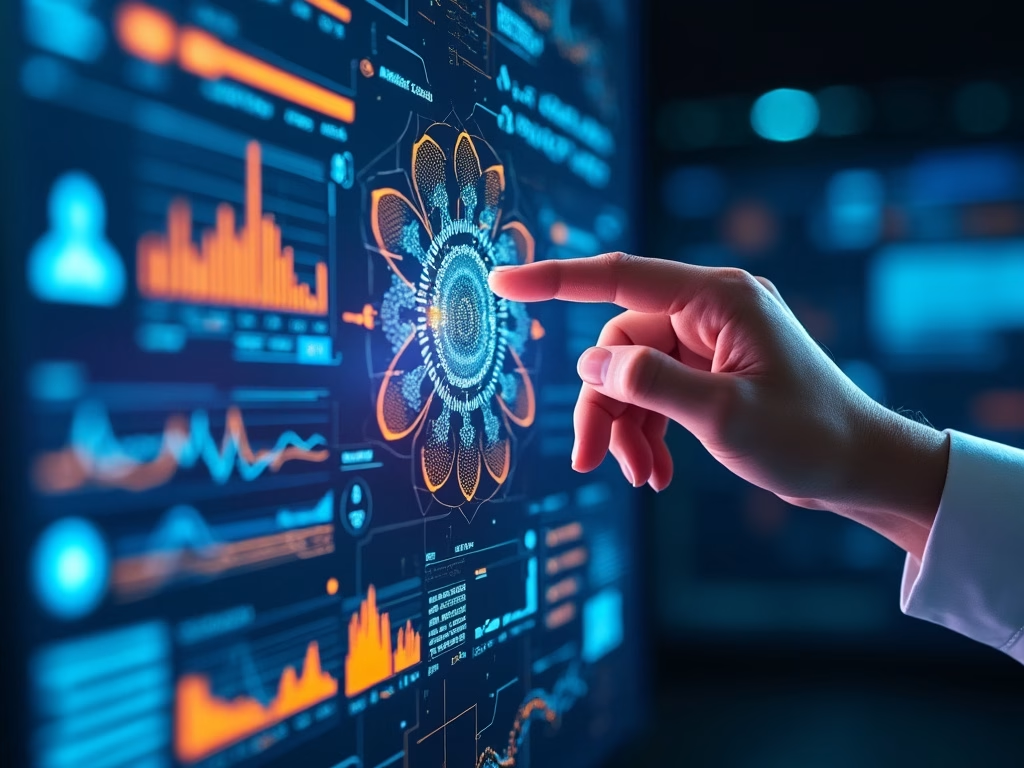
The integration of Large Language Model (LLM)-based chatbots within clinical research platforms has the potential to revolutionize medical research analysis and visualization. The Data Hotel platform, introduced by University Medical Center Hamburg-Eppendorf, enables researchers to generate hypotheses from patient data sources, streamline the process, and enhance reproducibility. The LLM-based chatbot uses machine learning algorithms to analyze secondary use patient data sources, providing enhanced data visualization, a streamlined research process, and improved reproducibility. This innovative approach has significant potential to transform clinical research, with future directions including integration with other AI-powered tools and expansion of the platform.
Can AI-Powered Chatbots Revolutionize Clinical Research?
The integration of Large Language Model (LLM)-based chatbots within clinical research platforms has the potential to revolutionize the way medical experts analyze and visualize secondary use clinical data. This innovative approach, demonstrated in the “Data Hotel” platform, enables researchers to generate research hypotheses from patient data sources, streamline the research process, and enhance reproducibility.
The Data Hotel platform was introduced in October 2022 by the University Medical Center Hamburg-Eppendorf (UKE) to provide a secure and user-friendly environment for researchers to access clinically gathered data. This platform allows researchers to obtain data-backed research hypotheses and answer retrospective research questions without the need for organizational aspects such as project-specific ethical committees, data protection impact assessments, or distinct study protocols.
The LLM-based chatbot within the Data Hotel ecosystem is designed to aid medical experts in visualizing and analyzing secondary use patient data sources. This integration represents a significant advancement in leveraging AI capabilities to enhance the utility and accessibility of clinical research platforms.
How Does the LLM-Based Chatbot Work?
The LLM-based chatbot is integrated into the Data Hotel platform, enabling researchers to interact with the system through natural language processing (NLP). The chatbot uses machine learning algorithms to generate research hypotheses from secondary use patient data sources. This approach allows researchers to focus on the analysis and interpretation of the data rather than spending time on organizational aspects.
The LLM-based chatbot is trained on a large dataset of clinical research papers, allowing it to understand the context and nuances of medical research. The chatbot can generate research hypotheses based on the input provided by the researcher, enabling them to explore new research questions and identify potential areas for investigation.
What Are the Benefits of Using LLM-Based Chatbots in Clinical Research?
The integration of LLM-based chatbots within clinical research platforms has several benefits, including:
- Enhanced data visualization: The LLM-based chatbot can generate visualizations of secondary use patient data sources, enabling researchers to better understand complex data sets.
- Streamlined research process: The chatbot can automate tasks such as data cleaning and preprocessing, allowing researchers to focus on the analysis and interpretation of the data.
- Improved reproducibility: The LLM-based chatbot can generate code that is transparent and reproducible, enhancing the credibility and reliability of the research findings.
What Are the Future Directions for LLM-Based Chatbots in Clinical Research?
The integration of LLM-based chatbots within clinical research platforms has significant potential to revolutionize the way medical experts analyze and visualize secondary use clinical data. Future directions include:
- Integration with other AI-powered tools: The LLM-based chatbot can be integrated with other AI-powered tools, such as natural language processing (NLP) and machine learning algorithms, to enhance its capabilities.
- Expansion of the platform: The Data Hotel platform can be expanded to include more features and functionalities, enabling researchers to access a wider range of clinical data sources.
- Development of new applications: The LLM-based chatbot can be used to develop new applications in clinical research, such as predictive modeling and personalized medicine.
Conclusion
The integration of LLM-based chatbots within clinical research platforms has the potential to revolutionize the way medical experts analyze and visualize secondary use clinical data. The Data Hotel platform is a significant advancement in leveraging AI capabilities to enhance the utility and accessibility of clinical research platforms. As the field continues to evolve, it is likely that we will see even more innovative applications of LLM-based chatbots in clinical research.
Publication details: “An LLM-Based Visualization and Analysis Aid for a Secondary Use Clinical Data Platform”
Publication Date: 2024-08-22
Authors: Sören Spiegel, Thore Wendt, Christopher Gundler, Frank Ückert, et al.
Source: Studies in health technology and informatics
DOI: https://doi.org/10.3233/shti240733