Researchers at the University of Southern California have developed an innovative AI model designed to measure the rate of brain aging. This groundbreaking tool utilizes saliency maps to identify specific brain regions associated with varying aging rates, providing insights into how these changes correlate with cognitive function tests.
The model’s ability to highlight such regions offers promising potential as a biomarker for detecting early signs of neurocognitive decline, paving the way for future advancements in understanding and managing age-related neurological conditions.
Brain Aging Speed Correlated with Cognitive Function Tests
The study highlights a novel AI model that measures brain aging rates and their correlation with cognitive function. This model demonstrates applicability across both cognitively normal individuals and those with impairments, offering insights into healthy aging and disease progression. By predicting individualized treatment responses, it could revolutionize personalized medicine in neurology.
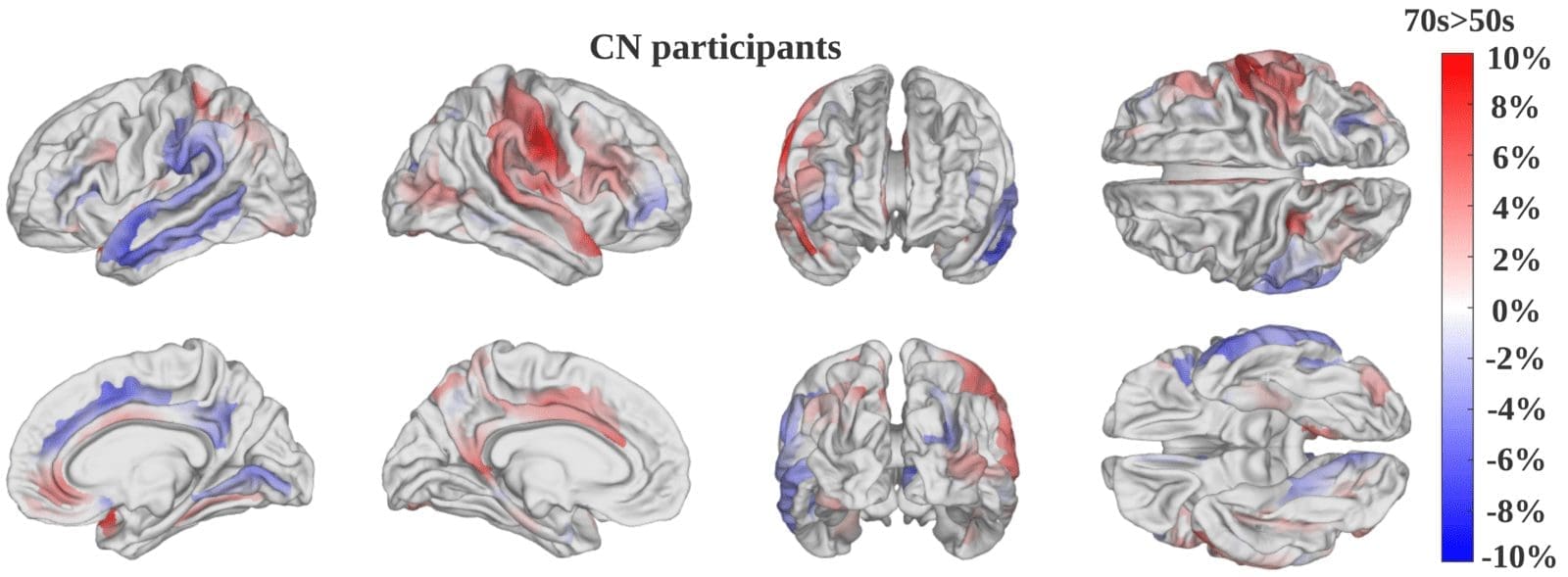
Rates of brain aging are closely linked to changes in cognitive abilities such as memory, executive function, and processing speed. The AI model identifies key brain regions influencing aging pace through saliency maps, distinguishing differences between age groups. Red regions highlight areas more indicative of aging in older adults, while blue regions reflect younger adult aging patterns.
The study also reveals variations in brain aging rates across brain regions, influenced by genetics, environment, and lifestyle. These findings could explain differing risks for neurodegenerative diseases like Alzheimer’s between sexes. Additionally, the model shows potential for early detection of accelerated brain aging before cognitive symptoms emerge, addressing current limitations in Alzheimer’s treatment efficacy.
Irimia expressed excitement about forecasting Alzheimer’s risk, aiming to provide personalized risk assessments. Such prognostic tools could enhance drug development and prevention strategies. The research underscores the importance of understanding brain aging mechanisms to improve diagnostic and therapeutic approaches for neurodegenerative disorders.
Alignment of Measures with Cognitive Test Results
The AI model’s ability to highlight specific brain regions through saliency maps provides a roadmap for understanding which areas are most indicative of cognitive decline or resilience. For instance, red regions in older adults may correspond to areas where cognitive functions like memory begin to diminish, while blue regions might indicate preserved cognitive abilities typical of younger adults. This spatial mapping not only aids in early detection but also offers insights into the biological underpinnings of cognitive changes.
Furthermore, the study explores how variations in brain aging rates across different regions are influenced by genetics, environment, and lifestyle. These factors can shape both the trajectory of brain aging and the outcomes of cognitive tests, providing a comprehensive view of individual risk profiles. By integrating these influences into predictive models, researchers aim to enhance the accuracy of forecasting tools for neurodegenerative diseases like Alzheimer’s.
The potential for early intervention is a significant implication of this work. If the AI model can detect accelerated brain aging before cognitive symptoms arise, it opens the door to preventive strategies and timely interventions. This proactive approach could address current limitations in treating conditions like Alzheimer’s, where early detection is often hindered by the lack of overt symptoms.
Potential for Early Biomarker in Neurocognitive Decline
The AI model developed in this study represents a significant advancement in identifying early biomarkers for neurocognitive decline. By measuring brain aging rates and correlating them with cognitive function, the model offers a novel approach to understanding how the brain ages and its impact on mental processes such as memory and executive function.
One of the key innovations is using saliency maps to pinpoint specific brain regions most indicative of aging. These maps reveal distinct patterns: red regions highlight areas where older adults show signs of cognitive decline, while blue regions indicate preserved cognitive abilities typical of younger individuals. This visualization tool not only aids in early detection but also provides insights into the biological mechanisms underlying cognitive changes.
The study underscores the influence of genetics, environment, and lifestyle on brain aging, which can vary significantly between individuals. These factors shape both the trajectory of aging and outcomes of cognitive assessments, suggesting that personalized approaches could be more effective in managing neurocognitive decline.
By enabling early detection of accelerated brain aging before symptoms manifest, this model opens new possibilities for preventive strategies and timely interventions. This is particularly crucial for conditions like Alzheimer’s, where current treatments often face challenges due to late-stage diagnosis.
The potential for personalized risk assessments and enhanced drug development further highlights the study’s impact. By integrating these findings into predictive models, researchers can develop more targeted therapies and monitoring tools, ultimately improving outcomes for those at risk of neurodegenerative diseases.
More information
External Link: Click Here For More