

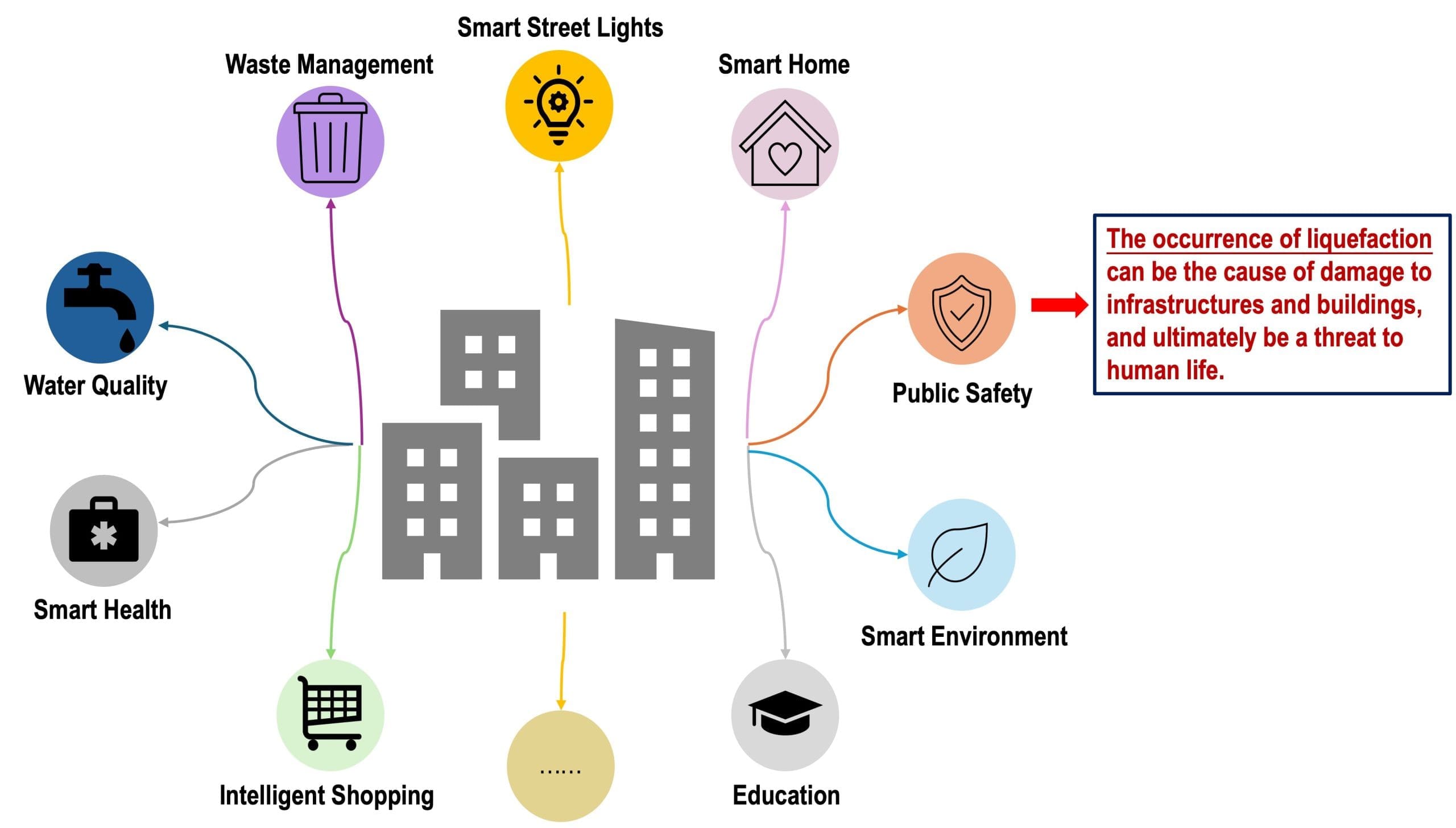
Researchers from the Shibaura Institute of Technology in Japan have developed an AI-driven method to enhance urban resilience against liquefaction, which causes soil to lose its strength and behave like a liquid during earthquakes.
Led by Professor Shinya Inazumi and his student Yuxin Cong, the team used machine learning models, including artificial neural networks and bagging techniques, to create accurate 3D maps of bearing layers in Setagaya, Tokyo. This approach can identify stable construction sites, enhance disaster planning, and contribute to safer urban development.
The researchers collected data from 433 locations and used it to train an artificial neural network to predict the depth of bearing layers, achieving a 20% improvement in prediction accuracy with the bagging technique. The resulting contour maps provide valuable insights for civil engineers and disaster management experts, helping them identify areas vulnerable to liquefaction and develop targeted risk assessment and mitigation strategies.
Building Safer Cities with AI: Enhancing Urban Resilience Against Liquefaction
Earthquakes pose a significant threat to urban infrastructure, and one of the critical risks is liquefaction, where intense shaking causes loose, water-saturated soils to lose their strength and behave like a liquid. In earthquake-prone countries like Japan, predicting soil stability is crucial for mitigating liquefaction risks. Researchers have developed machine learning models that can create accurate 3D maps of bearing layers using data from multiple locations. This approach can identify stable construction sites, enhance disaster planning, and contribute to safer urban development.
The threat of natural disasters becomes a pressing concern for city planners and disaster management authorities as urban areas expand. Liquefaction can cause buildings to sink into the soil, crack foundations, and collapse roads and utilities like water lines. The 2011 Tōhoku earthquake in Japan caused liquefaction that damaged 1,000 homes, while the 6.2 magnitude earthquake in Christchurch resulted in liquefaction that destroyed 80% of the water and sewage systems. In 2024, the Noto earthquake caused widespread liquefaction, affecting 6,700 houses.
To make cities more resilient to the effects of liquefaction, researchers have been developing machine learning models that predict how soil will react during earthquakes. These models use geological data to create detailed 3D maps of the soil layers, identifying stable areas and those more prone to liquefaction. Unlike manual soil testing methods, which cannot cover every location, this approach offers a broader and more detailed view of soil behavior.
Machine Learning Models for Liquefaction Prediction
Researchers have used artificial neural networks (ANNs) and ensemble learning techniques to accurately estimate the depth of the bearing layers, a crucial indicator of how stable the soil is and how likely it is to experience liquefaction during an earthquake. The researchers collected bearing depth data from 433 points in Setagaya-ku, Tokyo, using standard penetration tests and mini-ram sounding tests. In addition to the depth of the bearing layer, they also recorded key information about each location, such as longitude, latitude, and elevation.
The data was used to train an ANN to predict the bearing layer depth at 10 locations, utilizing the actual site measurements to evaluate the accuracy of the predictions. To improve the accuracy of these predictions, the researchers applied a technique called bagging (bootstrap aggregation), which involves training the model multiple times on different subsets of the training data. This approach resulted in a 20% improvement in prediction accuracy.
Applications in Urban Planning and Disaster Management
Using the predicted values, the researchers created a contour map illustrating the depth of bearing layers within a 1 km radius around four selected locations in Setagaya Ward. This map is a valuable visual aid for civil engineers, helping them identify suitable construction sites with stable soil conditions. It also assists disaster management experts in pinpointing areas that are more vulnerable to soil liquefaction, enabling better risk assessment and mitigation strategies.
The researchers envision their method as a key enabler for smart city growth, emphasizing the importance of data-driven strategies in guiding urban development and infrastructure planning. By integrating advanced AI models into geotechnical analysis, smart cities can better mitigate liquefaction risks and strengthen overall urban resilience.
Future Directions
Going ahead, the researchers plan to enhance their model’s accuracy by incorporating additional ground conditions and developing specialized models for coastal and non-coastal areas, considering the influence of groundwater, a significant factor in liquefaction. This study provides a foundation for safer, more efficient, and cost-effective urban development, and its implications can have far-reaching consequences for building resilient cities that can withstand natural disasters.
External Link: Click Here For More


