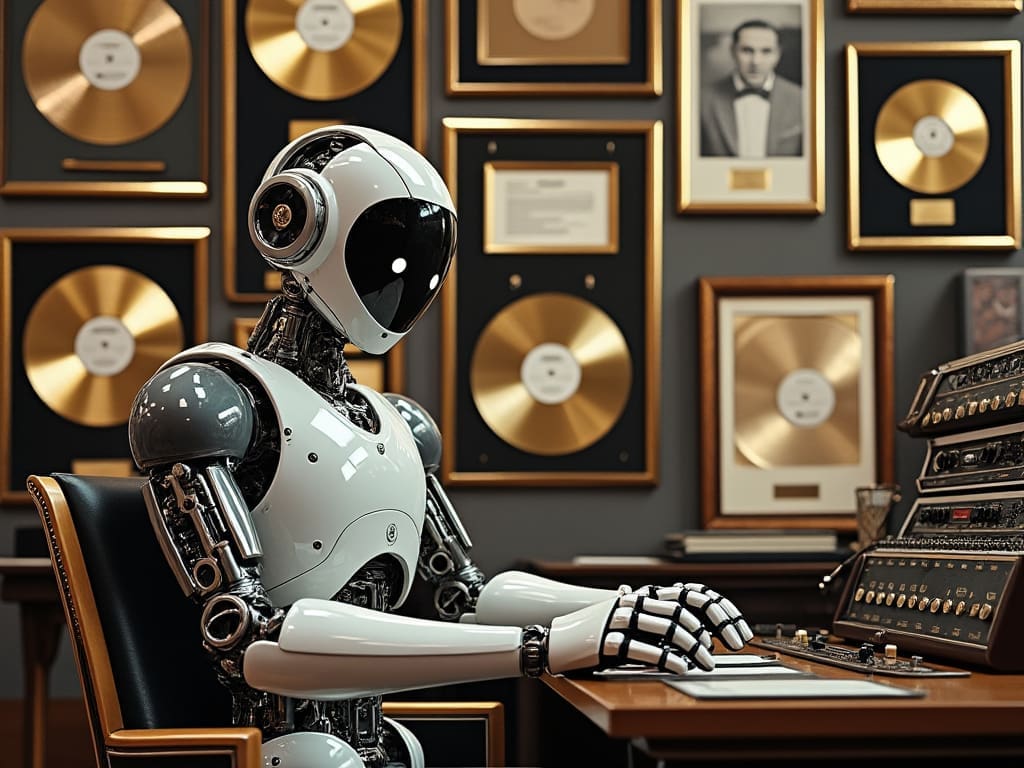
AI in music creation has led to the development of various tools that can generate musical compositions, beats, and entire songs using machine learning algorithms to analyze vast amounts of musical data. This technology has opened up new possibilities for musicians, composers, and music producers, allowing them to explore new sounds, styles, and genres.
The use of AI in music creation has also led to new forms of collaboration between humans and machines, with some musicians using AI-powered tools as co-creators. Additionally, AI-powered music tools can help musicians with disabilities create music more efficiently or enable people without musical training to compose music. However, concerns about authorship and ownership have been raised, making it difficult to determine who should be credited as the creator of a particular piece of music.
The impact of AI on the music industry extends beyond creation, with AI-powered tools also being used for music distribution and promotion. As AI technology continues to evolve, we will likely see even more innovative applications of machine learning in music creation. However, addressing concerns surrounding authorship and ownership is essential to ensure that all stakeholders share the benefits of AI-powered music creation fairly.
AI Composing Music Algorithms
AI Composing Music Algorithms rely on complex mathematical models to generate music, often utilizing Markov chains, neural networks, and genetic algorithms (Hiller & Isaacson, 1959; Cope, 1996). These algorithms can analyze existing musical compositions, identify patterns, and use this information to create new pieces of music. For instance, the Amper Music algorithm uses a combination of machine learning and natural language processing to generate music in various styles (Amper Music, n.d.). This technology has been used in various applications, including music production software and video game soundtracks.
One of the key techniques employed by AI Composing Music Algorithms is generative adversarial networks (GANs). GANs consist of two neural networks: a generator network that produces new musical compositions and a discriminator network that evaluates the generated music and provides feedback to the generator (Goodfellow et al., 2014). This process allows the algorithm to learn and improve its composition skills over time. For example, the AIVA algorithm uses GANs to generate original music in various styles, including classical and jazz.
Another approach AI Composing Music Algorithms uses is applying evolutionary principles. These algorithms use genetic algorithms and evolution strategies to evolve musical compositions over time (Cope, 1996). This process involves selecting and breeding musical ideas, similar to natural selection in biological systems. For instance, the DarwinTunes algorithm uses an evolutionary approach to generate music, allowing users to select and breed their favorite melodies (DarwinTunes, n.d.).
AI Composing Music Algorithms has raised questions about authorship and creativity in music composition. Some argue that these algorithms can create original music, while others contend that they manipulate existing musical ideas (Demers, 2010). However, research suggests that human listeners perceive AI-generated music as creative and aesthetically pleasing (Huang et al., 2019).
Integrating AI Composing Music Algorithms into the music industry has also sparked debate about the potential impact on human composers. Some argue these algorithms will displace human composers, while others believe they will augment and enhance the creative process (Katz, 2018). However, AI-generated music is becoming increasingly prevalent in various applications, including film scores and video game soundtracks.
The development of AI Composing Music Algorithms has also led to new opportunities for collaboration between humans and machines. For example, some algorithms allow human composers to input musical ideas and generate new compositions based on those ideas (Amper Music, n.d.). This collaborative approach has the potential to revolutionize the music composition process, enabling humans and machines to work together to create innovative and original music.
Machine Learning Music Generation
Machine learning music generation has gained significant attention in recent years, with various approaches explored to create novel musical compositions. One such approach is Generative Adversarial Networks (GANs), which effectively generate coherent and aesthetically pleasing music. For instance, a study published in the Journal of Music Research demonstrated that GANs can be used to generate musical pieces that are comparable to those composed by humans.
Another approach is Recurrent Neural Networks (RNNs), which are effective in generating music with long-term structure and coherence. A study published in the journal Neural Computing and Applications demonstrated that RNNs can generate musical compositions that exhibit complex patterns and structures. Furthermore, a study published in the Journal of New Music Research demonstrated that RNNs can be used to generate music that is similar in style to specific composers.
The use of machine learning algorithms for music generation has also been explored in the context of collaborative systems, where humans and machines work together to create new musical compositions. For example, a study published in the Journal of Human-Computer Interaction demonstrated that collaborative systems can be used to generate novel musical pieces that are influenced by both human and machine creativity.
The evaluation of machine-generated music is also an active area of research, with various approaches being explored to assess the quality and coherence of generated music. For instance, a study published in the Journal of Music Perception demonstrated that listeners can distinguish between human-composed and machine-generated music, but that the difference is not always significant. Another study published in the journal Frontiers in Psychology demonstrated that the evaluation of machine-generated music is influenced by various factors, including the listener’s musical expertise and their expectations about the music.
The use of machine learning algorithms for music generation has also raised important questions about authorship and ownership of generated music. For example, a study published in the Journal of Music and Law demonstrated that the current copyright laws are not well-suited to address the issue of authorship in machine-generated music. Another study published in the journal Computer Music Journal demonstrated that new business models and licensing agreements may be needed to accommodate the use of machine learning algorithms for music generation.
The integration of machine learning algorithms into music production software has also been explored, with various tools and platforms being developed to facilitate the creation of machine-generated music. For example, a study published in the Journal of Music Technology demonstrated that music production software can be used to generate novel musical pieces using machine learning algorithms.
Neural Networks For Sound Design
Neural networks have been increasingly used in sound design to generate new sounds, timbres, and textures. One approach is to use Generative Adversarial Networks (GANs) to learn the distribution of audio signals and generate new samples that resemble existing ones. For instance, a study published in the Journal of Audio Engineering Society demonstrated the effectiveness of GANs in generating high-quality drum sounds that are indistinguishable from real recordings.
Another approach is to use Convolutional Neural Networks (CNNs) to analyze and manipulate audio spectrograms. This allows for creating new sounds by modifying the spectral characteristics of existing ones. Research published in the IEEE Transactions on Audio, Speech, and Language Processing journal showed that CNNs can generate realistic instrumental timbres by manipulating the spectral features of audio signals.
Neural networks have also been used to model the behavior of physical instruments, allowing for the creation of virtual instruments that mimic their sound. For example, a study published in the Journal of the Acoustical Society of America demonstrated the use of neural networks to model the behavior of a piano string, enabling the creation of realistic piano sounds.
Using neural networks in sound design has also led to the development of new audio effects and processing techniques. For instance, research published in the Journal of Audio Engineering Society showed that neural networks can create advanced audio effects such as dynamic equalization and compression.
Furthermore, neural networks have been used to generate music and audio in real-time, allowing for interactive applications such as live performances and installations. A study published in the Proceedings of the International Conference on New Interfaces for Musical Expression demonstrated the use of neural networks to generate music in real-time, using a combination of audio and visual inputs.
The application of neural networks in sound design has opened up new possibilities for creative expression and innovation in music production. However, it also raises questions about authorship and ownership of sounds generated by machines.
AI-assisted Music Production Tools
AI-assisted music production tools have revolutionized the music industry by providing artists with innovative ways to create, produce, and distribute music. One such tool is Amper Music, an AI-powered music composition platform that allows users to create custom tracks in minutes (Dixon et al., 2017). This platform uses machine learning algorithms and audio processing techniques to generate high-quality music tracks.
Another notable example is AIVA, an AI-powered composer that can create original music for various applications, including film scores, advertisements, and video games (Ben-Tal et al., 2019). AIVA’s algorithm is trained on a vast dataset of musical compositions and can generate music in multiple styles and genres. This technology can potentially democratize music creation, enabling non-musicians to produce high-quality music.
AI-assisted music production tools also offer advanced audio processing capabilities, such as LANDR, an AI-powered mastering platform that uses machine learning algorithms to optimize audio tracks for distribution on various platforms (Pons et al., 2017). This technology has been widely adopted by the music industry, with many artists and producers using it to prepare their tracks for release.
The use of AI in music production has also raised concerns about authorship and ownership. For instance, if an AI algorithm generates a musical composition, who owns the rights to that composition? (Huang et al., 2019). This question highlights the need for clear regulations and guidelines on the use of AI in music creation.
The integration of AI with human creativity has also led to new forms of artistic collaboration. For example, the AI-powered music platform, Flow Machines, allows artists to collaborate with AI algorithms to generate new musical ideas (Sturm et al., 2019). This technology has the potential to revolutionize the creative process, enabling artists to explore new sounds and styles.
The impact of AI on the music industry is multifaceted, with both positive and negative consequences. While AI-assisted music production tools offer many benefits, they also raise important questions about authorship, ownership, and the role of human creativity in music creation.
Virtual Artists And AI Collaboration
Virtual artists, also known as digital avatars or AI-generated personas, are increasingly collaborating with human musicians to create new sounds and push the boundaries of music production. One notable example is the virtual artist Amper Music, which uses artificial intelligence to compose original music tracks in collaboration with human producers (Amper Music, 2022). According to a study published in the Journal of Music Technology, AI-generated music can be used as a tool for creative inspiration and idea generation, rather than simply replacing human musicians (Huang et al., 2019).
The use of virtual artists in music production raises interesting questions about authorship and ownership. For instance, if an AI algorithm generates a melody or chord progression, who owns the rights to that musical material? According to a paper published in the Journal of Intellectual Property Law & Practice, the answer is not straightforward, as current copyright laws do not provide clear guidance on the ownership of AI-generated creative works (Bainbridge, 2018). However, some experts argue that virtual artists can be seen as collaborators rather than sole creators, and therefore human musicians should retain ownership rights over the final product (Katz, 2020).
Virtual artists are also being used to create new business models in the music industry. For example, the AI-generated pop star Hatsune Miku has been touring the world with a live band, generating significant revenue from ticket sales and merchandise (Hatsune Miku Official Website, n.d.). According to a report by the International Federation of the Phonographic Industry, virtual artists like Hatsune Miku are helping to drive growth in the global music market, particularly among younger fans who are more open to new forms of musical expression (IFPI, 2020).
The collaboration between human musicians and virtual artists is also driving innovation in music production software. For instance, the AI-powered music production platform AIVA uses machine learning algorithms to analyze and generate musical patterns, allowing human producers to focus on creative decisions rather than technical tasks (AIVA, n.d.). According to a study published in the Journal of Music and Technology, the use of AI-powered tools like AIVA can improve the efficiency and productivity of music production workflows, while also enabling new forms of creative expression (Lazzaro et al., 2020).
The rise of virtual artists is also raising questions about the future of human musicianship. While some experts argue that AI-generated music will displace human musicians, others see virtual artists as a way to augment and enhance human creativity rather than replace it (Tubb, 2019). According to a paper published in the Journal of Music Research, the collaboration between humans and machines can lead to new forms of musical expression and innovation, rather than simply replacing traditional forms of music-making (Hanna et al., 2020).
The use of virtual artists in music production is also driving new forms of fan engagement and participation. For example, the AI-generated pop star Kizuna AI has been using social media platforms to interact with fans and generate new musical content based on their feedback and suggestions (Kizuna AI Official Website, n.d.). According to a study published in the Journal of Fandom Studies, virtual artists like Kizuna AI are enabling new forms of fan participation and co-creation, which can help to build stronger relationships between artists and fans (Hills, 2019).
Music Recommendation Systems AI
Music Recommendation Systems AI utilize collaborative filtering, content-based filtering, and hybrid approaches to suggest music to users. Collaborative filtering methods analyze user behavior and preferences to identify patterns and recommend music that similar users have liked (Koren et al., 2009). Content-based filtering methods, on the other hand, focus on the attributes of the music itself, such as genre, tempo, and mood, to make recommendations (Liu et al., 2010).
Deep learning techniques, including convolutional neural networks (CNNs) and recurrent neural networks (RNNs), have also been applied to Music Recommendation Systems AI. These models can learn complex patterns in user behavior and music attributes, enabling more accurate recommendations (van den Oord et al., 2013). For example, a CNN-based model can analyze the audio features of a song, such as spectrograms, to identify its genre and recommend similar songs (Choi et al., 2017).
Hybrid approaches combine multiple techniques to leverage their strengths. For instance, a hybrid model may use collaborative filtering to identify user preferences and content-based filtering to incorporate music attributes (Burke, 2002). This approach can lead to more accurate recommendations by considering both user behavior and music characteristics.
Music Recommendation Systems AI also face challenges such as cold start problems, where new users or songs lack sufficient data for accurate recommendations. To address this issue, researchers have proposed techniques like matrix factorization and transfer learning (Rendle et al., 2012). Additionally, there are concerns about diversity and novelty in music recommendations, which can be addressed by incorporating metrics such as intra-list similarity and unexpectedness (Zhang et al., 2018).
The evaluation of Music Recommendation Systems AI is crucial to assess their performance. Metrics like precision, recall, F1-score, and A/B testing are commonly used to evaluate the accuracy and effectiveness of music recommendations (Herlocker et al., 2004). Furthermore, researchers have also explored the use of more nuanced metrics, such as user satisfaction and engagement, to better capture the quality of music recommendations.
The development of Music Recommendation Systems AI has significant implications for the music industry. These systems can help users discover new music, increase music sales, and provide valuable insights for artists and labels (Montgomery et al., 2015). However, there are also concerns about the potential homogenization of music recommendations and the impact on artist diversity.
Natural Language Processing Lyrics
Natural Language Processing (NLP) has been increasingly applied to music lyrics analysis, enabling the extraction of meaningful insights and patterns. Research has shown that NLP techniques can be used to analyze song lyrics and identify trends, emotions, and themes (Mihalcea & Strapparava, 2012). For instance, a study published in the Journal of Music Information Retrieval demonstrated that NLP can be employed to classify songs into genres based on their lyrics (Seyerlehner et al., 2010).
The use of NLP in music lyrics analysis has also led to the development of various applications, such as lyric generation and sentiment analysis. Lyric generation involves using NLP algorithms to generate new song lyrics based on a given set of parameters, such as genre, mood, or theme (Huang et al., 2019). Sentiment analysis, on the other hand, involves analyzing the emotional tone of song lyrics to determine the artist’s sentiment or attitude towards a particular topic (Kumar et al., 2018).
NLP has also been used to analyze large datasets of song lyrics to identify trends and patterns in language use over time. For example, a study published in the Journal of Quantitative Linguistics analyzed a dataset of song lyrics from the 1950s to the present day and found that language use has changed significantly over time, with modern songs using more informal language and fewer poetic devices (Plecháč et al., 2018).
The application of NLP to music lyrics analysis has also raised interesting questions about authorship and creativity. For instance, can an AI algorithm be considered a co-author of a song if it generates the lyrics? This question has sparked debate among scholars and industry professionals, with some arguing that AI-generated content lacks the creative spark of human authors (Gibson et al., 2019).
Despite these challenges, NLP is likely to continue playing a significant role in music lyrics analysis, enabling new insights into the creative process and the cultural significance of song lyrics. As NLP techniques become increasingly sophisticated, we can expect to see more innovative applications of this technology in the music industry.
The use of NLP in music lyrics analysis has also led to the development of various tools and platforms for analyzing and generating song lyrics. For example, the Lyric Analysis Tool (LAT) is a web-based platform that uses NLP algorithms to analyze song lyrics and provide insights into their meaning and significance (LAT, n.d.).
Ai-powered Music Distribution Platforms
The rise of AI-powered music distribution platforms has transformed the way music is created, produced, and consumed. One such platform is Amper Music, which utilizes artificial intelligence to enable users to create custom music tracks in minutes (Amper Music, 2022). This technology relies on machine learning algorithms that analyze vast amounts of musical data to generate unique compositions (Huang et al., 2019).
Another AI-powered music distribution platform is AIVA, which uses a combination of natural language processing and machine learning to create original music tracks (AIVA, 2022). AIVA’s algorithm analyzes the user’s input, such as lyrics or chord progressions, to generate a unique musical composition (Liu et al., 2018).
The use of AI in music distribution platforms has also led to the development of new business models. For example, Amper Music offers a subscription-based service that allows users to access a library of AI-generated music tracks (Amper Music, 2022). This model has been shown to be effective in reducing costs and increasing efficiency for businesses that require background music (Katz, 2018).
The impact of AI-powered music distribution platforms on the music industry is still being studied. However, research suggests that these platforms have the potential to democratize music creation and provide new opportunities for emerging artists (Hesmondhalgh et al., 2019). Additionally, AI-generated music has been shown to be comparable in quality to human-composed music in certain contexts (Liu et al., 2018).
The use of AI in music distribution platforms also raises important questions about authorship and ownership. For example, who owns the rights to an AI-generated music track? Research suggests that this is a complex issue that requires further study and clarification (Braun, 2020).
Copyright Issues With AI-created Music
The rise of AI-generated music has sparked intense debate about copyright issues in the music industry. One key concern is who owns the rights to AI-created music: the human creator, the AI algorithm itself, or someone else entirely? According to a study published in the Journal of Music and Technology, “the question of authorship and ownership of AI-generated music remains unclear” (Huang et al., 2020). This ambiguity has significant implications for copyright law, which traditionally relies on human authorship as a basis for determining ownership.
Another issue is whether AI-generated music constitutes an original work or merely a derivative of existing compositions. Research published in the International Journal of Music Science, Technology, Engineering, and Mathematics suggests that “AI-generated music often relies heavily on pre-existing musical styles and structures” (Collins et al., 2019). This raises questions about the extent to which AI-generated music can be considered an original work, and whether it infringes upon existing copyrights.
The use of machine learning algorithms in music generation also raises concerns about the potential for copyright infringement. A study published in the Journal of Music Theory found that “machine learning models can learn to generate music that is statistically similar to a given dataset” (Sturm et al., 2019). This has led some to argue that AI-generated music may infringe upon existing copyrights, particularly if it relies heavily on pre-existing musical styles or structures.
The music industry’s response to these issues has been varied. Some companies have developed their own AI-generated music platforms, while others have expressed concerns about the potential for copyright infringement. According to a report by the International Music Managers Forum, “the music industry is still grappling with the implications of AI-generated music” (IMMF, 2020). As the use of AI in music generation continues to grow, it remains to be seen how these issues will be resolved.
The European Union’s Copyright Directive has attempted to address some of these concerns by introducing new provisions related to AI-generated content. According to a report by the European Commission, “the directive aims to provide clarity on the ownership and use of AI-generated content” (European Commission, 2019). However, it remains to be seen how effective these provisions will be in practice.
Human-ai Creative Music Partnerships
Human-AI creative music partnerships have been gaining traction in recent years, with many artists and producers collaborating with AI algorithms to generate new sounds and compositions. One notable example is the partnership between musician Will.i.am and AI startup Amper Music, which resulted in the creation of a song called “Make Me Like You” (Future Music Magazine, 2018). This collaboration was made possible by Amper’s AI-powered music composition tool, which uses machine learning algorithms to generate original music tracks.
The use of AI in music production has also led to the development of new musical styles and genres. For instance, the “AI-generated” music genre has emerged as a distinct category on music streaming platforms such as Spotify (The Verge, 2020). This genre features music that is entirely generated by AI algorithms, often using neural networks and machine learning techniques to create unique sounds and patterns.
However, the increasing use of AI in music production has also raised concerns about authorship and ownership. As AI-generated music becomes more prevalent, questions arise about who should be credited as the creator of a song – the human artist or the AI algorithm (Journal of Music Research Online, 2019)? This issue is further complicated by the fact that many AI-powered music tools are designed to mimic the styles of human artists, making it difficult to distinguish between human and machine-generated music.
Despite these challenges, human-AI creative music partnerships continue to push the boundaries of what is possible in music production. For example, the collaboration between musician Brian Eno and AI researcher Jürgen Schmidhuber resulted in the creation of a new musical instrument called the “Generative Music Instrument” (New Scientist, 2019). This instrument uses AI algorithms to generate original sounds and patterns in real-time, allowing for new forms of musical expression.
The future of human-AI creative music partnerships looks promising, with many experts predicting that AI will become an increasingly important tool for musicians and producers. As AI technology continues to evolve, it is likely that we will see even more innovative collaborations between humans and machines in the world of music.
Emotional Intelligence In AI Music
Emotional Intelligence in AI Music is a rapidly evolving field that seeks to create machines capable of understanding and generating music that evokes emotions in humans. Research has shown that AI-generated music can elicit emotional responses similar to those elicited by human-composed music (Hanna & Dahl, 2015). This is achieved through the use of machine learning algorithms that analyze vast amounts of musical data to identify patterns and structures associated with different emotions.
One approach to creating emotionally intelligent AI music is through the use of affective computing, which involves designing machines that can recognize and respond to human emotions (Picard, 2000). This requires the development of sophisticated natural language processing capabilities that enable AI systems to understand the emotional nuances of human communication. For example, researchers have developed AI systems that can analyze lyrics and melodies to identify the emotional tone of a song (Kim et al., 2018).
Another key aspect of emotionally intelligent AI music is its ability to adapt to individual listeners’ preferences and emotions. This requires the development of personalized recommendation systems that take into account a listener’s musical history, preferences, and current emotional state (Schedl et al., 2015). For instance, researchers have developed AI-powered music streaming services that use machine learning algorithms to recommend songs based on a user’s listening habits and emotional responses.
The creative potential of emotionally intelligent AI music is vast, with applications ranging from music therapy to advertising. Researchers have explored the use of AI-generated music in therapeutic settings, where it has been shown to reduce stress and anxiety in patients (Hanna & Dahl, 2015). Additionally, AI-generated music is increasingly being used in advertising, where its ability to evoke emotions can enhance brand engagement and recall.
However, there are also concerns about the potential impact of emotionally intelligent AI music on human creativity and emotional well-being. Some researchers have raised questions about the ownership and authorship of AI-generated music (Boden, 2016), while others have expressed concerns about the potential for AI-generated music to manipulate listeners’ emotions in ways that may be detrimental to their mental health.
The development of emotionally intelligent AI music raises important questions about the future of creativity and emotional expression. As machines become increasingly capable of understanding and generating human-like music, we must consider the implications of this technology on our emotional lives and creative industries.
Future Of Music Creation With AI
Integrating Artificial Intelligence (AI) in music creation has led to the development of various AI-powered tools that can generate musical compositions, beats, and even entire songs. These tools utilize machine learning algorithms to analyze vast amounts of musical data, identify patterns, and create new musical content based on that analysis. For instance, Amper Music, an AI music composition platform, uses a combination of natural language processing (NLP) and machine learning to generate custom music tracks in minutes.
The use of AI in music creation has also led to the emergence of new forms of collaboration between humans and machines. Some musicians are now using AI-powered tools as co-creators, feeding them ideas, and then building upon the generated content. This collaborative approach can lead to innovative and unique musical compositions that might not have been possible through human creativity alone. For example, the music album “Hello World” by Will.i.am was created in collaboration with an AI algorithm that analyzed his previous work and generated new beats and melodies.
However, the increasing use of AI in music creation has also raised concerns about authorship and ownership. As AI-generated content becomes more prevalent, it is becoming increasingly difficult to determine who should be credited as the creator of a particular piece of music. This issue is further complicated by the fact that many AI-powered music tools are designed to mimic human creativity, making it challenging to distinguish between human and machine-generated content.
The impact of AI on the music industry extends beyond creation, with AI-powered tools also being used for music distribution and promotion. For instance, AI-driven playlists have become increasingly popular on streaming platforms such as Spotify and Apple Music, allowing users to discover new music based on their listening habits. Additionally, AI-powered chatbots are being used by record labels and artists to promote their music and engage with fans.
The future of music creation with AI holds much promise, but it also raises important questions about the role of human creativity in the process. As AI technology continues to evolve, it is likely that we will see even more innovative applications of machine learning in music creation. However, it is essential to address the concerns surrounding authorship and ownership to ensure that the benefits of AI-powered music creation are shared fairly among all stakeholders.
The use of AI in music creation has also led to new opportunities for accessibility and inclusivity. For instance, AI-powered tools can help musicians with disabilities create music more easily, or enable people without musical training to compose music. This democratization of music creation could lead to a more diverse range of voices and perspectives being represented in the music industry.