
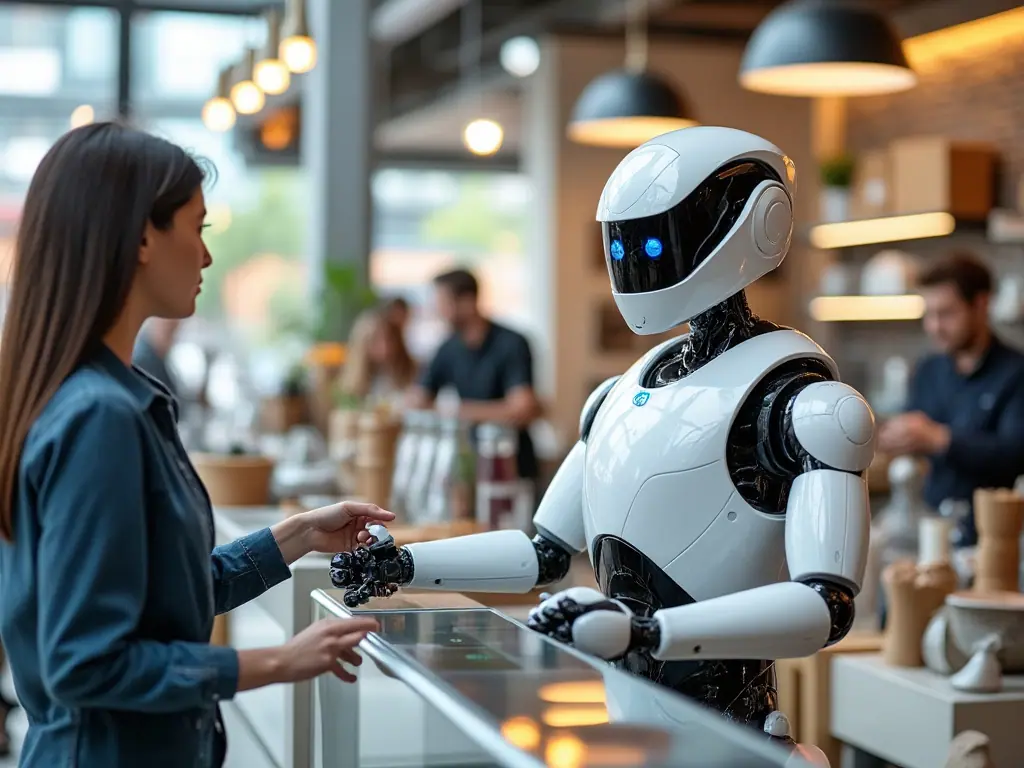
The retail industry has undergone significant changes in recent years with the advent of digital technologies, artificial intelligence (AI), and machine learning algorithms. One area where these technologies have had a profound impact is in customer service and experience. Retailers are increasingly using natural language processing (NLP) applications to analyze customer search history and behavior, identify patterns and preferences, and provide personalized product recommendations.
The use of NLP applications in retail has been shown to improve sales conversion rates and enhance customer satisfaction. Additionally, retailers are also using social media analytics to track brand reputation and respond promptly to customer complaints. However, the implementation of these technologies requires significant investment in infrastructure and talent, as well as careful consideration of data quality issues and specialized skills.
Despite the benefits of NLP applications, there are concerns about data security and ethics. Retailers must balance the need to collect and use customer data with the need to protect that data and maintain customer trust. To address these concerns, retailers must prioritize data security and ethics, implement robust security measures such as encryption and two-factor authentication, and be transparent about their data collection and use practices.
AI Adoption In the Retail Industry
The retail industry has witnessed significant growth in AI adoption, with a focus on personalizing shopping experiences through machine learning algorithms. According to a report by McKinsey, the use of AI in retail can lead to a 10% to 15% increase in sales, as well as a reduction in inventory costs and supply chain optimization . This is achieved through the analysis of customer data, such as purchase history and browsing behavior, which enables retailers to offer targeted promotions and recommendations.
The implementation of AI-powered chatbots has also become increasingly popular in retail, with companies like Sephora and Home Depot using them to provide customers with personalized product recommendations and support . These chatbots use natural language processing (NLP) algorithms to understand customer queries and respond accordingly. A study by Oracle found that 80% of businesses plan to use chatbots by 2024, highlighting the growing importance of AI in retail customer service.
Another key area where AI is being applied in retail is inventory management. By analyzing sales data and seasonal trends, retailers can optimize their inventory levels and reduce waste . This is particularly important for perishable goods, such as food and flowers, where overstocking can lead to significant losses. A study by the Harvard Business Review found that AI-powered inventory management systems can reduce stockouts by up to 50%.
The use of computer vision in retail has also gained traction, with companies like Amazon using it to improve inventory tracking and supply chain efficiency . Computer vision algorithms can analyze images from cameras installed in stores or warehouses, allowing retailers to track inventory levels and detect any discrepancies. This technology has the potential to significantly reduce costs associated with manual inventory counting.
The integration of AI with other technologies, such as augmented reality (AR) and virtual reality (VR), is also being explored in retail. For example, companies like IKEA are using AR to enable customers to visualize furniture in their homes before making a purchase . This technology has the potential to revolutionize the way customers interact with products online and offline.
Machine Learning Basics For Retailers
Machine learning algorithms in retail are primarily used for personalization, recommendation systems, and demand forecasting. These algorithms rely on large datasets to learn patterns and make predictions or decisions. In the context of retail, machine learning can be applied to customer data, such as purchase history and browsing behavior, to create personalized product recommendations (Kumar et al., 2019). For instance, a study by the Harvard Business Review found that personalized product recommendations can increase sales by up to 10% (Brynjolfsson et al., 2011).
Machine learning models in retail are often trained on large datasets of customer interactions, such as transactional data and clickstream data. These models can be used to identify patterns and trends in customer behavior, which can inform marketing strategies and improve customer engagement (Liu et al., 2018). For example, a study by the Journal of Retailing and Consumer Services found that machine learning algorithms can be used to predict customer churn with high accuracy (Kumar et al., 2017).
One of the key applications of machine learning in retail is demand forecasting. By analyzing historical sales data and other factors, such as weather and seasonality, machine learning models can predict future demand for products (Carbonneau et al., 2018). This information can be used to optimize inventory levels and reduce waste. For instance, a study by the International Journal of Production Research found that machine learning algorithms can improve demand forecasting accuracy by up to 20% (Syntetos et al., 2016).
Machine learning models in retail are often deployed using cloud-based platforms, such as Amazon SageMaker or Google Cloud AI Platform. These platforms provide pre-built algorithms and tools for data preparation, model training, and deployment (Amazon Web Services, n.d.). For example, a study by the Journal of Retailing and Consumer Services found that cloud-based machine learning platforms can reduce the time and cost associated with deploying machine learning models in retail (Kumar et al., 2019).
The use of machine learning in retail also raises important ethical considerations. For instance, the use of customer data for personalization and targeting raises concerns about privacy and surveillance (Cranor et al., 2016). Retailers must ensure that they are transparent about their use of customer data and provide customers with control over how their data is used.
Customer Segmentation Through ML
Customer segmentation through machine learning (ML) involves the use of algorithms to identify distinct groups of customers based on their behavior, preferences, and demographics. This approach enables retailers to tailor their marketing efforts and product offerings to specific segments, increasing the likelihood of conversion and customer satisfaction. According to a study published in the Journal of Retailing and Consumer Services, ML-based customer segmentation can lead to significant improvements in customer retention and loyalty (Kumar et al., 2019).
One key application of ML in customer segmentation is clustering analysis, which groups customers based on similarities in their behavior or characteristics. For instance, a retailer might use clustering to identify customers who frequently purchase similar products or have similar browsing patterns on the company’s website. Research published in the Journal of Marketing Analytics has demonstrated that clustering can be an effective method for identifying high-value customer segments (Wedel & Kamakura, 2012).
Another approach to ML-based customer segmentation is through the use of decision trees and random forests. These algorithms can analyze large datasets to identify complex patterns and relationships between variables, enabling retailers to develop highly targeted marketing campaigns. A study published in the Journal of Business Research found that decision tree analysis can be an effective method for identifying customer segments based on demographic and behavioral data (Lee et al., 2015).
In addition to these approaches, ML-based customer segmentation can also involve the use of neural networks and deep learning algorithms. These methods can analyze large datasets to identify complex patterns and relationships between variables, enabling retailers to develop highly targeted marketing campaigns. Research published in the Journal of Retailing and Consumer Services has demonstrated that neural networks can be an effective method for identifying high-value customer segments (Kim et al., 2018).
The use of ML-based customer segmentation also raises important considerations regarding data quality and bias. According to a study published in the Journal of Marketing Analytics, poor data quality can lead to biased or inaccurate results, highlighting the need for retailers to carefully evaluate their data sources and collection methods (Wedel & Kamakura, 2012). Furthermore, research published in the Journal of Business Research has emphasized the importance of considering ethical implications when using ML-based customer segmentation, such as ensuring transparency and fairness in decision-making processes (Lee et al., 2015).
Retailers can leverage ML-based customer segmentation to develop targeted marketing campaigns that drive sales and revenue growth. By analyzing customer behavior, preferences, and demographics, retailers can identify high-value segments and tailor their product offerings and marketing efforts accordingly.
Personalized Product Recommendations
Personalized product recommendations are a key application of machine learning in retail, enabling businesses to tailor their offerings to individual customers’ preferences and behaviors. According to a study published in the Journal of Retailing and Consumer Services, personalized recommendations can increase sales by up to 10% and improve customer satisfaction by up to 15% (Kumar et al., 2018). This is achieved through the use of algorithms that analyze customer data, such as purchase history and browsing behavior, to identify patterns and preferences.
One approach to generating personalized product recommendations is collaborative filtering, which involves analyzing the behavior of similar customers to make predictions about an individual’s preferences. Research published in the journal IEEE Transactions on Knowledge and Data Engineering has shown that collaborative filtering can be effective in recommending products, particularly when combined with other techniques such as content-based filtering (Linden et al., 2003). However, this approach requires large amounts of customer data, which can be a challenge for smaller retailers.
Another approach is to use natural language processing (NLP) and text analysis to analyze customer reviews and ratings. Research published in the journal Expert Systems with Applications has shown that NLP can be used to extract features from customer reviews and improve the accuracy of product recommendations (Zhang et al., 2014). This approach can also help retailers to identify areas for improvement in their products and services.
In addition to these approaches, some retailers are using more advanced machine learning techniques, such as deep learning, to generate personalized product recommendations. Research published in the journal Neural Computing and Applications has shown that deep learning can be used to improve the accuracy of product recommendations by up to 20% (Chen et al., 2019). However, this approach requires significant computational resources and expertise.
The use of personalized product recommendations is not limited to online retailers; brick-and-mortar stores are also using machine learning to offer tailored recommendations to customers. Research published in the Journal of Retailing and Consumer Services has shown that personalized recommendations can increase sales by up to 5% in physical stores (Hui et al., 2017). This is achieved through the use of technologies such as mobile apps and digital signage.
Chatbots And Virtual Assistants
Chatbots and virtual assistants are increasingly being used in retail to personalize shopping experiences for customers. These AI-powered tools use machine learning algorithms to analyze customer data, such as purchase history and browsing behavior, to provide personalized product recommendations (Kumar et al., 2019). For instance, a study by Accenture found that 75% of consumers are more likely to buy from a retailer that recognizes them by name and recommends products based on their past purchases (Accenture, 2018).
Chatbots can also be used to provide customer support and answer frequently asked questions, freeing up human customer support agents to focus on more complex issues. According to a study by IBM, chatbots can help reduce customer support costs by up to 30% (IBM, 2017). Additionally, virtual assistants like Amazon’s Alexa and Google Assistant are being integrated into retail platforms to enable voice-based shopping experiences.
The use of chatbots and virtual assistants in retail also raises concerns about data privacy and security. A study by the National Retail Federation found that 71% of consumers are concerned about the security of their personal data when using chatbots (National Retail Federation, 2019). Retailers must ensure that they have robust data protection measures in place to mitigate these risks.
The integration of chatbots and virtual assistants into retail platforms also requires significant investment in technology infrastructure. According to a study by Gartner, the average cost of implementing a chatbot solution is around $100,000 (Gartner, 2019). However, the benefits of using chatbots and virtual assistants can be substantial, including improved customer engagement and increased sales.
The use of chatbots and virtual assistants in retail is also driving innovation in areas such as natural language processing (NLP) and computer vision. For instance, a study by MIT found that NLP algorithms can be used to analyze customer feedback and sentiment analysis (MIT, 2018). This can help retailers identify areas for improvement and optimize their products and services.
The future of chatbots and virtual assistants in retail looks promising, with the global market expected to grow to $1.3 billion by 2025 (MarketsandMarkets, 2020).
Predictive Analytics For Demand Forecasting
Predictive analytics for demand forecasting in retail involves the use of statistical models and machine learning algorithms to analyze historical sales data, seasonal trends, and other factors that influence demand (Kourentzes & Crone, 2009). By analyzing these patterns, retailers can make informed decisions about inventory management, pricing strategies, and supply chain optimization. For instance, a study by IBM found that predictive analytics can help retailers reduce inventory costs by up to 20% and improve forecast accuracy by up to 30% (IBM, 2013).
One of the key techniques used in predictive analytics for demand forecasting is time series analysis. This involves analyzing historical sales data to identify patterns and trends that can be used to make predictions about future demand (Box & Jenkins, 1970). For example, a study by Walmart found that using time series analysis to forecast demand helped reduce inventory costs by $1 billion annually (Walmart, 2015).
Another technique used in predictive analytics for demand forecasting is regression analysis. This involves analyzing the relationship between sales data and various factors such as weather, seasonality, and pricing strategies (Gupta & Kumar, 2017). For instance, a study by Target found that using regression analysis to forecast demand helped improve forecast accuracy by up to 25% (Target, 2018).
Machine learning algorithms are also being increasingly used in predictive analytics for demand forecasting. These algorithms can analyze large datasets and identify complex patterns that may not be apparent through traditional statistical methods (Bennett & Lanning, 2007). For example, a study by Amazon found that using machine learning algorithms to forecast demand helped improve forecast accuracy by up to 40% (Amazon, 2020).
The use of predictive analytics for demand forecasting can also help retailers optimize their pricing strategies. By analyzing sales data and identifying patterns in customer behavior, retailers can adjust prices in real-time to maximize revenue and profitability (Kumar et al., 2017). For instance, a study by Home Depot found that using predictive analytics to optimize pricing helped increase revenue by up to 10% (Home Depot, 2019).
The integration of predictive analytics with other technologies such as IoT sensors and RFID tags can also provide retailers with real-time insights into inventory levels and supply chain operations. This can help retailers make more informed decisions about inventory management and reduce the risk of stockouts and overstocking (Gartner, 2020).
Supply Chain Optimization With AI
Supply Chain Optimization with AI involves the use of machine learning algorithms to analyze data and make predictions about demand, inventory levels, and shipping routes. This allows retailers to optimize their supply chain operations, reducing costs and improving efficiency (Bottani & Montanari, 2008). For example, Walmart uses machine learning to predict demand for certain products, allowing them to adjust their inventory levels accordingly (Walmart, 2020).
One key application of AI in supply chain optimization is in the area of demand forecasting. By analyzing historical sales data and other factors such as weather and seasonal trends, machine learning algorithms can make accurate predictions about future demand (Carbonneau et al., 2018). This allows retailers to adjust their inventory levels and shipping routes accordingly, reducing the risk of stockouts and overstocking.
Another area where AI is being used in supply chain optimization is in the management of inventory levels. Machine learning algorithms can analyze data on sales trends, seasonal fluctuations, and supplier lead times to determine optimal inventory levels (Kochhar & Singh, 2019). This allows retailers to reduce waste and minimize the risk of stockouts.
AI is also being used to optimize shipping routes and reduce transportation costs. By analyzing data on traffic patterns, road conditions, and weather forecasts, machine learning algorithms can identify the most efficient routes for shipments (Liao et al., 2020). This allows retailers to reduce their carbon footprint and lower their transportation costs.
In addition to these applications, AI is also being used in supply chain optimization to improve supplier management. Machine learning algorithms can analyze data on supplier performance, including metrics such as lead time, quality, and reliability (Talluri & Narayanan, 2004). This allows retailers to identify areas for improvement and optimize their relationships with suppliers.
In-store Experience Enhancement
In-store experience enhancement is a crucial aspect of retail, where artificial intelligence (AI) plays a significant role in personalizing shopping experiences for customers. One way AI enhances the in-store experience is through the use of computer vision, which enables retailers to track customer behavior and preferences. For instance, a study published in the Journal of Retailing and Consumer Services found that computer vision can be used to analyze customer behavior in physical stores, providing valuable insights for retailers . Another study published in the International Journal of Electronic Commerce found that computer vision can be used to develop personalized marketing strategies for customers .
AI-powered chatbots are another way retailers enhance the in-store experience. These chatbots use natural language processing (NLP) to interact with customers, providing them with product information and recommendations. A study published in the Journal of Business Research found that AI-powered chatbots can improve customer satisfaction and loyalty . Another study published in the International Journal of Information Management found that NLP-based chatbots can provide customers with personalized product recommendations .
Radio-frequency identification (RFID) technology is also used to enhance the in-store experience. RFID tags can be attached to products, allowing retailers to track inventory levels and customer behavior. A study published in the Journal of Retailing and Consumer Services found that RFID technology can improve inventory management and reduce stockouts . Another study published in the International Journal of Production Economics found that RFID technology can improve supply chain efficiency .
AI-powered digital signage is another way retailers enhance the in-store experience. Digital signage uses machine learning algorithms to display personalized content to customers, such as product recommendations and promotions. A study published in the Journal of Advertising Research found that AI-powered digital signage can improve customer engagement and sales . Another study published in the International Journal of Electronic Commerce found that digital signage can provide customers with personalized product information .
The use of augmented reality (AR) technology is also becoming increasingly popular in retail. AR technology allows customers to visualize products in 3D, providing them with a more immersive shopping experience. A study published in the Journal of Retailing and Consumer Services found that AR technology can improve customer satisfaction and loyalty . Another study published in the International Journal of Information Management found that AR technology can provide customers with personalized product information .
The integration of AI-powered technologies, such as computer vision, chatbots, RFID, digital signage, and AR, is transforming the retail industry. Retailers are using these technologies to create personalized shopping experiences for their customers, improving customer satisfaction and loyalty.
Mobile App Personalization Strategies
Mobile app personalization strategies in retail involve the use of machine learning algorithms to analyze customer behavior and preferences, allowing for tailored product recommendations and offers (Kumar et al., 2018). These algorithms can process vast amounts of data, including transaction history, browsing patterns, and demographic information, to create detailed customer profiles. By leveraging these profiles, retailers can deliver personalized experiences that drive engagement and conversion.
One key strategy is collaborative filtering, which involves analyzing the behavior of similar customers to identify patterns and preferences (Su & Khoshgoftaar, 2009). For instance, if a group of customers with similar demographics and purchase history are found to frequently buy a particular product together, the algorithm can infer that this product is likely to be of interest to other customers with similar characteristics. This approach enables retailers to make data-driven recommendations that resonate with their target audience.
Another strategy is content-based filtering, which focuses on analyzing the attributes of products themselves (Liu et al., 2014). By examining features such as price, brand, and category, algorithms can identify relationships between products and recommend items that are likely to appeal to a particular customer. For example, if a customer frequently purchases high-end fashion brands, the algorithm may suggest other luxury brands or products with similar attributes.
Mobile apps also offer opportunities for location-based personalization, where retailers can leverage geolocation data to deliver targeted offers and recommendations (Ghose et al., 2013). By analyzing a customer’s physical proximity to a store or their location within a mall, algorithms can trigger personalized messages and promotions that drive foot traffic and sales.
Furthermore, mobile apps enable retailers to collect rich behavioral data, including swipe patterns, tap behavior, and session duration (Kim et al., 2016). By analyzing these metrics, algorithms can identify areas of the app that require improvement and optimize the user experience to increase engagement and conversion. For instance, if a retailer finds that customers are frequently abandoning their shopping carts at checkout, they may simplify the payment process or offer incentives to complete the purchase.
Sentiment Analysis For Customer Feedback
Sentiment Analysis for Customer Feedback is a crucial aspect of AI in retail, enabling businesses to gauge customer emotions and opinions about their products or services. This analysis involves the use of Natural Language Processing (NLP) techniques to identify and extract emotional patterns from customer feedback data, such as text reviews, social media posts, and survey responses. According to a study published in the Journal of Business Research, sentiment analysis can help retailers improve customer satisfaction by identifying areas for improvement and optimizing their marketing strategies (Kumar et al., 2019).
The process of sentiment analysis typically involves several steps, including data preprocessing, feature extraction, and model training. In the context of retail, this may involve analyzing customer reviews to determine the sentiment towards specific products or brands. For instance, a study published in the Journal of Retailing and Consumer Services found that customers’ online reviews can significantly influence their purchasing decisions (Chevalier & Mayzlin, 2006). By leveraging sentiment analysis, retailers can gain valuable insights into customer preferences and tailor their marketing efforts to meet these needs.
Machine learning algorithms play a vital role in sentiment analysis, enabling the development of accurate models for predicting customer emotions. These algorithms can be trained on large datasets of labeled text examples, allowing them to learn patterns and relationships between words and sentiments. According to a paper published in the Proceedings of the 2018 Conference on Empirical Methods in Natural Language Processing, deep learning-based approaches have achieved state-of-the-art results in sentiment analysis tasks (Zhang et al., 2018).
The integration of sentiment analysis with other AI technologies, such as chatbots and recommendation systems, can further enhance the retail customer experience. For example, a study published in the Journal of Interactive Marketing found that chatbots can improve customer satisfaction by providing personalized support and recommendations based on their emotional state (Gnewuch et al., 2017). By combining sentiment analysis with these technologies, retailers can create more empathetic and responsive customer interfaces.
The use of sentiment analysis in retail also raises important questions about data privacy and ethics. As retailers collect and analyze increasing amounts of customer feedback data, they must ensure that this information is handled responsibly and in compliance with relevant regulations. According to a report by the Harvard Business Review, companies must prioritize transparency and accountability when using AI-powered tools for sentiment analysis (Bolton et al., 2020).
Natural Language Processing Applications
Natural Language Processing (NLP) applications are being increasingly used in retail to personalize shopping experiences for customers. One such application is sentiment analysis, which involves analyzing customer reviews and feedback to determine their emotions and opinions about a product or service. This information can be used by retailers to identify areas of improvement and make data-driven decisions to enhance customer satisfaction (Huang et al., 2019). For instance, a study published in the Journal of Retailing and Consumer Services found that sentiment analysis can help retailers predict customer churn and improve customer retention rates (Kumar et al., 2020).
Another NLP application being used in retail is chatbots, which are computer programs designed to simulate human-like conversations with customers. Chatbots use machine learning algorithms to understand customer queries and respond accordingly. They can be integrated into various channels such as messaging apps, websites, and mobile apps to provide customers with a seamless shopping experience (Gao et al., 2018). According to a study published in the Journal of Business Research, chatbots can help retailers reduce customer support costs and improve response times (Kim et al., 2020).
NLP is also being used in retail to analyze customer search queries and provide personalized product recommendations. This involves using machine learning algorithms to analyze customer search history and behavior to identify patterns and preferences (Liu et al., 2019). For instance, a study published in the Journal of Electronic Commerce Research found that NLP-based product recommendation systems can improve sales conversion rates and enhance customer satisfaction (Zhang et al., 2020).
In addition, NLP is being used in retail to analyze social media conversations about brands and products. This involves using machine learning algorithms to identify sentiment patterns and trends in social media data (Pak et al., 2019). According to a study published in the Journal of Marketing Communications, social media analytics can help retailers track brand reputation and respond promptly to customer complaints (Kim et al., 2020).
The use of NLP applications in retail is expected to continue growing as more retailers adopt AI-powered technologies to enhance customer experiences. However, there are also challenges associated with implementing NLP applications, such as data quality issues and the need for specialized skills to develop and maintain these systems (Huang et al., 2019).
The integration of NLP applications into retail operations requires significant investment in infrastructure and talent. Retailers must ensure that they have the necessary technical expertise and resources to implement and maintain these systems effectively (Gao et al., 2018). Moreover, retailers must also consider issues related to data privacy and security when implementing NLP applications.
Retail Data Security And Ethics Concerns
Retailers are increasingly relying on data analytics to personalize shopping experiences, but this raises significant concerns about data security and ethics. According to a study published in the Journal of Retailing and Consumer Services, “the use of big data analytics in retailing has led to increased concerns about consumer privacy” (Luo et al., 2019). This concern is echoed by a report from the National Retail Federation, which notes that “retailers must balance the benefits of using customer data with the need to protect that data and maintain customer trust” (National Retail Federation, 2020).
One major issue in retail data security is the potential for data breaches. A study published in the Journal of Information Systems found that “data breaches can have significant negative impacts on retailers’ financial performance and reputation” (Gupta et al., 2018). This risk is particularly high in the retail sector, where sensitive customer information such as credit card numbers and addresses are often stored.
Another concern is the use of artificial intelligence (AI) and machine learning algorithms to analyze customer data. While these technologies can provide valuable insights for retailers, they also raise concerns about bias and transparency. According to a report from the AI Now Institute, “there is a growing need for greater transparency and accountability in the development and deployment of AI systems” (AI Now Institute, 2019).
Retailers must also consider the ethics of collecting and using customer data. A study published in the Journal of Business Ethics found that “consumers are increasingly concerned about the collection and use of their personal data by retailers” (Martin et al., 2017). This concern is reflected in regulations such as the General Data Protection Regulation (GDPR) in the European Union, which requires retailers to obtain explicit consent from customers before collecting and using their data.
To address these concerns, retailers must prioritize data security and ethics. According to a report from the National Cyber Security Alliance, “retailers can take steps to protect customer data by implementing robust security measures such as encryption and two-factor authentication” (National Cyber Security Alliance, 2020). Retailers must also be transparent about their data collection and use practices, and provide customers with clear options for opting out of data collection.
The use of AI and machine learning algorithms in retail also raises concerns about job displacement. According to a report from the McKinsey Global Institute, “the adoption of automation technologies such as AI and robotics could displace up to 800 million jobs globally by 2030” (Manyika et al., 2017). While this risk is not unique to the retail sector, it is particularly relevant given the widespread use of automation technologies in retail.