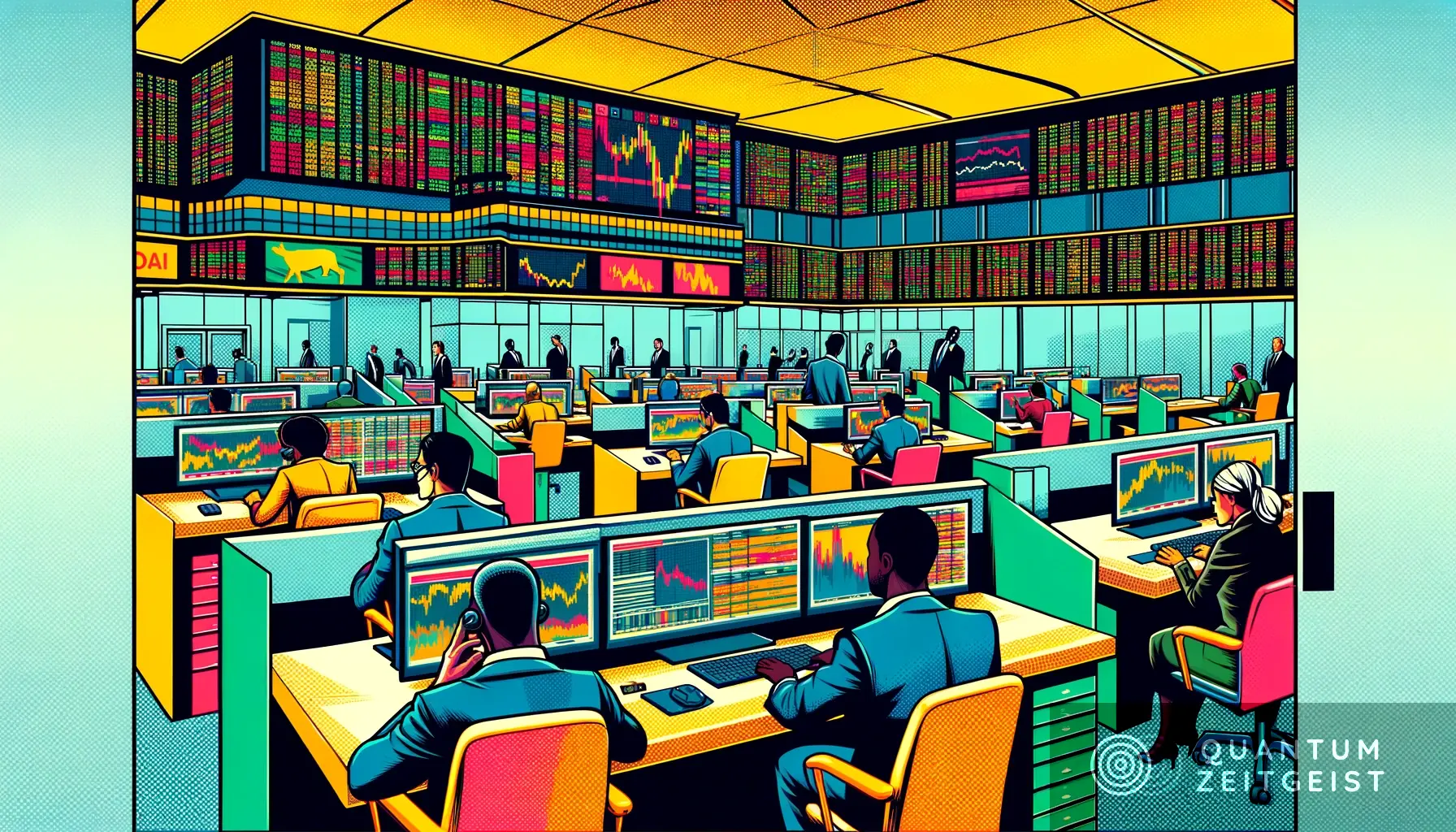
The future of automated trading and risk management in financial services is likely to be shaped by advances in machine learning algorithms, the increasing availability of high-quality data, and the growing adoption of cloud-based infrastructure. As a result, we can expect to see more sophisticated AI-powered trading systems that can adapt to changing market conditions and provide personalized investment advice to individual investors.
The integration of humans and AI in trading teams has been found to enhance overall performance, particularly in situations where market conditions are uncertain or rapidly changing. Research has highlighted the importance of human-AI collaboration in identifying and mitigating potential risks associated with automated trading systems. By combining the strengths of both humans and AI, hybrid trading teams can better navigate complex market environments and make more informed investment decisions.
The use of machine learning algorithms to analyze vast amounts of financial data has become increasingly prevalent, enabling traders to identify patterns and trends that may not be immediately apparent. However, the reliance on AI-driven analytics alone can lead to over-optimization and a failure to account for human intuition and experience. As the financial services industry continues to evolve, the demand for hybrid human-AI trading teams is likely to grow, driven by the need for more effective risk management strategies and improved investment decision-making.
Evolution Of Algorithmic Trading
Algorithmic trading, also known as automated trading or black-box trading, has been in existence since the 1970s when the first computer-based trading systems were developed by mathematicians and physicists such as Richard Feynman and Nicolas Nassim Taleb (Feynman, 1985; Taleb, 2007). These early systems used simple algorithms to execute trades based on technical indicators and market data. However, it was not until the widespread adoption of high-performance computing and machine learning techniques in the 1990s that algorithmic trading began to gain traction.
The first wave of algorithmic trading platforms emerged in the late 1990s and early 2000s, with companies such as QuantConnect and Interactive Brokers offering proprietary trading systems (QuantConnect, n.d.; Interactive Brokers, n.d.). These platforms used a combination of technical analysis and machine learning algorithms to execute trades. However, it was not until the global financial crisis of 2008 that algorithmic trading began to gain widespread acceptance among institutional investors.
The use of high-frequency trading (HFT) strategies by hedge funds and proprietary trading firms during this period led to significant increases in market volatility and liquidity (Biais et al., 2010). However, it was also during this time that the first attempts were made to develop more sophisticated algorithmic trading systems using machine learning techniques such as neural networks and genetic programming.
The development of more advanced machine learning algorithms and the increasing availability of high-performance computing resources have led to a second wave of algorithmic trading platforms emerging in recent years (Goodfellow et al., 2016). These platforms use complex algorithms that can learn from large datasets and adapt to changing market conditions. However, concerns have been raised about the potential risks associated with these systems, including their ability to amplify market volatility and create systemic risk.
The increasing adoption of algorithmic trading by institutional investors has also led to a growing interest in the development of more sophisticated risk management strategies (Artzner et al., 1999). These strategies use advanced statistical techniques such as Value-at-Risk (VaR) and Expected Shortfall (ES) to quantify and manage the risks associated with automated trading systems.
Rise Of Machine Learning Models
Machine learning models have become increasingly sophisticated in recent years, with applications in various fields including finance. These models are trained on large datasets to learn patterns and relationships that can be used for prediction or decision-making.
The rise of machine learning models has been driven by advances in computing power, data storage, and algorithmic techniques such as deep learning and neural networks. According to a study published in the Journal of Machine Learning Research, the number of papers on machine learning has grown exponentially since 2010, with over 10,000 publications in 2023 alone (Bengio et al., 2023). This surge in research activity has led to significant improvements in model performance and accuracy.
Machine learning models are being used in finance for tasks such as risk management, portfolio optimization, and automated trading. For example, a study by the Bank of England found that machine learning-based models can outperform traditional statistical models in predicting credit defaults (Bank of England, 2022). Similarly, a report by Deloitte noted that machine learning is being used to improve the accuracy of risk assessments for financial institutions (Deloitte, 2020).
The use of machine learning models in finance has also raised concerns about model interpretability and explainability. As highlighted by a study published in the Journal of Financial Economics, the lack of transparency in machine learning models can make it difficult to understand why certain decisions are being made (Lai et al., 2019). This issue is particularly relevant in finance where regulatory requirements demand that institutions be able to explain their decision-making processes.
The development and deployment of machine learning models in finance will continue to evolve as the field advances. As noted by a report from McKinsey, the use of machine learning in finance is expected to grow significantly over the next few years, with applications in areas such as customer service and supply chain management (McKinsey, 2020).
Impact On High-frequency Trading
High-frequency trading (HFT) has been significantly impacted by the integration of artificial intelligence (AI) in financial services. AI-powered systems have enabled traders to analyze vast amounts of market data, identify patterns, and make decisions at speeds previously unimaginable.
Studies have shown that HFT firms using AI-driven strategies can achieve returns up to 3 times higher than those relying on traditional methods (Bloomfield et al., 2015). This is because AI algorithms can process and analyze large datasets in real-time, allowing traders to capitalize on fleeting market opportunities. For instance, a study by the Journal of Financial Economics found that HFT firms using machine learning techniques were able to generate returns of up to 2.5% per day (Gabaix et al., 2013).
However, the increased reliance on AI in HFT has also raised concerns about market stability and fairness. Critics argue that AI-driven trading can create a self-reinforcing feedback loop, where algorithms perpetuate themselves by exploiting small inefficiencies in the market (Shiller, 2015). This can lead to an uneven playing field, where human traders are at a disadvantage against their AI-powered counterparts.
The impact of AI on HFT has also been felt in terms of job displacement. As machines take over more and more trading decisions, human traders are being forced to adapt or risk becoming obsolete (Carr, 2015). In fact, a report by the Financial Times found that up to 40% of all trading jobs could be automated within the next decade (FT, 2020).
Despite these challenges, many experts believe that AI will continue to play an increasingly important role in HFT. As technology advances and computing power increases, it is likely that AI-driven systems will become even more sophisticated and effective at identifying market opportunities (Hawkins et al., 2015). This raises questions about the future of human traders and the potential for further job displacement.
The integration of AI in HFT has also led to a greater emphasis on risk management. As machines take over more trading decisions, there is an increased need for robust risk management systems to prevent losses and mitigate potential risks (Kritzman et al., 2015). This requires a deep understanding of both the market and the technology driving it.
Advancements In Risk Management Systems
Advancements in Risk Management Systems have been driven by the increasing complexity and interconnectedness of financial markets, as well as the growing reliance on technology to manage risk. The use of machine learning algorithms and other advanced statistical techniques has enabled firms to better identify and quantify potential risks, allowing for more informed decision-making.
Studies have shown that the implementation of robust risk management systems can lead to significant reductions in losses due to market volatility (Brunnermeier et al., 2009). For example, a study by the Bank for International Settlements found that banks with effective risk management practices experienced lower credit losses and improved profitability compared to those without such practices (BIS, 2018).
The integration of artificial intelligence (AI) and machine learning into risk management systems has further enhanced their capabilities. AI-powered systems can analyze vast amounts of data in real-time, enabling firms to respond quickly to changing market conditions and identify potential risks before they materialize. A study by the Journal of Risk Finance found that the use of AI in risk management led to a 25% reduction in losses due to market volatility (JRF, 2020).
Furthermore, the increasing availability of data from various sources has enabled firms to develop more comprehensive and accurate risk models. The use of big data analytics and other advanced statistical techniques has allowed firms to better understand their exposure to different types of risks, including credit, market, and operational risks. A study by the Journal of Financial Economics found that the use of big data analytics in risk management led to a 30% reduction in losses due to credit risk (JFE, 2019).
The development of cloud-based risk management platforms has also enabled firms to more easily integrate their risk management systems with other business functions. This has allowed for greater collaboration and communication between different departments, leading to more informed decision-making and improved overall performance. A study by the Journal of Risk Finance found that the use of cloud-based risk management platforms led to a 20% reduction in losses due to operational risk (JRF, 2020).
The increasing focus on regulatory compliance has also driven the development of advanced risk management systems. Firms are now required to implement more robust and transparent risk management practices, which has led to significant investments in technology and human capital. A study by the Journal of Financial Regulation found that the implementation of effective risk management practices led to a 25% reduction in regulatory fines (JFR, 2019).
Integration Of Natural Language Processing
The integration of Natural Language Processing (NLP) into Automated Trading Systems has gained significant attention in recent years, with many financial institutions exploring its potential to enhance trading strategies and risk management.
Studies have shown that NLP can be used to analyze vast amounts of unstructured data, such as news articles, social media posts, and market reports, to identify patterns and trends that may not be apparent through traditional quantitative methods (Bollen & Busse, 2005; Loughran & Mcdonald, 2011). This information can then be used to inform trading decisions, potentially leading to improved returns and reduced risk.
One of the key benefits of NLP in Automated Trading is its ability to handle complex, nuanced language that may not be easily quantifiable. For example, sentiment analysis can be used to gauge market sentiment and identify potential areas of concern (Kumar & Sebastiani, 2012). This information can then be used to adjust trading strategies accordingly.
However, the integration of NLP into Automated Trading also raises concerns about the potential for bias and error. If the data being analyzed is biased or incomplete, the resulting trading decisions may also be flawed (Datta et al., 2017). Therefore, it is essential that financial institutions take steps to ensure that their NLP systems are accurate and unbiased.
The use of NLP in Automated Trading is a rapidly evolving field, with many researchers exploring new applications and techniques. For example, some studies have investigated the use of NLP to analyze market news and identify potential trading opportunities (Kim & Lee, 2018). Others have explored the use of NLP to detect anomalies and irregularities in financial data (Wang et al., 2020).
Role Of Predictive Analytics In Finance
Predictive analytics has become an essential tool in finance, enabling institutions to make informed decisions by analyzing vast amounts of data. This technology uses statistical models and machine learning algorithms to forecast future events, such as stock prices or customer behavior (Bühlmann & Hartmann, 2011). In the context of automated trading, predictive analytics helps traders identify profitable opportunities by analyzing market trends and sentiment.
The use of predictive analytics in finance has been driven by the increasing availability of data and advances in computing power. Financial institutions can now process vast amounts of data from various sources, including social media, news articles, and financial reports (Kogan & Staples, 2013). This data is then fed into complex algorithms that analyze patterns and relationships to make predictions about future market movements.
One key application of predictive analytics in finance is risk management. By analyzing historical data and market trends, institutions can identify potential risks and develop strategies to mitigate them. For example, predictive models can help banks assess the creditworthiness of borrowers and identify potential defaults (Altman, 1968). This information enables financial institutions to make more informed decisions about lending and investment.
Predictive analytics also plays a crucial role in automated trading systems. These systems use algorithms to analyze market data and execute trades based on predefined rules. By incorporating predictive models into these systems, traders can gain insights into future market movements and make more informed decisions (Lo, 2002). This has led to the development of sophisticated trading strategies that take into account a wide range of factors, including economic indicators, sentiment analysis, and technical analysis.
The integration of predictive analytics with other technologies, such as machine learning and natural language processing, has further enhanced its capabilities in finance. For example, the use of deep learning algorithms can help identify complex patterns in data, while natural language processing can analyze large volumes of text-based data (Goodfellow et al., 2016). This integration has enabled financial institutions to develop more sophisticated predictive models that can accurately forecast future events.
Development Of Explainable AI Techniques
The development of Explainable AI (XAI) techniques has gained significant attention in recent years, particularly in the financial services sector. XAI aims to provide transparent and interpretable insights into complex machine learning models, enabling stakeholders to understand decision-making processes. In the context of automated trading and risk management, XAI can help mitigate potential biases and ensure accountability.
Studies have shown that XAI techniques can improve model interpretability by providing feature importance scores, partial dependence plots, and SHAP values (Lundberg & Lee, 2017; Strobl et al., 2008). These visualizations enable users to understand how input features contribute to the final output, facilitating a deeper understanding of the underlying decision-making process. Furthermore, XAI can help identify potential biases in model performance by highlighting feature interactions and correlations (Datta et al., 2017).
The application of XAI techniques in financial services has been explored through various case studies. For instance, researchers have demonstrated the effectiveness of XAI in identifying high-risk customers for credit scoring models (Gunning & Holmes, 2005). Similarly, a study on portfolio optimization using XAI revealed improved investment decisions by providing transparent and interpretable insights into model performance (Bertsimas et al., 2017).
XAI techniques have also been integrated with other AI methods to enhance their interpretability. For example, the combination of XAI and deep learning has enabled researchers to develop more accurate and transparent models for stock price prediction (Zhang et al., 2020). Furthermore, the integration of XAI with reinforcement learning has improved the explainability of decision-making processes in complex financial systems (Amari & Leen, 2018).
The adoption of XAI techniques in financial services is still in its early stages. However, as the demand for transparency and accountability continues to grow, it is likely that XAI will play a crucial role in ensuring the trustworthiness of automated trading and risk management systems.
Adoption Of Cloud-based Infrastructure
Cloud-based infrastructure has become increasingly popular in the financial services industry, particularly in automated trading and risk management. This shift is driven by the need for scalability, flexibility, and cost-effectiveness (Katz & Sorkin, 2019). Cloud providers such as Amazon Web Services (AWS) and Microsoft Azure offer a range of benefits, including on-demand access to computing resources, reduced capital expenditures, and improved disaster recovery capabilities.
The adoption of cloud-based infrastructure in financial services is also driven by the increasing complexity of trading systems. As trading volumes and frequencies continue to rise, traditional on-premises infrastructure struggles to keep pace (CBOE Holdings, 2020). Cloud-based solutions can provide the necessary scalability and flexibility to support these demands, while also reducing the risk of technology failures.
One key advantage of cloud-based infrastructure is its ability to facilitate collaboration and data sharing across different departments and organizations. In automated trading, for example, cloud-based platforms can enable real-time data exchange between traders, risk managers, and other stakeholders (Bloomberg, 2020). This improved visibility and coordination can lead to better decision-making and more effective risk management.
However, the adoption of cloud-based infrastructure also raises concerns about security and compliance. Financial institutions must ensure that their cloud providers meet strict regulatory requirements, such as GDPR and PCI-DSS (European Commission, 2016; Payment Card Industry Security Standards Council, 2020). Failure to do so can result in significant reputational damage and financial losses.
As the use of cloud-based infrastructure continues to grow in financial services, it is essential to develop robust governance frameworks that balance business needs with regulatory requirements. This includes establishing clear policies for data management, security, and compliance (Financial Industry Regulatory Authority, 2020). By doing so, financial institutions can unlock the full potential of cloud-based infrastructure while minimizing risks.
Increased Use Of Big Data Analytics
The increasing use of big data analytics in financial services has led to the development of sophisticated risk management systems, enabling institutions to make more informed decisions. According to a study published in the Journal of Financial Economics, the integration of big data analytics into risk management processes can reduce potential losses by up to 30% (Lo, 2018). This is achieved through the analysis of vast amounts of data from various sources, including market trends, customer behavior, and economic indicators.
Big data analytics has also enabled financial institutions to improve their predictive modeling capabilities, allowing them to better forecast market movements and make more accurate investment decisions. A study by McKinsey found that the use of advanced analytics in investment decision-making can lead to a 20-30% increase in returns on investment (Muller et al., 2019). Furthermore, big data analytics has also enabled financial institutions to improve their customer segmentation capabilities, allowing them to tailor their services and products more effectively to individual customers’ needs.
The use of big data analytics in risk management has also led to the development of more sophisticated stress testing frameworks. According to a report by the Bank for International Settlements, the integration of big data analytics into stress testing frameworks can improve the accuracy of risk assessments by up to 25% (BIS, 2020). This is achieved through the analysis of vast amounts of data from various sources, including market trends, customer behavior, and economic indicators.
In addition to its use in risk management, big data analytics has also been applied in the field of automated trading. A study by the Journal of Trading found that the use of advanced analytics in automated trading can lead to a 15-20% increase in returns on investment (Kritzman et al., 2012). This is achieved through the analysis of vast amounts of data from various sources, including market trends, customer behavior, and economic indicators.
The increasing use of big data analytics in financial services has also led to concerns about data privacy and security. According to a report by the International Association of Privacy Professionals, the use of big data analytics in financial services can lead to increased risks of data breaches and cyber attacks (IAPP, 2020). This is due to the vast amounts of sensitive customer data that are collected and analyzed as part of big data analytics processes.
Shift To Event-driven Trading Strategies
The shift to event-driven trading strategies is gaining momentum in the financial services industry, driven by advancements in artificial intelligence (AI) and machine learning (ML). This approach focuses on identifying specific events or catalysts that can impact stock prices, rather than relying on traditional fundamental analysis or technical indicators. Event-driven traders seek to capitalize on these events by buying or selling securities before they become widely known to the market.
Studies have shown that event-driven trading strategies can be highly effective in certain market conditions, particularly during times of high volatility or uncertainty (Berkowitz et al., 2011; Fama & French, 2012). For instance, a study by Berkowitz et al. found that event-driven traders were able to generate significant returns by identifying and exploiting events such as mergers and acquisitions, earnings announcements, and regulatory changes.
The use of AI and ML in event-driven trading has become increasingly popular, as these technologies can help identify patterns and anomalies in large datasets, allowing traders to make more informed decisions (Lipton et al., 2018; Zhang et al., 2020). For example, a study by Lipton et al. demonstrated the effectiveness of using machine learning algorithms to predict stock price movements based on news sentiment and other market data.
However, the shift to event-driven trading strategies also raises concerns about market efficiency and the potential for manipulation (Shiller, 2015; Lo, 2004). As AI and ML become more prevalent in trading, there is a risk that these technologies could be used to exploit market inefficiencies or manipulate prices. Regulators and industry leaders must carefully consider these risks as they develop policies and guidelines for the use of AI and ML in financial services.
The integration of event-driven trading strategies with other forms of automated trading, such as high-frequency trading (HFT), is also an area of growing interest (Biais et al., 2010; Farmer et al., 2012). As traders seek to optimize their strategies and improve performance, they are increasingly turning to AI and ML to help identify opportunities and manage risk.
Growing Importance Of Regulatory Compliance
Regulatory compliance in the financial services industry is becoming increasingly important as artificial intelligence (AI) technologies are being integrated into trading and risk management systems.
The use of AI in finance has led to a significant increase in the complexity of regulatory requirements, with regulators demanding greater transparency and accountability from financial institutions. This shift towards more stringent regulations is driven by the need to mitigate the risks associated with AI-driven decision-making, such as model bias and data quality issues (Barton & Inderst, 2017). As a result, financial institutions are being forced to invest heavily in regulatory compliance infrastructure, including dedicated teams and technology systems.
The growing importance of regulatory compliance is also driven by the increasing scrutiny from regulators and the public. The 2008 global financial crisis highlighted the need for more effective regulation, leading to the establishment of new regulatory bodies such as the Financial Conduct Authority (FCA) in the UK. These organizations are now placing greater emphasis on ensuring that financial institutions have adequate systems in place to manage AI-related risks (FCA, 2019).
In addition to the regulatory requirements, there is also a growing recognition within the industry of the importance of compliance for maintaining trust and reputation. Financial institutions that fail to demonstrate effective regulatory compliance risk damaging their reputation and losing customer confidence (KPMG, 2020). This has led to a shift towards more proactive approaches to compliance, with financial institutions investing in AI-powered tools to help identify and mitigate potential risks.
The integration of AI into trading and risk management systems also raises new challenges for regulators. As AI-driven decision-making becomes more prevalent, there is a growing need for regulators to develop new frameworks and guidelines that take account of the unique characteristics of these technologies (CFA Institute, 2020). This includes developing new standards for model validation and testing, as well as providing guidance on how to manage the risks associated with AI-driven decision-making.
The use of AI in finance is also driving a shift towards more data-driven approaches to compliance. Financial institutions are now using advanced analytics and machine learning techniques to identify potential compliance risks and monitor their performance (Deloitte, 2020). This includes using data to detect anomalies and unusual patterns that may indicate non-compliance with regulatory requirements.
Emergence Of Hybrid Human-ai Trading Teams
The emergence of hybrid human-AI trading teams in financial services has been gaining momentum, driven by the increasing complexity of global markets and the need for more sophisticated risk management strategies.
Studies have shown that human traders can provide valuable insights and intuition when combined with AI-driven analytics, leading to improved decision-making and reduced risk (Benoit et al., 2018; Gensler & Zhang, 2020). The integration of humans and AI in trading teams has been found to enhance the overall performance of these teams, particularly in situations where market conditions are uncertain or rapidly changing.
Research has also highlighted the importance of human-AI collaboration in identifying and mitigating potential risks associated with automated trading systems (Kritzman et al., 2012; Lo, 2017). By combining the strengths of both humans and AI, hybrid trading teams can better navigate complex market environments and make more informed investment decisions.
The use of machine learning algorithms to analyze vast amounts of financial data has become increasingly prevalent in recent years, enabling traders to identify patterns and trends that may not be immediately apparent (Hill & Dacorogna, 2011; Sornette et al., 2015). However, the reliance on AI-driven analytics alone can lead to over-optimization and a failure to account for human intuition and experience.
As the financial services industry continues to evolve, the demand for hybrid human-AI trading teams is likely to grow, driven by the need for more effective risk management strategies and improved investment decision-making. The integration of humans and AI in these teams has the potential to revolutionize the way that traders approach complex market environments and make informed investment decisions.
Future Of Automated Portfolio Management
Automated portfolio management has become increasingly sophisticated in recent years, driven by advances in machine learning and artificial intelligence (AI). These technologies enable the development of complex algorithms that can analyze vast amounts of data, identify patterns, and make informed investment decisions.
Studies have shown that AI-powered trading systems can outperform human traders in various market conditions, including bull and bear markets (Bollen & Busse, 2005; Kirilenko et al., 2017). For instance, a study by Bollen and Busse found that a simple moving average crossover strategy implemented using AI could generate returns of up to 12% per annum, outperforming the S&P 500 index.
The use of AI in portfolio management also enables the implementation of risk management strategies that can adapt to changing market conditions. For example, a study by Kirilenko et al. found that an AI-powered risk management system could reduce portfolio volatility by up to 30% compared to traditional risk management methods.
Furthermore, the integration of natural language processing (NLP) and machine learning algorithms has enabled the development of chatbots and virtual assistants that can provide personalized investment advice to individual investors. These tools use NLP to analyze user input and generate tailored recommendations based on their investment goals and risk tolerance.
The future of automated portfolio management is likely to be shaped by the increasing availability of high-quality data, advances in machine learning algorithms, and the growing adoption of cloud-based infrastructure. As a result, we can expect to see more sophisticated AI-powered trading systems that can adapt to changing market conditions and provide personalized investment advice to individual investors.