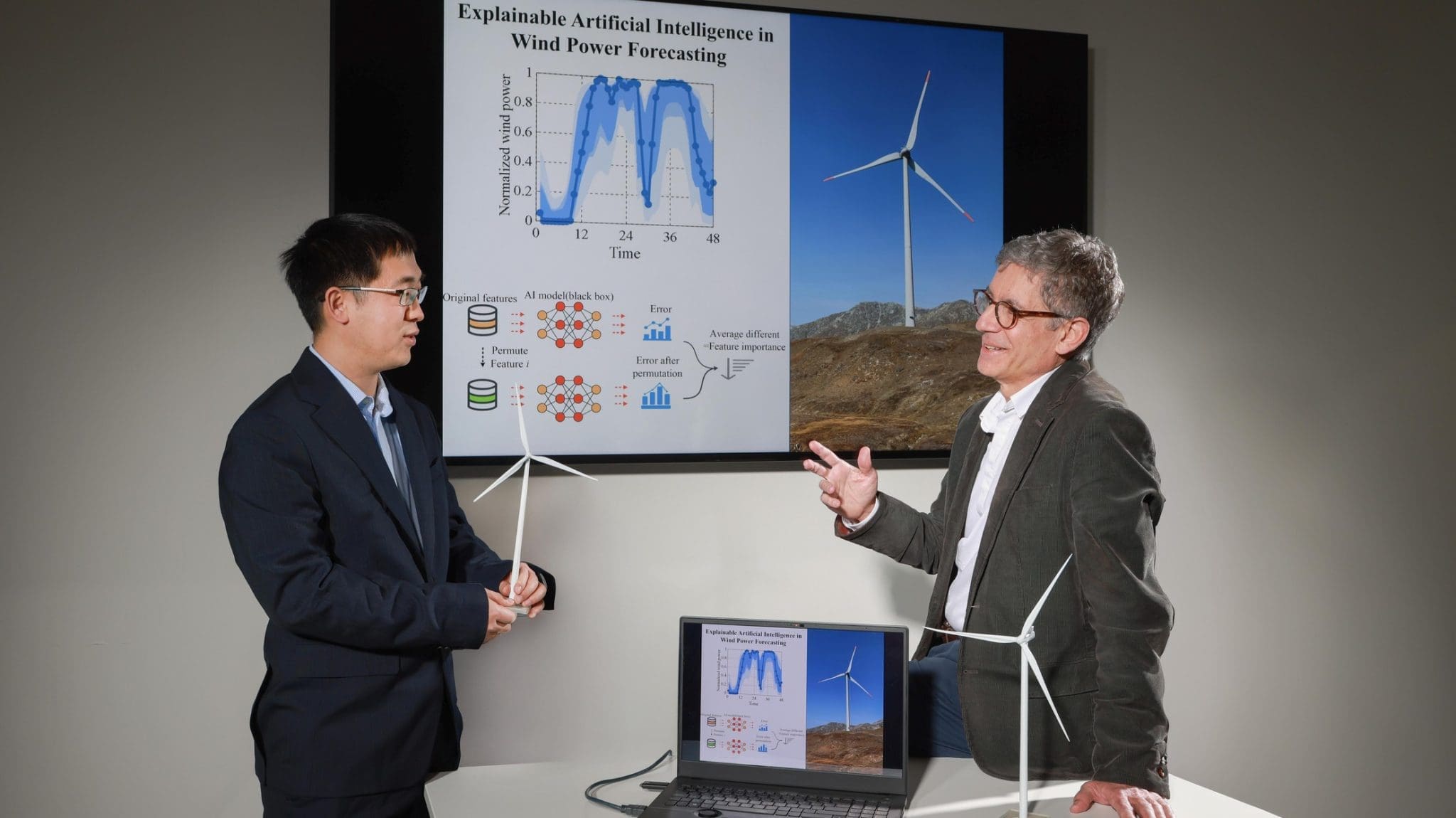
The integration of wind power into smart grids has become increasingly crucial for a sustainable energy future, but it relies heavily on the accuracy of daily forecasts to ensure efficient management and minimize reliance on fossil fuels. To address the limitations of current forecasting models, which often function as “black boxes” lacking transparency, researchers have turned to explainable artificial intelligence (XAI).
By applying XAI techniques to wind power generation, engineers can enhance the interpretability of forecasts, providing insights into the decision-making processes of AI models and identifying key variables that contribute to reliable predictions. A recent study published in Applied Energy demonstrates the potential of XAI to improve the trustworthiness of wind power forecasts, leveraging data from weather models and wind farms to develop more credible and reliable predictions, which could ultimately make wind power a more competitive and integral part of the energy landscape.
Introduction to Explainable Artificial Intelligence in Wind Power Forecasting
The integration of wind power into smart grids relies heavily on accurate daily forecasts of wind energy generation. However, current models used for forecasting wind power output have a non-negligible margin of error, which can lead to grid operators compensating at the last minute with more expensive fossil fuel-based energy. To address this issue, researchers have been exploring the application of explainable artificial intelligence (XAI) to improve the trustworthiness of wind power forecasts. XAI is a branch of AI that provides transparency into the decision-making processes of black-box models, allowing users to understand how their output is generated and whether their forecasts can be trusted.
The use of XAI in wind power forecasting has the potential to provide more credible and reliable predictions by identifying the most important variables that influence wind power generation. By applying XAI techniques to black-box AI models, researchers can gain insight into the string of decisions made by the model and determine which variables should be used in the model’s input. This approach was recently tested on wind power generation by a team of experts from EPFL, who found that XAI can improve the interpretability of wind power forecasting and help identify the most relevant variables for use in models.
The study, published in Applied Energy, demonstrated the effectiveness of XAI in improving the trustworthiness of wind power forecasts. The researchers trained a neural network using input variables from a weather model and data collected from wind farms in Switzerland and worldwide. They then applied four XAI techniques to evaluate the trustworthiness of the models and developed metrics to determine whether a technique’s interpretation of the data was reliable. The results showed that XAI can pinpoint which variables are most important for generating reliable forecasts, and even allow for certain variables to be left out of the models without compromising accuracy.
The Importance of Transparency in Wind Power Forecasting
The lack of transparency in black-box AI models is a significant challenge in wind power forecasting. Most AI models function as “black boxes,” making it difficult to understand how they arrive at specific predictions. This lack of understanding can lead to a lack of trust in the forecasts, which can have significant consequences for grid operators and the integration of wind power into smart grids. XAI addresses this issue by providing transparency on the modeling processes leading to the forecasts, resulting in more credible and reliable predictions.
The application of XAI in wind power forecasting has the potential to provide a higher level of transparency and trustworthiness in the decision-making process. By understanding how the models arrive at their predictions, researchers can identify areas for improvement and develop more accurate models. Additionally, XAI can help to identify biases in the data and models, which can lead to more robust and reliable forecasts. The use of XAI in wind power forecasting is an important step towards improving the integration of wind power into smart grids and reducing reliance on fossil fuels.
The development of metrics to evaluate the trustworthiness of XAI techniques is also a crucial aspect of this research. Metrics are used to evaluate model performance, and in the context of XAI, they can help determine whether a technique’s interpretation of the data is reliable. The researchers developed various metrics to evaluate the trustworthiness of XAI techniques, which can be applied to other fields where transparency and trust are essential.
Applications of Explainable Artificial Intelligence in Wind Power Forecasting
The application of XAI in wind power forecasting has significant implications for the integration of wind power into smart grids. By providing more accurate and reliable forecasts, XAI can help grid operators to better manage their resources and reduce reliance on fossil fuels. The use of XAI can also help to identify areas for improvement in the models and data, leading to more robust and reliable forecasts.
The findings of this study could help make wind power more competitive, as power system operators will be more comfortable relying on wind power if they understand the internal mechanisms that their forecasting models are based on. With XAI-based approaches, models can be diagnosed and upgraded, generating more reliable forecasts of daily wind power fluctuations. This can lead to a reduction in the costs associated with integrating wind power into smart grids and make it a more viable option for meeting energy demands.
The application of XAI in wind power forecasting is not limited to this specific field. The techniques and metrics developed in this study can be applied to other areas where transparency and trust are essential, such as diagnosing medical conditions or calculating stock market valuations. The use of XAI has the potential to revolutionize the way we approach complex decision-making processes, providing more accurate and reliable predictions that can inform critical decisions.
Future Directions for Explainable Artificial Intelligence in Wind Power Forecasting
The study demonstrates the effectiveness of XAI in improving the trustworthiness of wind power forecasts, but there are still several areas that require further research. The development of more advanced XAI techniques and metrics is necessary to improve the accuracy and reliability of wind power forecasts. Additionally, the application of XAI to other fields where transparency and trust are essential can help to identify new areas for improvement and develop more robust models.
The integration of XAI with other technologies, such as machine learning and data analytics, can also provide new opportunities for improving wind power forecasting. The use of XAI can help to identify biases in the data and models, which can lead to more robust and reliable forecasts. Furthermore, the development of urban digital twins for climate action can help to assess policies and solutions for energy, water, and infrastructure, providing a more comprehensive approach to addressing the challenges associated with wind power forecasting.
The funding provided by the Swiss Federal Office of Energy and the ETH Domain joint initiative in the strategic area of Energy, Climate, and a Sustainable Environment has been instrumental in supporting this research. The study highlights the importance of continued investment in research and development to improve the integration of wind power into smart grids and reduce reliance on fossil fuels. As the world continues to transition towards more sustainable energy sources, the application of XAI in wind power forecasting will play an increasingly important role in providing accurate and reliable predictions that can inform critical decisions.
External Link: Click Here For More