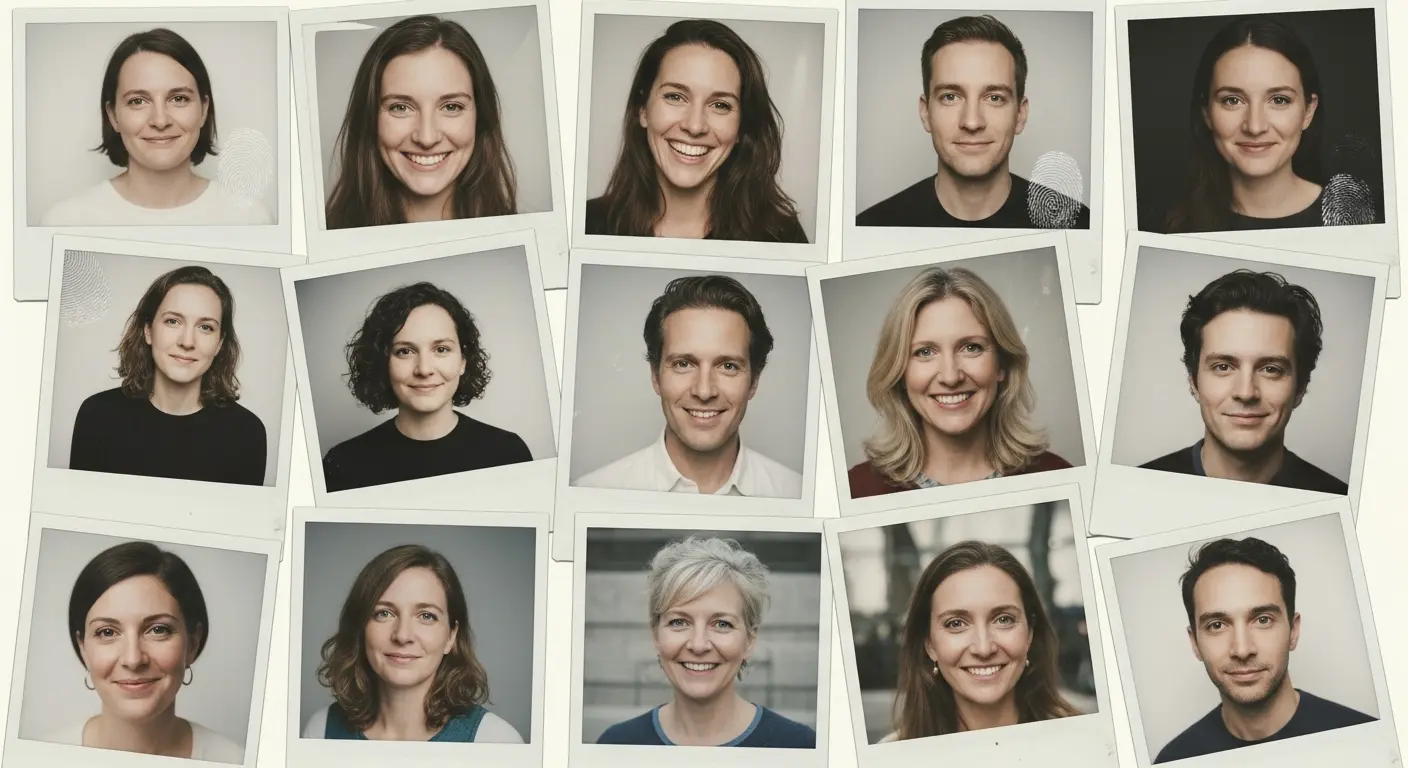
A collaborative study led by Jeremy Tree of Swansea University, alongside colleagues from the University of Lincoln and Ariel University in Israel, demonstrates that AI-generated facial images are now virtually indistinguishable from authentic photographs. Published in Cognitive Research: Principles and Implications, the research utilized models like ChatGPT and DALL·E to create synthetic images of both fictional and real individuals, including celebrities. Across four experiments involving participants from multiple countries, the team found limited ability to reliably differentiate AI-generated faces from genuine photos, even with comparative images or prior familiarity—highlighting a new level of “deepfake realism” and raising concerns about eroding trust in visual media.
AI Generates Realistic and Indistinguishable Facial Images
Recent research from Swansea University, University of Lincoln, and Ariel University demonstrates a significant leap in AI’s ability to generate photorealistic facial images. Using readily available models like ChatGPT and DALL·E, the team created synthetic images of both fictional and real people – including celebrities – that proved virtually indistinguishable from genuine photographs in four separate experiments. Participants, drawn from multiple countries, struggled to identify the AI-generated images, highlighting a new level of “deepfake realism” posing challenges to trust in visual media.
The study’s findings are particularly concerning because even providing participants with comparison photos or leveraging pre-existing familiarity with the faces offered limited improvement in detection rates. Researchers tested this with images of Hollywood stars like Paul Rudd and Olivia Wilde, finding consistently low accuracy in identifying the authentic photographs. This indicates that current human judgment isn’t equipped to reliably discern AI-generated faces, even with contextual clues, raising substantial concerns about potential misinformation campaigns.
This advancement isn’t merely a technical feat; it has immediate implications for trust and verification. The ability to create convincingly fake images of real people opens avenues for malicious use, such as fabricating endorsements or influencing public opinion. Professor Jeremy Tree emphasizes the urgent need for reliable detection methods, as automated systems currently offer no significant advantage over human judgment in this task. The research underscores a growing gap between AI image generation and our ability to validate visual information.
Research Highlights Difficulty Distinguishing Real from Synthetic
Recent research from Swansea University, the University of Lincoln, and Ariel University demonstrates a concerning new level of realism in AI-generated imagery. Utilizing models like ChatGPT and DALL·E, scientists created synthetic images of real people – both fictional composites and existing celebrities – that proved virtually indistinguishable from genuine photographs. Across four experiments involving participants from multiple countries, accuracy rates for identifying fakes remained low, highlighting a significant challenge to visual trust.
The study revealed that simply providing comparison photos or leveraging participant familiarity with faces offered limited improvement in detection rates. Even when presented with images of Hollywood stars like Paul Rudd and Olivia Wilde, subjects struggled to differentiate authentic photos from AI-generated versions. This suggests current human visual processing isn’t adequately equipped to identify these sophisticated fakes, raising serious implications for the spread of misinformation and the erosion of public trust in visual media.
This isn’t simply about creating believable new faces; the ability to convincingly synthesize images of existing individuals opens avenues for manipulation. Researchers emphasize the potential for generating false endorsements or misrepresenting individuals’ views, impacting public opinion and potentially damaging reputations. The urgent need for reliable detection methods—both automated systems and improved human discernment—is now paramount given AI’s rapidly advancing capabilities.
Implications for Trust, Misinformation, and Detection Methods
Recent research from Swansea, Lincoln, and Ariel Universities demonstrates a critical erosion of trust in visual media. Utilizing readily available AI like ChatGPT and DALL-E, researchers successfully generated photorealistic images of both fictional and real people – including celebrities – that proved virtually indistinguishable from genuine photographs in four separate experiments. Participants, drawn from multiple countries (US, Canada, UK, Australia, New Zealand), consistently failed to accurately identify the AI-generated images, highlighting a new level of “deepfake realism” and raising significant concerns about potential misuse.
The study’s findings indicate that simple mitigation strategies are ineffective. Even when provided with comparison photos or asked to evaluate familiar faces (like Paul Rudd or Olivia Wilde), participants showed limited ability to discern AI-generated fakes from authentic images. This suggests current human-based detection relies heavily on intuitive, but easily fooled, pattern recognition. The implications extend beyond simple deception; realistic synthetic imagery can be used to fabricate endorsements, manipulate public opinion, and damage reputations with increasing ease.
Consequently, the need for robust automated detection methods is urgent. While the research acknowledges potential for AI to eventually outperform humans in spotting deepfakes, current reliance falls to viewers. The team emphasizes that existing methods offering comparison images or relying on prior familiarity are insufficient. Developing reliable technological solutions – likely involving analysis of subtle image artifacts or inconsistencies in lighting and texture – is crucial to restore trust in visual content and combat the spread of misinformation.