

The proliferation of manipulated videos, or deepfakes, presents a growing threat to information integrity, and detecting these forgeries remains a significant challenge. Chen Chen from Guangdong University of Finance and Economics, Runze Li from Westlake University, and Zejun Zhang from the University of Southern California, along with their colleagues, introduce FakeHunter, a novel framework designed to not only identify deepfakes but also to explain how it arrives at that conclusion. FakeHunter combines advanced artificial intelligence techniques, including contextual memory retrieval and step-by-step reasoning, with automated tool use to meticulously examine video content and pinpoint manipulations. The system achieves a substantial improvement in accuracy compared to existing methods, and importantly, delivers structured explanations detailing what was altered, where the changes occur, and the reasoning behind its judgement, offering a crucial step towards trustworthy video forensics and combating the spread of misinformation.
FakeHunter represents a multimodal deepfake-detection framework that integrates memory-guided retrieval, chain-of-thought reasoning, and tool-augmented verification to achieve accurate and interpretable video forensics. The system encodes visual content and audio, generating representations which then retrieve semantically similar real examples from a stored memory for contextual grounding. This retrieved context guides the system in iteratively reasoning over evidence, allowing it to localise manipulations and provide explanations for its findings. When confidence levels are low, FakeHunter automatically invokes specialised tools, such as detailed image analysis or audio spectrum inspection, to enhance its verification process.
Multimodal Deepfake Detection and Explainability Research
Deepfakes pose a growing threat, and robust detection methods are increasingly necessary. Many recent approaches combine visual and audio information for improved accuracy, as inconsistencies often reveal manipulations. Crucially, explainability is becoming paramount; simply detecting a deepfake is no longer sufficient, understanding why a system believes content is fake is essential. Real-world datasets are needed to move beyond controlled lab environments and reflect the challenges of deepfakes encountered in the wild. Utilizing common sense reasoning to identify inconsistencies in videos is also a promising area of research.
Several datasets are available for deepfake detection research, including Celeb-DF, WildDeepfake, FakeAVCeleb, FaceForensics++, AVoiD-DF, Exddv, and datasets focusing on manipulations beyond faces. Researchers are also creating datasets like FRADE to address specific challenges in deepfake detection. Various techniques are employed in deepfake detection, including RawNet and its variations for raw audio waveform processing, Large Language Models for explainable detection, Diffusion Models for content generation and anomaly detection, and Graph Attention Networks for audio spectro-temporal analysis. Other techniques include propagated networks for video inpainting and the application of common sense reasoning.
Current research emphasizes Explainable AI, aiming to make deepfake detection systems more transparent and interpretable. Multimodal fusion, combining audio and visual features, consistently improves accuracy. There is a growing focus on real-world scenarios and datasets, and research is expanding to detect manipulations beyond just faces. Key researchers in this field include Li, Manocha.
FakeHunter Explains Deepfake Manipulations With Reasoning
FakeHunter represents a significant advance in deepfake detection, moving beyond simple identification to provide detailed explanations of why content is manipulated. This new framework combines advanced artificial intelligence techniques, including memory-guided retrieval, step-by-step reasoning, and specialized tool integration, to achieve a high level of accuracy and interpretability in video forensics. Unlike many existing systems that merely flag manipulated content, FakeHunter aims to pinpoint exactly what has been altered, where the changes occur, and the reasoning behind its judgment. The system operates by first encoding both the visual and audio components of a video, creating a comprehensive representation of the content.
This contextual grounding allows FakeHunter to iteratively reason about potential manipulations, identifying inconsistencies and anomalies. When the system encounters uncertainty, it automatically activates specialized tools, such as detailed image analysis or audio spectrum inspection, to provide further verification. The result is a structured report detailing the specific modifications made to the video and the rationale behind the detection. To facilitate and evaluate this new approach, researchers also introduced X-AVFake, a large and comprehensive dataset of over 5,700 videos, totaling over 950 minutes of content, containing both visual and audio manipulations.
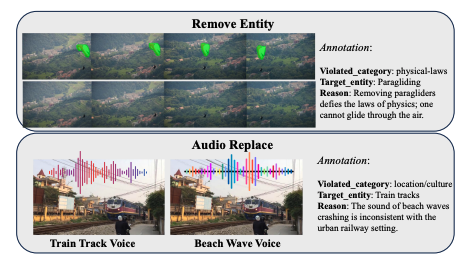
Crucially, each manipulation is accompanied by detailed annotations specifying the type of alteration, the affected region or entity, the category of reasoning violated by the change, and a natural language justification. In testing, FakeHunter achieved an accuracy of 34. 75% on this challenging dataset, representing a substantial improvement over comparable AI models. Furthermore, the system demonstrates practical deployability, processing a 10-minute video in approximately 8 minutes on a single high-performance processor or just 2 minutes using four processors, effectively operating at real-time speed or faster. The ability to not only detect deepfakes but also to explain how and why they are fake, combined with its speed and efficiency, positions FakeHunter as a powerful tool for combating the growing threat of manipulated media. The detailed explanations generated by the system are particularly valuable, offering a level of transparency and accountability currently lacking in most deepfake detection technologies.
Explainable Deepfake Detection with Contextual Reasoning
FakeHunter presents a new framework for detecting deepfake videos that combines several key techniques to improve both accuracy and interpretability. The system analyzes both video and audio content, retrieving similar real videos to provide context for its judgements, and uses a reasoning process to pinpoint manipulations. When the system is uncertain, it automatically employs specialized tools, such as detailed image analysis or audio spectrum inspection, to verify its conclusions. Experiments on a newly created benchmark dataset, X-AVFake, demonstrate that FakeHunter achieves improved accuracy compared to existing methods.
This research highlights the importance of providing explanations for deepfake detections, with FakeHunter outputting structured evidence detailing what was altered, where the changes occurred, and the reasoning behind its assessment. This focus on transparency aims to bridge the gap between simple predictions and the detailed analysis required for forensic applications. While the system currently processes videos at a speed comparable to real-time on multiple GPUs, the authors acknowledge that further improvements in processing speed are possible. Future work will focus on expanding the benchmark dataset to include more complex manipulations, developing more efficient tool selection, and exploring methods for end-to-end training that integrates reasoning traces with audio-visual features. The dataset, code, and models will be released to encourage further research and development in this field.
🗞 FakeHunter: Multimodal Step-by-Step Reasoning for Explainable Video Forensics
🧠 ArXiv: https://arxiv.org/abs/2508.14581


