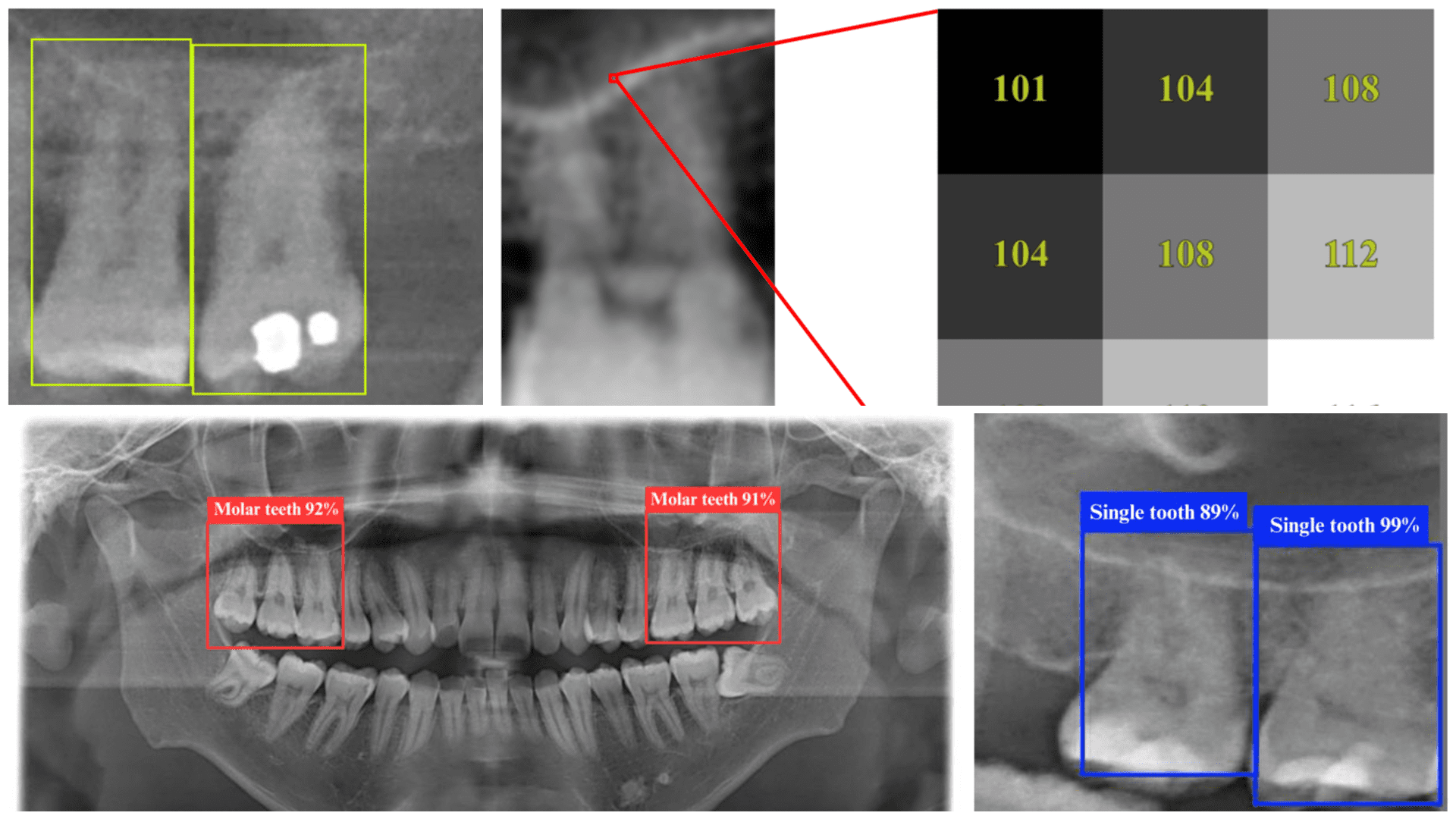
Collaborating with international colleagues, researchers at the Ateneo Laboratory for Intelligent Visual Environments (ALIVE) at Ateneo de Manila University have developed a deep learning model using YOLO 11n to detect tooth and sinus structures in dental X-rays with 98.2% accuracy. This advancement addresses the challenge of diagnosing odontogenic sinusitis, which is often mistaken for general sinusitis due to similar symptoms but can lead to severe complications if untreated. The model, trained on dental panoramic radiographs, offers a faster and more precise diagnostic tool than traditional methods, reducing reliance on CT scans and lowering radiation exposure. Published in the journal Bioengineering, this innovation highlights AI’s role in enhancing medical diagnostics by improving accuracy, efficiency, and accessibility for dental professionals.
AI dental assistant
The diagnosis of odontogenic sinusitis presents significant challenges due to its symptoms mirroring those of general sinusitis, often leading to misdiagnosis. This condition, stemming from upper tooth infections, is frequently overlooked by general practitioners, resulting in delayed treatment and potential complications.
Researchers have developed an AI dental assistant utilizing the YOLO 11n deep learning model to address this issue. This system achieves a remarkable 98.2% accuracy in identifying tooth and sinus structures on dental X-rays, surpassing traditional methods. The YOLO 11n model excels in medical imaging by detecting key anatomical relationships swiftly and precisely.
The AI dental assistant offers substantial benefits, including reduced radiation exposure by minimizing the need for CT scans and providing a cost-effective screening tool, especially in areas with limited resources. Enabling early detection facilitates prompt intervention, improves patient outcomes, and alleviates healthcare burdens.
This innovation holds promise as a standard tool in dental and ENT clinics, enhancing diagnostic accuracy where human expertise may fall short. The integration of AI into dentistry underscores its growing role in medical diagnostics, offering a reliable solution to the challenges of odontogenic sinusitis diagnosis.
Challenges in diagnosing odontogenic sinusitis
The diagnosis of odontogenic sinusitis is complicated by its similarity to general sinusitis, as both conditions present with symptoms such as nasal congestion, foul-smelling discharge, and occasional tooth pain. This overlap often leads to misdiagnosis, particularly since only about one-third of patients experience noticeable dental pain, further complicating early identification. The condition arises from infections or complications related to the upper teeth, making it a challenging area for general practitioners to recognize without specialized training.
Traditional diagnostic methods require collaboration between dentists and otolaryngologists, which can delay treatment and increase the risk of complications such as infection spreading to the face, eyes, or brain. The complexity of accurately diagnosing odontogenic sinusitis highlights the need for advanced tools that can improve diagnostic precision and reduce delays in care.
AI technology poised for clinical adoption
The AI dental assistant utilizing the YOLO 11n model demonstrates exceptional accuracy in identifying tooth and sinus structures on dental X-rays, achieving a remarkable 98.2% success rate. This level of precision significantly enhances diagnostic reliability compared to traditional methods, reducing the likelihood of misdiagnosis.
The system effectively lowers patient radiation exposure by minimising reliance on CT scans, contributing to safer diagnostic practices. This approach is particularly advantageous in resource-limited settings, where cost-effective screening tools are essential for ensuring timely and accessible care.
The YOLO 11n model’s ability to detect key anatomical relationships with high precision enables faster and more accurate diagnoses, improving workflow efficiency in clinical environments. Early detection facilitated by this technology allows for prompt intervention, enhancing patient outcomes and reducing the risk of complications associated with delayed treatment.
Integrating the AI dental assistant into clinical practice offers a reliable solution to diagnostic challenges, particularly where human expertise may be limited. This innovation improves diagnostic capabilities and supports more efficient and effective patient care in dental and ENT clinics.
More information
External Link: Click Here For More