Jefferson Lab data scientists in Newport News, VA, are developing an innovative AI-driven system to enhance computing cluster efficiency. Their study employs a competition-based approach where machine learning models compete daily to monitor and predict cluster behavior, aiming to minimize downtime and operational costs.
The DIDACT framework utilizes continual learning, allowing models to adapt incrementally, similar to human lifelong learning. This research could significantly improve resource optimization in large-scale scientific facilities, offering potential cost savings and improved scientific outcomes.
Competition-Based AI Models for Data Center Optimization
Jefferson Lab has developed an innovative approach to data center optimization through its DIDACT project, which employs competition-based AI models. This system leverages continual learning techniques to enhance anomaly detection and resource efficiency within computing clusters. By training multiple AI models daily, the system identifies the most effective model for monitoring cluster behavior, ensuring optimal performance.
The DIDACT framework utilizes autoencoders, including a graph neural network (GNN), to analyze relationships between components and detect anomalies. Each day, models compete based on their error rates, with the top performer becoming the “daily champion.” This competitive mechanism ensures that the system adapts dynamically to changing conditions, maintaining high efficiency.
Looking ahead, the DIDACT team aims to expand the AI framework’s capabilities to optimize energy usage in data centers. This includes exploring methods to reduce cooling requirements and adjust processing power based on demand, ultimately lowering operational costs while enhancing scientific output.
The Need for Anomaly Detection in Large-Scale Scientific Instruments
Jefferson Lab’s DIDACT project employs competition-based AI models to optimize data center operations. The system trains multiple autoencoder models daily, including one equipped with a graph neural network (GNN), to analyze relationships between components and detect anomalies. These models compete based on error rates, with the top performer designated as the “daily champion.” This approach ensures dynamic adaptation to changing conditions, enhancing resource efficiency and anomaly detection within computing clusters.
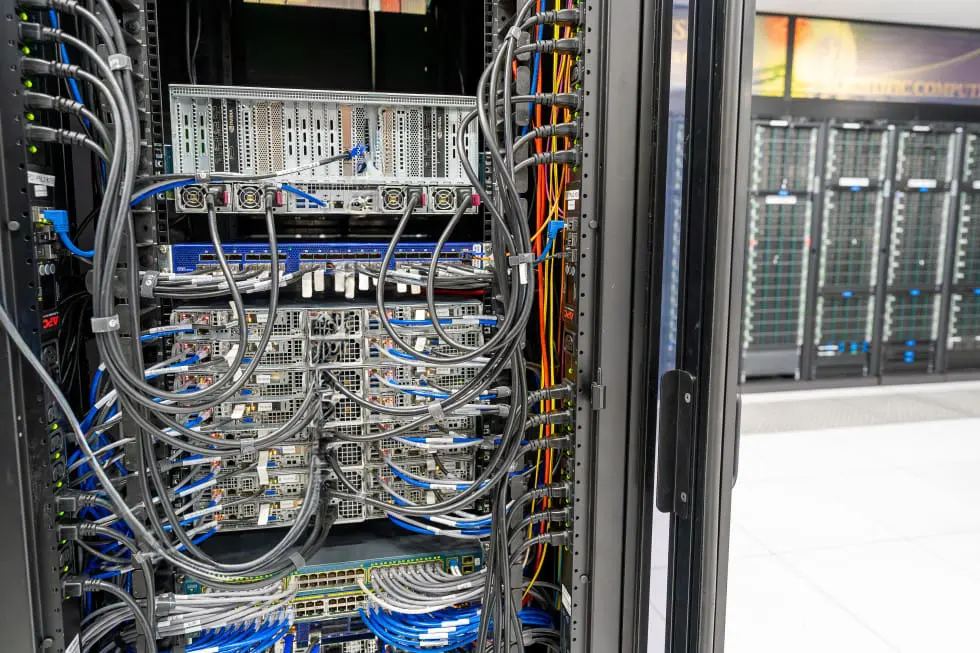
The DIDACT framework uses a testbed cluster called the “sandbox” for training without disrupting daily operations. The software ensemble combines open-source tools and custom-built code to develop, manage, and monitor ML models, with all data visualized on a graphical dashboard. The system includes three pipelines: one for offline development, another for continual learning where live competitions occur, and a third for real-time monitoring by the current champion model.
Future work aims to expand DIDACT’s capabilities to optimize energy usage in data centers. This includes exploring methods to reduce cooling requirements and adjust processing power based on demand, potentially lowering operational costs while improving scientific output. The project represents a novel hardware and open-source software integration, demonstrating the potential for efficient and adaptive AI-driven optimization in large-scale computing environments.
Introducing the DIDACT System for Continual Learning
Jefferson Lab’s DIDACT project employs competition-based AI models to optimize data center operations through continual learning. The system trains multiple autoencoder models daily, including one equipped with a graph neural network (GNN), to analyze relationships between components and detect anomalies. These models compete based on error rates, with the top performer designated as the “daily champion.” This approach ensures dynamic adaptation to changing conditions, enhancing resource efficiency and anomaly detection within computing clusters.
The DIDACT framework uses a testbed cluster called the “sandbox” for training without disrupting daily operations. The software ensemble combines open-source tools and custom-built code to develop, manage, and monitor ML models, with all data visualized on a graphical dashboard. The system includes three pipelines: one for offline development, another for continual learning where live competitions occur, and a third for real-time monitoring by the current champion model.
Training the Models in a Sandbox Cluster
Jefferson Lab’s DIDACT project employs competition-based AI models to optimize data center operations through continual learning. The system trains multiple autoencoder models daily, including one equipped with a graph neural network (GNN), to analyze relationships between components and detect anomalies. These models compete based on error rates, with the top performer designated as the “daily champion.” This approach ensures dynamic adaptation to changing conditions, enhancing resource efficiency and anomaly detection within computing clusters.
The DIDACT framework uses a testbed cluster called the “sandbox” for training without disrupting daily operations. The software ensemble combines open-source tools and custom-built code to develop, manage, and monitor ML models, with all data visualized on a graphical dashboard. The system includes three pipelines: one for offline development, another for continual learning where live competitions occur, and a third for real-time monitoring by the current champion model.
Future work aims to expand DIDACT’s capabilities to optimize energy usage in data centers. This includes exploring methods to reduce cooling requirements and adjust processing power based on demand, potentially lowering operational costs while improving scientific output. The project represents a novel integration of hardware and open-source software, demonstrating the potential for efficient and adaptive AI-driven optimization in large-scale computing environments.
Overall, DIDACT represents a comprehensive approach to data center optimization, combining adaptability with advanced AI techniques to enhance efficiency and anomaly detection capabilities.
More information
External Link: Click Here For More