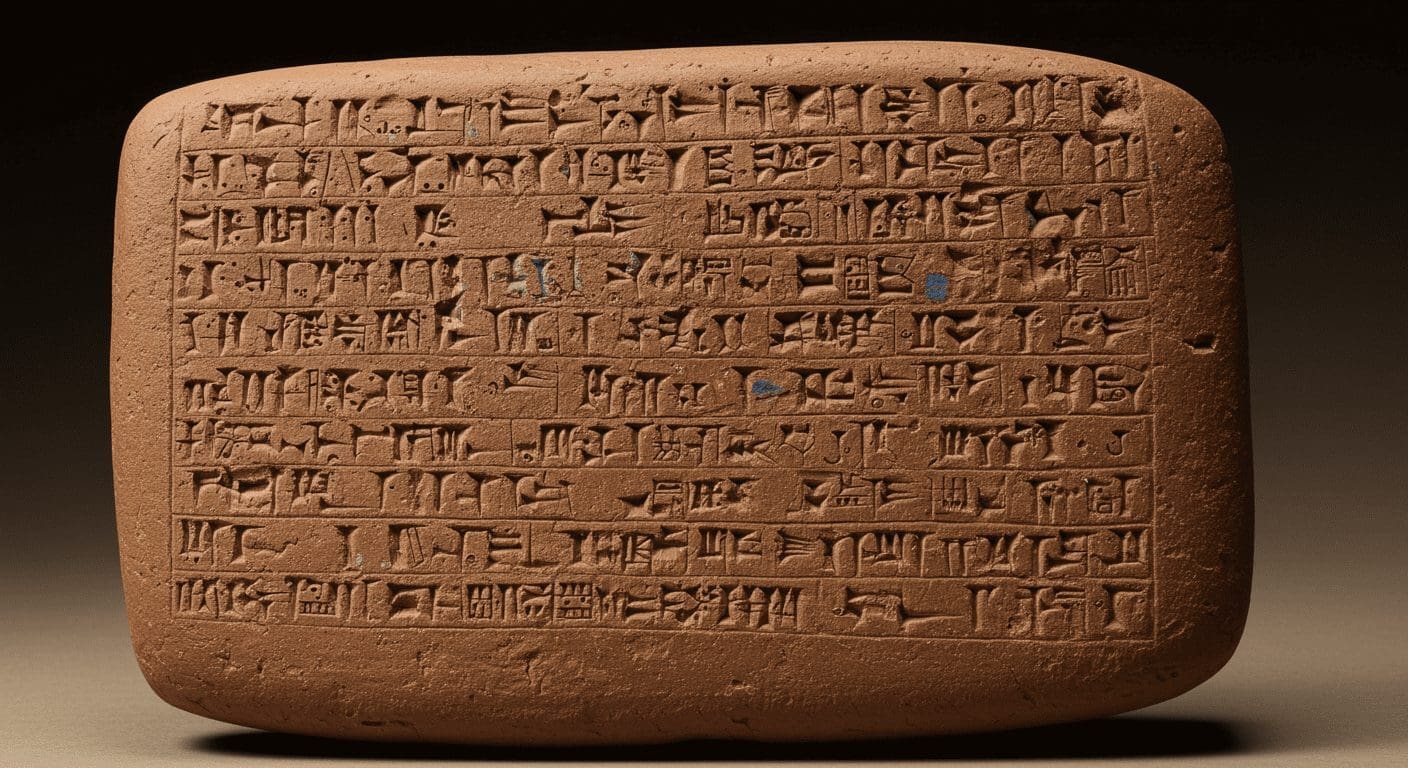
Researchers from Cornell University and Tel Aviv University have developed an AI approach called ProtoSnap, which aligns general prototypes of cuneiform characters with their variations in tablet images. Using a diffusion model to calculate pixel-level similarities, this method enhances character recognition accuracy, enabling more efficient transcription of ancient texts.
The research will be presented at the International Conference on Learning Representations (ICLR) in April and could significantly aid scholars by automating the copying process and facilitating large-scale comparisons of cuneiform characters across different contexts.
Introducing ProtoSnap: An AI Approach for Cuneiform Character Recognition
ProtoSnap is an innovative AI approach developed by researchers from Cornell University and Tel Aviv University to address the challenges of cuneiform character recognition. This method leverages artificial intelligence to align a prototype of a cuneiform character with variations found on ancient tablets, enabling precise copying and reproduction of these characters.
Cuneiform presents significant challenges due to its variability across different time periods, cultures, geographies, and individual scribes. These variations make automatic interpretation difficult, as the same character can appear markedly different depending on its context.
The ProtoSnap approach employs a diffusion model, a type of generative AI, to analyze images of cuneiform characters. By calculating pixel-level similarities between an image and a prototype, the system aligns the template to match the actual strokes of the character accurately. This process enhances the ability to create machine-readable text from tablet images.
The application of ProtoSnap has demonstrated improved performance in optical character recognition (OCR) models, particularly for rare or highly variable characters. This advancement streamlines the translation process and facilitates large-scale comparative studies of cuneiform across diverse contexts, significantly aiding scholars in their research efforts.
How ProtoSnap Aligns Prototypes with Cuneiform Variations
ProtoSnap addresses the challenge of cuneiform character recognition by aligning a character prototype with its variations on ancient tablets. The system uses a diffusion model, a type of generative AI, to analyze images of cuneiform characters at the pixel level. By calculating similarities between an image and a prototype, ProtoSnap aligns the template to match the actual strokes of the character, enabling accurate reproduction. This process enhances the creation of machine-readable text from tablet images.
The application of ProtoSnap improves optical character recognition (OCR) models, particularly for rare or highly variable characters. This advancement streamlines the translation process and facilitates large-scale comparative cuneiform studies across different contexts, aiding scholars in their research efforts.
The Implications of AI-Driven Cuneiform Analysis
The application of ProtoSnap has significant implications for cuneiform studies. By enabling precise alignment of character prototypes to variations in tablet images, the system facilitates accurate reproduction of cuneiform characters. This capability is particularly valuable given the vast number of unanalyzed tablets in museums worldwide. The ability to automate the copying process could save scholars substantial time and effort, allowing them to focus on higher-level analysis rather than manual transcription.
ProtoSnap’s improvement of optical character recognition (OCR) models represents a key advancement in cuneiform research. By enhancing the accuracy of OCR for rare or highly variable characters, the system supports more reliable translation of texts. This capability is especially important for studying less common cuneiform scripts or dialects, where existing resources may be limited. The technology also enables comparative studies across different regions and time periods, providing new insights into linguistic evolution and cultural exchange.
The system’s ability to handle large-scale datasets further expands its utility in cuneiform studies. By automating the translation process, ProtoSnap can assist in identifying patterns or trends within extensive collections of texts. This capability could lead to discoveries about ancient societies, economies, and governance structures that have previously been difficult to discern due to the sheer volume of unanalyzed material. As a result, ProtoSnap represents a valuable tool for advancing our understanding of cuneiform cultures and their historical contexts.
The application of ProtoSnap addresses critical challenges in cuneiform research, particularly the scarcity of labeled data and the complexity of character variations. By improving OCR accuracy and enabling large-scale comparative studies, the system supports more efficient and effective analysis of cuneiform texts, ultimately contributing to a deeper understanding of ancient cultures and civilizations.
More information
External Link: Click Here For More