QUDORA Technologies will continue its work developing application-oriented quantum technologies after the QVLS-iLabs future cluster secured a second funding phase of €15 million over the next three years. The funding, awarded by Germany’s Bundesministerium für Forschung, Technologie und Raumfahrt, recognizes QVLS-iLabs as a key initiative focused on trapped-ion quantum computing and quantum metrology, areas considered vital for the nation’s technological future. This continuation follows a highly competitive selection process, with QVLS-iLabs chosen from an initial pool of 117 applicants; the cluster now comprises 25 partners spanning research, industry, and startups. “The first phase’s successes provide strong momentum for establishing sustainable transfer structures toward market deployment,” said Christian Ospelkaus, QVLS-iLabs spokesperson, professor at the Physikalisch-Technische Bundesanstalt and Leibniz Universität Hannover, and QUDORA co-founder, highlighting the cluster’s proven ability to translate research into practical systems.
€15 Million Funding Secured for QVLS-iLabs Quantum Technology Transfer
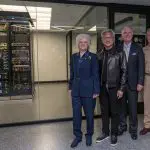
QUDORA Technologies, an industry partner within the cluster, highlights how this funding validates collaborative research-industry approaches. Their recently developed trapped-ion quantum computer, built in Braunschweig, exemplifies the successful translation of research into commercially viable systems. This work extends beyond academic research; the initial funding phase yielded open-source software, multiple patents, and practical applications like quantum sensors optimizing battery manufacturing. The cluster’s infrastructure, including a 350-square-meter deep-tech laboratory in Braunschweig’s Rolleiwerke, supports both quantum startups and industrial development, managed by the newly founded QVLS Innovation GmbH. Braunschweig’s Mayor, Dr. Thorsten Kornblum, recently toured QUDORA’s headquarters, stating that the federal government’s continued funding for the QVLS-iLabs future cluster is great news for Braunschweig and the entire region. QUDORA anticipates contributing significantly to the second phase, furthering the transfer of quantum technologies for both industrial and societal benefit.
Trapped-Ion Quantum Computing & Industrial Use Case Development
Trapped-ion quantum computing is rapidly shifting from theoretical exploration toward demonstrable industrial applications, particularly within the Hannover and Braunschweig region of Germany. This continued investment underscores the strategic importance Germany places on achieving technological sovereignty in quantum technologies, recognizing their potential to reshape industrial processes. The system is notable for its design, intended for seamless on-premise integration with existing high-performance computing infrastructure and standalone use, bridging the gap between laboratory experiments and practical industrial applications. These include quantum sensors optimizing battery manufacturing, demonstrating a move beyond purely academic pursuits. Braunschweig’s Mayor, Dr. Thorsten Kornblum, highlighted the economic potential for regional businesses, stating, “The economic potential of quantum technologies for our medium-sized businesses and innovative startups is enormous.”
The federal government’s continued funding for the QVLS-iLabs future cluster is great news for Braunschweig and the entire region. It is also confirmation of the outstanding work of our strong partners in the QVLS consortium, above all the Physikalisch-Technische Bundesanstalt and TU Braunschweig. The economic potential of quantum technologies for our medium-sized businesses and innovative startups is enormous.
QVLS Innovation GmbH Manages Cluster & Deep-Tech Laboratory
The continuation of the QVLS-iLabs future cluster, bolstered by a further €15 million in funding from the Federal Government’s Clusters4Future initiative, has seen the establishment of QVLS Innovation GmbH to oversee long-term technology transfer. This new entity will professionally manage the cluster’s operations, including the 350-square-meter deep-tech laboratory located in Braunschweig’s Rolleiwerke, a facility designed to nurture quantum startups and facilitate industrial development. The laboratory’s existence underscores a commitment to moving beyond purely academic pursuits, providing physical space for companies like QUDORA Technologies to refine and scale their innovations. Braunschweig’s Mayor, Dr.
See today’s quantum computing news on Quantum Zeitgeist for the latest breakthroughs in qubits, hardware, algorithms, and industry deals.