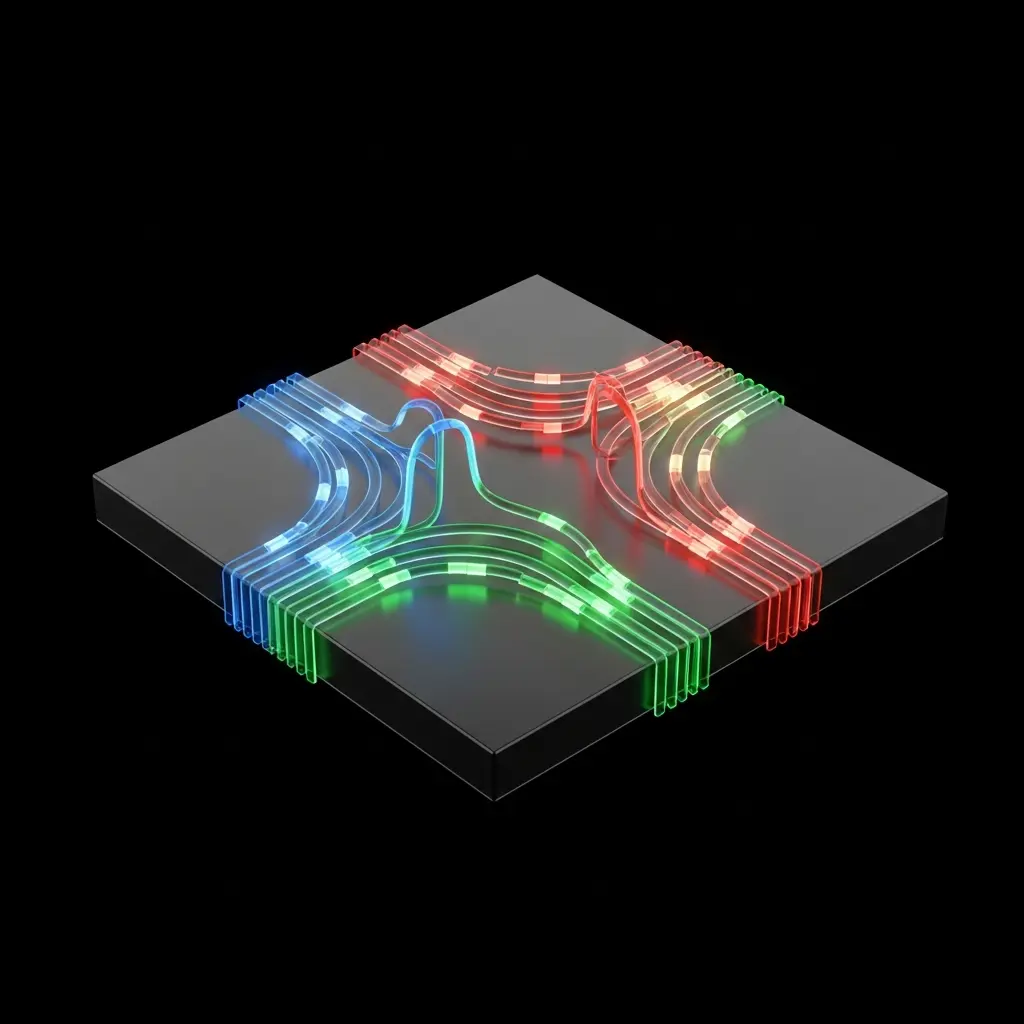
Encoding classical data into quantum states presents a significant bottleneck in quantum computation, as many current methods demand deep circuits and substantial resources, hindering scalability. Guang Lin from the RIKEN Center for Advanced Intelligence Project, Toshihisa Tanaka from Tokyo University of Agriculture and Technology, and Qibin Zhao, also from the RIKEN Center for Advanced Intelligence Project, address this challenge with a novel framework called TNQE. Their research introduces structured unitary tensor network representations to build circuit-efficient data encoding, decomposing classical inputs into tensor cores and compiling them into shallow circuits via trainable, unitary-aware constraints. This collaborative work enables explicit control over circuit depth and qubit usage, achieving encoding circuits comparable in shallowness to amplitude encoding, while scaling effectively to high-resolution images and demonstrating potential for implementation on existing quantum hardware.
Complex images and datasets could one day be processed far faster using quantum computers. This advance relies on clever ways to translate everyday information into the language of quantum bits, offering a more streamlined approach and potentially unlocking practical quantum data processing. Scientists are increasingly focused on overcoming a fundamental hurdle in quantum machine learning: the efficient encoding of classical data into quantum states.
Introducing the TNQE Efficient Encoding Framework
Introducing TNQE: Efficient Data Encoding Framework
Many current encoding methods demand deep quantum circuits and substantial resources, severely limiting the potential for scaling these systems to tackle complex problems. Researchers have now introduced TNQE, a new framework for circuit-efficient quantum data encoding that utilises structured unitary tensor network (TN) representations. This approach decomposes classical input into a tensor network, then translates the resulting tensor cores into an encoding circuit via two distinct, yet complementary, strategies.
At the heart of TNQE lies a unitary-aware constraint, a technique that parameterises tensor network cores as learnable block unitaries, allowing for direct optimisation and encoding as quantum operators, bypassing the need for complex post-processing steps. The framework offers explicit control over both circuit depth and the number of qubits required, enabling the creation of shallow, resource-conscious circuits.
Demonstrating Scalability with High-Resolution Images
Initial benchmarks reveal TNQE achieves encoding circuits with depths comparable to amplitude encoding, while also demonstrating the ability to scale to high-resolution images. TNQE has successfully encoded 256 × 256 images, a feat often remaining theoretical for competing methods. Circuits generated by TNQE have been executed on actual quantum hardware provided by the IBM Quantum platform, suggesting a pathway towards scalable and practical quantum data encoding, potentially unlocking advancements in various quantum machine learning applications.
Implementing Core Unitaries via Parallel Decomposition
Challenges remain in translating theoretical advantages into consistently performing quantum algorithms. The ability to manipulate tensor cores as learnable unitaries represents a departure from conventional encoding schemes. By decoupling the decomposition of classical data from its conversion into a quantum circuit, TNQE offers a modular approach to encoding.
TNQE-full converts tensor cores into isometries before completing them into local unitaries, creating a sequential circuit, while TNQE-core prepares each core using a dedicated sub-circuit, enabling parallelisation and a shallower overall structure. Comparisons across different image resolutions, 32 × 32, 256 × 256, and 256 × 256 × 3, demonstrate TNQE’s performance relative to amplitude encoding.
Optimizing Circuit Depth and Encoding Efficiency
Quantifying Circuit Depth and Optimization Benefits
Across these benchmarks, TNQE maintains informative structure while achieving circuit depths as low as 0.04× that of amplitude encoding. The development of TNQE-unitary incorporates a important optimisation constraint, directly encoding quantum operators without complex synthesis.
Image Reconstruction Quality and Quantum Circuit Complexity using TNQE-unitary
Researchers achieved a mean squared error (MSE) of 0.021 when reconstructing images using the TNQE-unitary framework on the MNIST dataset, attaining effective data encoding with a circuit depth of four. Binary cross entropy (BCE) reached 0.018, while the peak signal-to-noise ratio (PSNR) measured 26.2 decibels and the structural similarity index measure (SSIM) registered 0.89, collectively indicating a high degree of fidelity in the reconstructed images.
Further analysis involved evaluating semantic information preservation using classical classifiers applied to images encoded via TNQE, confirming the retention of essential image features. At a rank of four, TNQE-full and TNQE-core required 256 qubits and 1024 CNOT gates, whereas TNQE-unitary, configured with a rank of eight and four layers, achieved comparable performance with a circuit depth limited to four.
TNQE-unitary circuits are as shallow as those produced by amplitude encoding, but scale more effectively to high-resolution images. A 256×256 grayscale image, “Cameraman”, was successfully encoded. The team utilised Qiskit for simulating quantum circuits on a classical computer. By operating on tensor cores rather than the full pixel space, TNQE provides a structured and hardware-compatible strategy for quantum data encoding. For TNQE-core, tensor cores are encoded independently on disjoint sub-circuits, avoiding long-range entangling operations and further reducing circuit depth.
Quantized Tensor Train Decomposition and Modular Quantum Circuit Construction
The research began with representing classical data using a quantized tensor train decomposition, breaking down high-dimensional data into a network of smaller tensors, offering a compact and structured representation. The study then focused on converting these tensor cores into executable quantum circuits via two distinct strategies. TNQE-full converts right-canonical matrix product state cores into isometries, then completing them into local unitaries to create a sequential circuit.
An alternative approach, TNQE-core, was also developed to prepare each tensor core using a dedicated sub-circuit, allowing for a shallow, modular, and parallelizable encoding process by avoiding entanglement between cores. Maintaining unitarity is vital, so the researchers introduced TNQE-unitary, parameterizing tensor cores as learnable block unitaries, allowing direct optimisation and encoding as quantum operators without post-processing.
To enable direct optimisation of the tensor cores, a unitary-aware constraint was implemented, allowing the cores to be directly encoded as quantum operators. For benchmarking, the team assessed TNQE across several metrics including circuit depth, qubit count, operation count, and encoding fidelity, which measures the quality of image approximation. Explicit control over circuit depth and qubit resources enables the construction of shallow, resource-efficient circuits.
The resulting circuits were validated on real quantum hardware provided by the IBM Quantum platform, confirming practical feasibility. Unlike many existing approaches limited to theoretical demonstrations, TNQE successfully encoded 256 × 256 images into quantum circuits in simulation, demonstrating a scalable and practical framework.
Efficient data encoding unlocks potential for scalable quantum image processing
For years, the promise of quantum computing has been held back not by the physics itself, but by the simple problem of getting data in. Representing everyday information, images, text, sensor readings, as quantum states demands circuits that quickly become impossibly large and complex. This new work offers a potential route around that bottleneck, presenting a data encoding framework called TNQE that prioritises efficient circuit construction.
Unlike many existing methods which strain even simulated quantum systems, TNQE demonstrably scales to handle high-resolution images and, crucially, shows some durability when run on actual quantum hardware. Acknowledging practical performance on current devices is only the first step. While other approaches remain largely confined to theoretical exercises, this research delivers circuits shallow enough to be genuinely executable, even if error rates still present a challenge.
The observed discrepancy between simulation and real-world results highlights a familiar issue: noise accumulation. Beyond simply achieving a shallower circuit, the true test will be integrating TNQE with existing error mitigation techniques and hardware-specific optimisation. Once a method can reliably encode data, the possibilities expand rapidly. The framework relies on established tensor decomposition algorithms, meaning further advances in that field will directly improve encoding fidelity.
Future work could explore how TNQE might be adapted for specific quantum architectures, tailoring the encoding process to the strengths of different qubit technologies. By explicitly controlling resource allocation, this approach offers a valuable step towards bridging the gap between quantum potential and practical application.
🗞 Structured Unitary Tensor Network Representations for Circuit-Efficient Quantum Data Encoding
🧠 ArXiv: https://arxiv.org/abs/2602.16266