

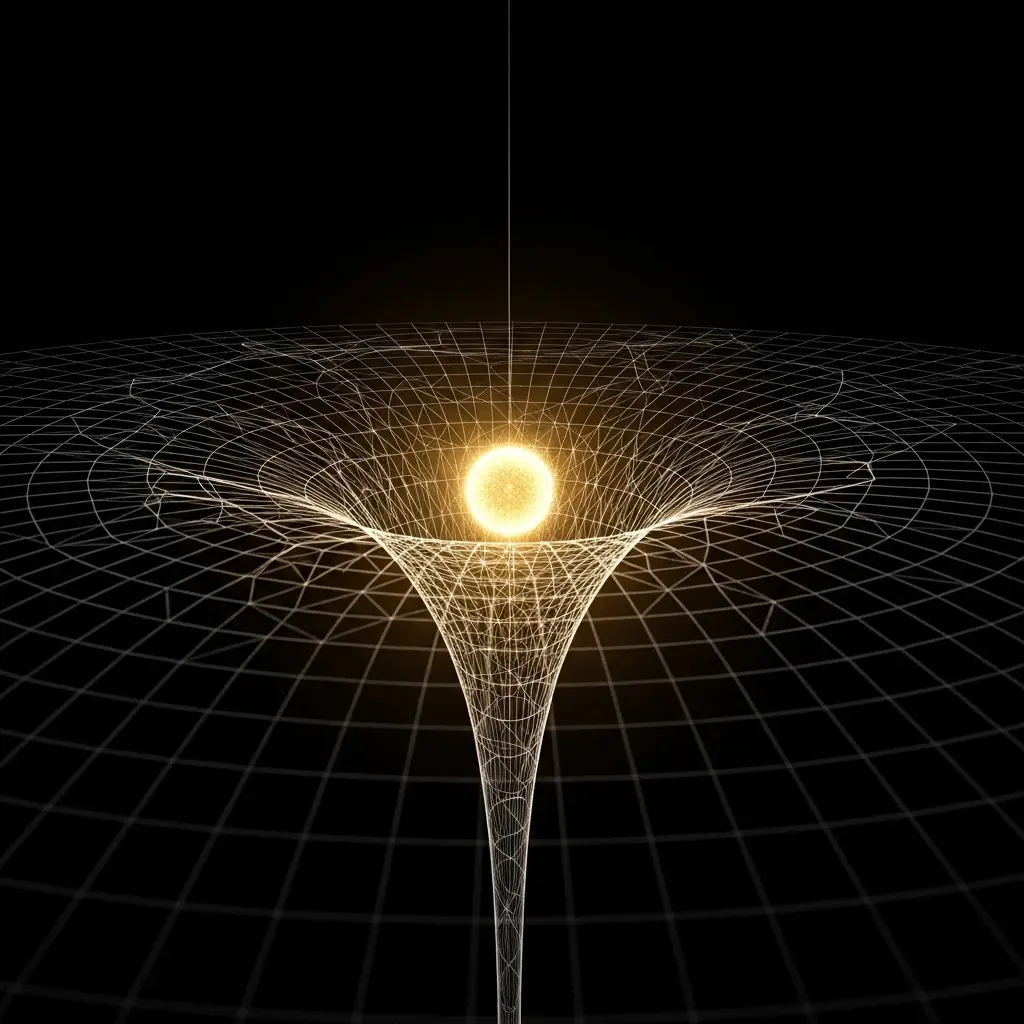
Researchers investigated the fundamental problem of defining consistent observables for localising quantum mechanical events in spacetime. Gandalf Lechner of Friedrich-Alexander-Universität Erlangen-Nürnberg, Department Mathematik, and Ivan Romualdo de Oliveira from Departamento de Física, Universidade Federal de Lavras, demonstrate that conventional limitations preventing such localisation, notably the No-Go theorems of Hegerfeldt and Malament, can be overcome by adopting a lattice-theoretic framework based on real linear projections. This collaborative work reveals that, within this refined mathematical structure, Lorentz symmetry and the concept of localisation arise naturally, potentially offering a new pathway towards reconciling quantum mechanics with special relativity. Furthermore, the authors establish crucial theorems concerning probabilistic interpretations, showing that while a strictly additive probability measure is not possible, a sufficiently coarse-grained approximation recovers the familiar Newtonian picture of localisation.
Scientists have developed a novel approach to defining spatial and spacetime localization in quantum mechanics, circumventing long-standing theoretical obstacles established by Hegerfeldt and Malament. This work demonstrates that by reformulating the mathematical framework underpinning quantum measurements, these ‘No-Go’ theorems no longer apply, opening the door to consistent descriptions of localized quantum phenomena. The research introduces a new lattice-theoretic perspective, replacing the conventional lattice of complex projections with one based on real linear projections and a process called symplectic complementation. This shift allows for the construction of causal and Poincaré covariant localization observables, mathematical tools that describe a particle’s position while respecting both causality and the symmetries of spacetime. Several features characteristic of quantum field theory, including Lorentz symmetry and a refined concept of localization termed ‘modular localization’, emerge naturally from this new formulation. Specifically, for particles possessing mass and adhering to the principles of the Poincaré group, the Brunetti-Guido-Longo map defines a unique spacetime localization observable under certain conditions. Further investigation into the probabilistic interpretation of these observables reveals a ‘fuzzy’ probability measure, lacking full additivity. However, for separation scales significantly larger than the Compton wavelength, the resulting localization picture closely approximates the established Newton-Wigner approach. The study demonstrates that causal localization observables mapping into the lattice of real linear projections automatically induce modular localization, a concept linked to standard subspaces. Considering a particle governed by a massive positive energy representation of the Poincaré group, the Brunetti-Guido-Longo map defines a unique spacetime localization observable, contingent upon natural assumptions. The research establishes a Gleason theorem and a cluster theorem specifically for symplectic complements, revealing that evaluating these localization observables yields a fuzzy probability measure. Fredenhagen’s cluster theorem, adapted for standard subspaces, shows approximate additivity for spatial Borel regions separated by distances much larger than the inverse particle mass. Specifically, the deviation from full additivity is bounded by a factor of e−m·d(A,B), where ‘m’ represents the particle mass and ‘d(A,B)’ denotes the distance between regions A and B, suggesting convergence towards a conventional probabilistic interpretation at macroscopic scales. This lattice-theoretic approach employs the lattice of real linear projections with symplectic complementation, rather than the conventional lattice of complex orthogonal projections used in the Born rule. This substitution circumvents the established No-Go theorems, allowing for the attainment of causal and Poincaré covariant localization observables and the automatic emergence of Lorentz symmetry and localization features characteristic of field theory. To define a spacetime localization observable, the study utilised a massive positive energy representation of the Poincaré group alongside the Brunetti-Guido-Longo map, providing a precise method for determining particle localization within spacetime. Further methodological innovation involved establishing a Gleason theorem and a cluster theorem specifically for symplectic complements, rigorously demonstrating that evaluating the defined localization observables yields a ‘fuzzy’ probability measure. This fuzziness is negligible when considering separation scales significantly larger than the Compton wavelength, at which point the localization picture closely approximates the established Newton-Wigner approach, providing a crucial link between the new formalism and existing quantum mechanical descriptions of localization. The study’s focus on lattice structures and symplectic complementation offers a novel pathway to reconcile quantum mechanics with the principles of relativity, potentially resolving long-standing issues in the foundations of physics. Scientists have long grappled with the seemingly contradictory demands of quantum mechanics and relativity when pinpointing a particle’s location, as the standard framework, built on projections in Hilbert space, encounters ‘No-Go’ theorems preventing a consistent notion of localisation for relativistic particles. This new work circumvents those limitations by shifting the underlying mathematical structure, employing real linear projections instead of conventional complex ones, a subtle but potentially profound move rewriting the rules for how a particle’s position in spacetime is considered. What makes this notable is the automatic emergence of desirable features like Lorentz symmetry and a form of localisation, as these properties aren’t imposed but arise naturally from the altered mathematical foundation, suggesting a deeper connection between quantum theory and relativity. The implications extend beyond fundamental theory, potentially influencing how quantum fields are modelled and how quantum gravity is explored. However, the resulting picture isn’t a perfect restoration of classical intuition, as the localisation observable yields a ‘fuzzy’ probability inherent at very small scales, comparable to the Compton wavelength. Crucially, for larger scales, the realm of everyday phenomena, the approximation converges towards the familiar Newton-Wigner localisation. The immediate challenge now is to explore whether this framework can accommodate interactions between particles and whether it offers a viable path towards a fully consistent quantum field theory, with further research needed to investigate the implications for entanglement and the nature of quantum measurements within this revised framework.
🗞 Causal quantum-mechanical localization observables in lattices of real projections
🧠 ArXiv: https://arxiv.org/abs/2602.11392




See today’s quantum computing news on Quantum Zeitgeist for the latest breakthroughs in qubits, hardware, algorithms, and industry deals.



