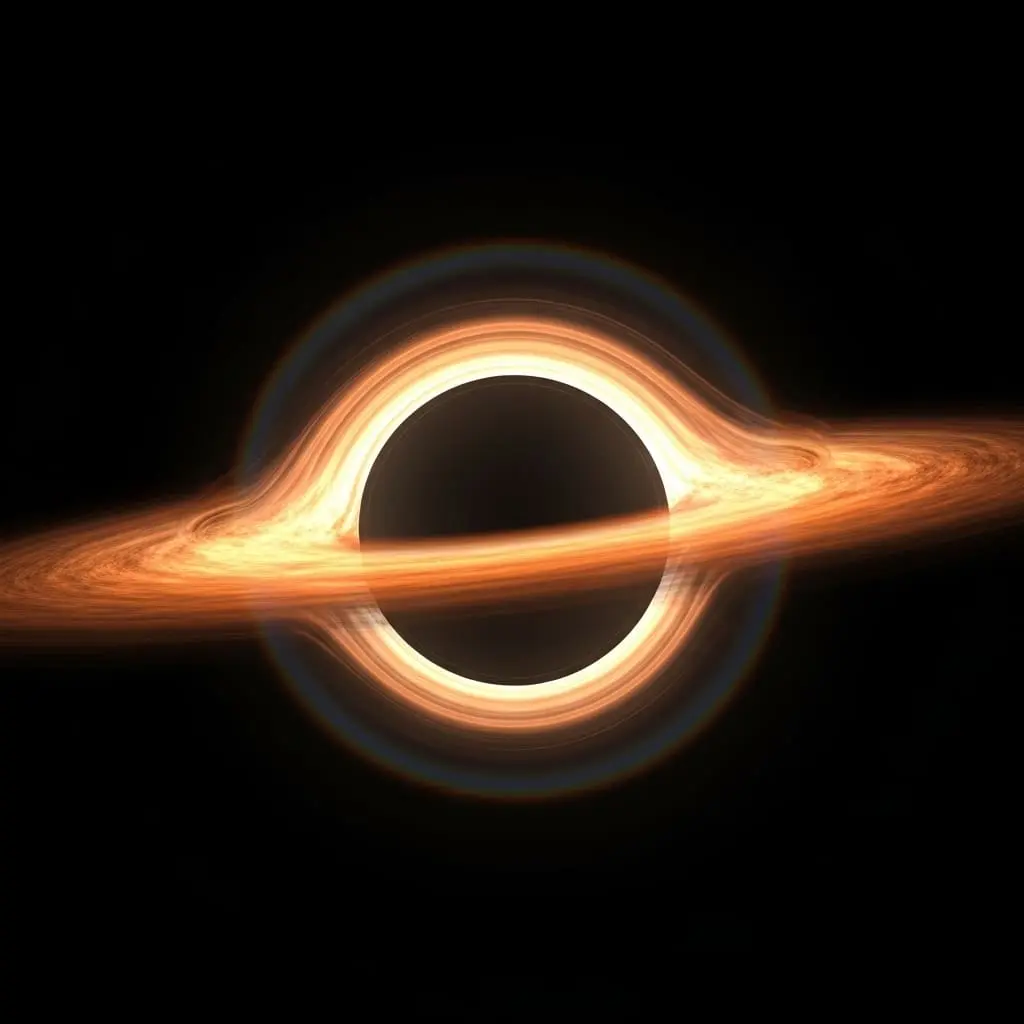
Scientists are investigating the potential for detecting merging massive black hole binaries (MBHBs) through their electromagnetic signatures, specifically X-ray emissions. Luke Krauth from Gravitation Astroparticle Physics Amsterdam (GRAPPA), University of Amsterdam, and Jordy Davelaar from the Department of Astrophysical Sciences, Princeton University, and the NASA Hubble Fellowship Program, have modelled the interplay between thermal and non-thermal X-ray emission from these systems. Their research, a collaboration between the University of Amsterdam and Princeton University, demonstrates that non-thermal X-ray emission, powered by magnetic reconnection, is unlikely to obscure the predicted disappearing thermal signal from minidiscs surrounding MBHBs. This finding strengthens the prospect of using this thermal signature as a robust electromagnetic counterpart to MBHB mergers detectable by the Laser Interferometer Space Antenna (LISA), and crucially, enhances the potential for successful multi-messenger astronomy combining gravitational and electromagnetic observations.
Researchers constructed semi-analytic models to simulate both the thermal X-ray emission from the minidiscs and the non-thermal synchrotron radiation produced by reconnection within the strong magnetic fields surrounding the black holes.
Analyzing Thermal versus Non-Thermal X-Ray Signals
Analyzing Thermal Versus Non-Thermal X-Ray Emission
Evaluating these models across the mass range of MBHBs relevant to LISA observations, the study demonstrates that, for realistic magnetic field strengths and accretion rates, non-thermal X-ray luminosity remains substantially weaker than the thermal component throughout the inspiral phase. Even when optimistically enhancing the non-thermal emission, it remains significantly subdominant.
Furthermore, the research incorporates the ‘magnetospheric balding’ framework, which describes how magnetic fields decay as black holes approach each other, to model the fading of reconnection-powered X-ray emission. This analysis shows that such emission diminishes rapidly on timescales proportional to the black hole mass once the supply of external magnetic flux is disrupted.
Confirming the Robustness of the Thermal Emission Source
Confirming the Robustness of the Thermal Signal Source
These findings collectively suggest that non-thermal emission is unlikely to mask the disappearing thermal X-ray signature. This reinforces the robustness of the thermal signal as a reliable electromagnetic counterpart to MBHB mergers and highlights its potential for use in multi-messenger astronomy with LISA, combining gravitational wave and electromagnetic observations.
Implications for Black Hole Co-evolution and GR
Implications for Black Hole Co-evolution and Relativity
The ability to detect this X-ray drop could provide crucial insights into the co-evolution of black holes and their host galaxies, and potentially test the fundamental predictions of General Relativity. Understanding the interplay between thermal and non-thermal emission mechanisms is therefore paramount for maximising the scientific return from future observations of merging supermassive black holes.
Modelling thermal and synchrotron X-ray emission in merging black hole binaries
Semi-analytic models form the basis of our investigation into non-thermal X-ray emission from massive black hole binaries. We constructed these models to evaluate both the thermal X-ray luminosity originating from minidiscs and the non-thermal synchrotron radiation produced by magnetic reconnection within magnetically dominated black hole magnetospheres.
The minidisc thermal emission was calculated by assuming optically thick, geometrically thin accretion discs around each black hole, accounting for tidal truncation effects as the binary inspirals. Simultaneously, we modelled synchrotron emission arising from reconnection events in the black hole magnetospheres, considering the energy distribution of accelerated particles and the resulting radiation.
To accurately represent the magnetic environment, we incorporated the magnetospheric balding framework, which describes the decay of external magnetic flux as the black holes approach merger. The choice of semi-analytic modelling, rather than computationally expensive hydrodynamical simulations, enabled us to efficiently explore a wide parameter space of magnetic field strengths and accretion rates.
Our approach differs from previous studies by explicitly linking the decline in accretion rate to the transition towards a magnetically arrested disc state, where magnetic pressure dominates the inner flow. This framework allowed us to assess whether reconnection-driven emission could potentially obscure the predicted thermal X-ray drop.
By modelling the decay of the magnetic field, we aimed to determine if non-thermal emission could persist long enough to mask the thermal signal, or if it would fade rapidly as the system evolves. This detailed treatment of magnetic effects provides a crucial step towards accurately predicting the electromagnetic counterparts to MBHB mergers.
Non-thermal X-ray emission is consistently subdominant during binary black hole inspiral
Throughout the inspiral phase of massive black hole binaries, non-thermal X-ray luminosity originating from magnetic reconnection remains several orders of magnitude below the thermal component emitted by minidiscs. Even when employing optimistic assumptions designed to maximise non-thermal emission, it consistently remains subdominant to the thermal signal.
This finding is crucial because it suggests that the anticipated disappearance of thermal X-ray emission, predicted to occur shortly before merger, is unlikely to be obscured by non-thermal processes. The study incorporated the magnetospheric balding framework to model the decay of non-thermal emission, revealing that reconnection-powered X-ray emission fades on timescales proportional to the system’s mass.
Specifically, the timescale for this decay is found to be short, indicating a rapid decline in non-thermal contribution as the binary system evolves. Calculations demonstrate that the non-thermal luminosity is consistently suppressed, even with enhanced magnetic field strengths and accretion rates. This rapid decay, coupled with the initial low luminosity, reinforces the robustness of the thermal X-ray drop as a reliable electromagnetic counterpart to MBHB mergers.
The work establishes that the thermal X-ray signal from minidiscs is the dominant source of emission throughout the inspiral. The fading of non-thermal emission on mass-scaled timescales further solidifies this conclusion, indicating that it will not significantly interfere with the detection of the thermal drop. This disappearing thermal signature therefore remains a promising avenue for multi-messenger studies, potentially allowing for sky localisation of host galaxies and providing additional constraints on the parameters of merging black holes.
The Bigger Picture
Scientists pursuing the detection of merging supermassive black holes have long sought reliable electromagnetic signals to accompany the gravitational waves predicted by general relativity. This latest work offers a reassuringly clear signal amidst a complex astrophysical landscape. The challenge lies in disentangling the faint glow expected from the inner regions of these binary systems from the myriad other sources of X-ray radiation in galactic nuclei.
For years, the predicted thermal X-ray emission from the gas swirling around the black holes seemed promising, but vulnerable to being drowned out. This research tackles a specific potential contaminant: non-thermal X-rays generated by magnetic reconnection events in the black holes’ magnetospheres. The team’s modelling demonstrates that, even under optimistic assumptions about the strength of magnetic fields and accretion rates, this non-thermal emission is unlikely to obscure the crucial thermal ‘dip’ in X-rays predicted just before the black holes coalesce.
This is significant because it strengthens the case for using this thermal signature as a robust beacon for multi-messenger astronomy. However, the study necessarily relies on simplified models of magnetic field configurations and particle acceleration. The true magnetic environment around merging black holes is likely far more turbulent and dynamic.
Furthermore, the interplay between the accretion disc and the magnetosphere remains poorly understood, potentially influencing both thermal and non-thermal emission. Future work must incorporate more sophisticated simulations that capture these complexities. The next step will likely involve refining these models with data from current and upcoming X-ray observatories, and crucially, combining those observations with the first detections of gravitational waves from these cosmic behemoths by LISA.
🗞 Non-thermal X-ray Emission from Merging Massive Black Hole Binaries
🧠 ArXiv: https://arxiv.org/abs/2602.11112



See today’s quantum computing news on Quantum Zeitgeist for the latest breakthroughs in qubits, hardware, algorithms, and industry deals.