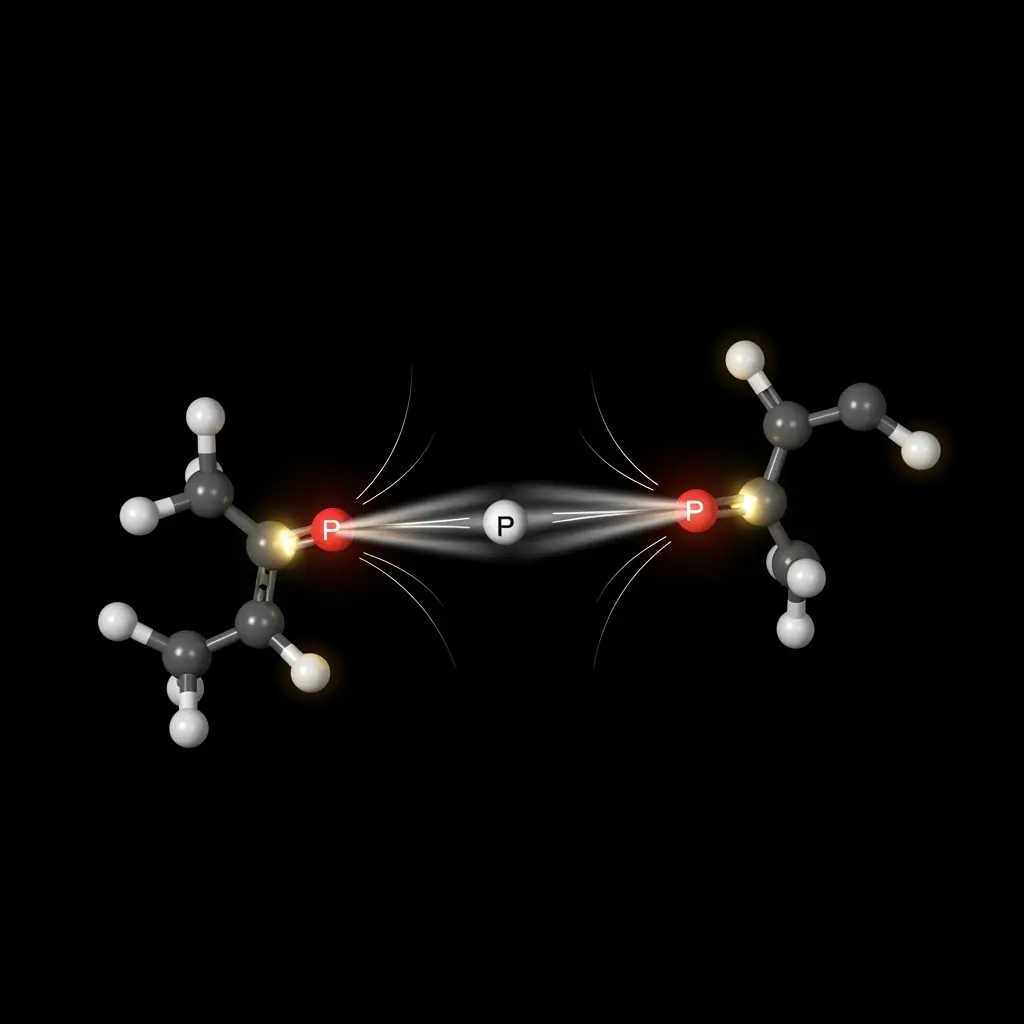
Researchers are elucidating the complex mechanisms behind excited-state intramolecular proton transfer (ESIPT) in 3-hydroxychromone (3-HC), a crucial photochemical process with implications for molecular switches and sensing. Alessandro Nicola Nardi, Morgane Vacher, and colleagues at Nantes Université and CNRS have now used non-adiabatic dynamics to investigate the dual time scales observed during proton transfer in this system. Their work resolves a long-standing question regarding the origin of a slower proton transfer component, identifying a competitive out-of-plane hydrogen torsional motion as the key factor. By constructing a detailed reaction network, this study provides a unified framework for understanding both ultrafast and slower ESIPT pathways, significantly advancing our knowledge of excited-state dynamics in these molecules.
By employing advanced computational methods, the researchers were able to explicitly observe the two time constants and pinpoint the torsional motion as the key factor governing the slower process. This approach involved simulating the Molecular dynamics of 3-HC in its excited state, tracking the movement of protons and the associated energy changes. The research establishes a clear connection between the molecular structure of 3-HC and its dynamic behaviour during ESIPT, providing a detailed picture of the reaction pathway.
This detailed understanding is crucial for designing molecules with tailored optical properties, as ESIPT systems find applications as fluorescent probes, photostabilizers, and in organic light-emitting diodes. Furthermore, the findings have implications for understanding ESIPT in a broader range of molecular systems, particularly those exhibiting similar dual fluorescence characteristics. The ability to accurately model and predict ESIPT dynamics is essential for advancing the field of photochemistry and developing new technologies based on light-induced processes. The team achieved this by combining quantum mechanical calculations with classical molecular dynamics, allowing them to simulate the complex interplay of electronic and nuclear motions. This innovative approach provides a powerful tool for investigating the fundamental mechanisms of ESIPT and designing novel molecular systems with enhanced performance.
ESIPT Dynamics in 3-Hydroxychromone via Simulation reveal key
The study began with state-of-the-art ab initio excited-state calculations to define the potential energy landscape governing the ESIPT reaction in 3-HC. These calculations revealed a near-degeneracy between the first two singlet excited states at the Franck-Condon point, necessitating the explicit inclusion of non-adiabatic effects in the dynamics simulations. Non-adiabatic trajectories were then propagated using a trajectory surface hopping (TSH) approach, allowing the simulation to dynamically explore the interplay between canonical ESIPT and alternative reaction pathways. This method involved calculating the couplings between the S1 and S2 states on-the-fly during the simulations, enabling transitions between the surfaces based on the Fermi Golden Rule. This network delineated the competition between the standard ESIPT pathway and a newly identified torsion-mediated pathway involving out-of-plane hydrogen motion. The simulations revealed that the slower picosecond timescale arises from this competitive torsional motion, providing a mechanistic explanation for the previously hypothesised second time constant.
ESIPT Timescales Linked to Torsional Motion are remarkably
The team measured the S1, S2 energy gap at the Franck-Condon point to be 0.12 eV using TD-PBE0/cc-pVDZ calculations, with variations of 0.08 eV and 0.10 eV observed with cc-pVTZ and aug-cc-pVDZ basis sets respectively. These calculations, validated against higher-level methods like CC2, ADC(2), and EOM-CCSD, confirm the accuracy of the chosen computational approach for describing the electronic structure at key points along the ESIPT coordinate. Solvent effects were assessed using the IEFPCM dielectric continuum description, providing a more realistic representation of the molecular environment. Researchers propagated trajectories using the SHARC software package, initiating a total of 311 trajectories on the S1 state and 86 on the S2 state, based on an excitation energy window of 0.2 eV centred at 3.9 eV.
The absorption spectrum was constructed using a nuclear ensemble approach, with each line convoluted with a Gaussian function of 0.1 eV full width at half maximum, closely mirroring experimental data. A nuclear time step of 0.5 fs was employed, and the electronic wave function was propagated using the local diabatization method with 25 substeps, ensuring accurate representation of the excited-state dynamics. Data shows that the Granucci and Persico decoherence scheme, with a factor of 0.1 a. u. of energy, effectively managed decoherence during the simulations. Hopping probabilities between S1 and S2 were calculated based on the time evolution of electronic amplitudes, with an energy threshold of 0.10 eV used to enforce hops, addressing known deficiencies in TD-DFT descriptions of conical intersections. All trajectories maintained total energy conservation within a 0.5 eV threshold, demonstrating the stability and reliability of the simulations. Structural analyses, utilising MDTraj, focused on monitoring the distances d(Od, H) and d(H, Oa), as well as dihedral angles φ1 and φ2, to characterise the ESIPT process and the role of torsional motions.
Slower ESIPT linked to torsional motion suggests increased
Simulations utilising surface hopping with TD-PBE0 for electronic structure demonstrate that ESIPT occurs on a sub-100 femtosecond timescale, consistent with prior theoretical work. This slower timescale aligns with experimental observations obtained through time-resolved UV, vis spectroscopy in apolar solvents. The authors acknowledge a limitation in fully accessing certain conformational states, but suggest ultrafast spectroscopic techniques could detect the competitive torsional motion, corroborating their findings. Future research could focus on experimentally verifying the predicted torsional motion and further refining the reaction network to explore the interplay between ESIPT and torsional pathways in greater detail. These findings contribute to a more nuanced understanding of non-adiabatic excited-state dynamics in molecular systems exhibiting ESIPT.
👉 More information
🗞 Excited-State Intermolecular Proton Transfer and Competing Pathways in 3-Hydroxychromone: A Non-adiabatic Dynamics Study
🧠 ArXiv: https://arxiv.org/abs/2601.21918