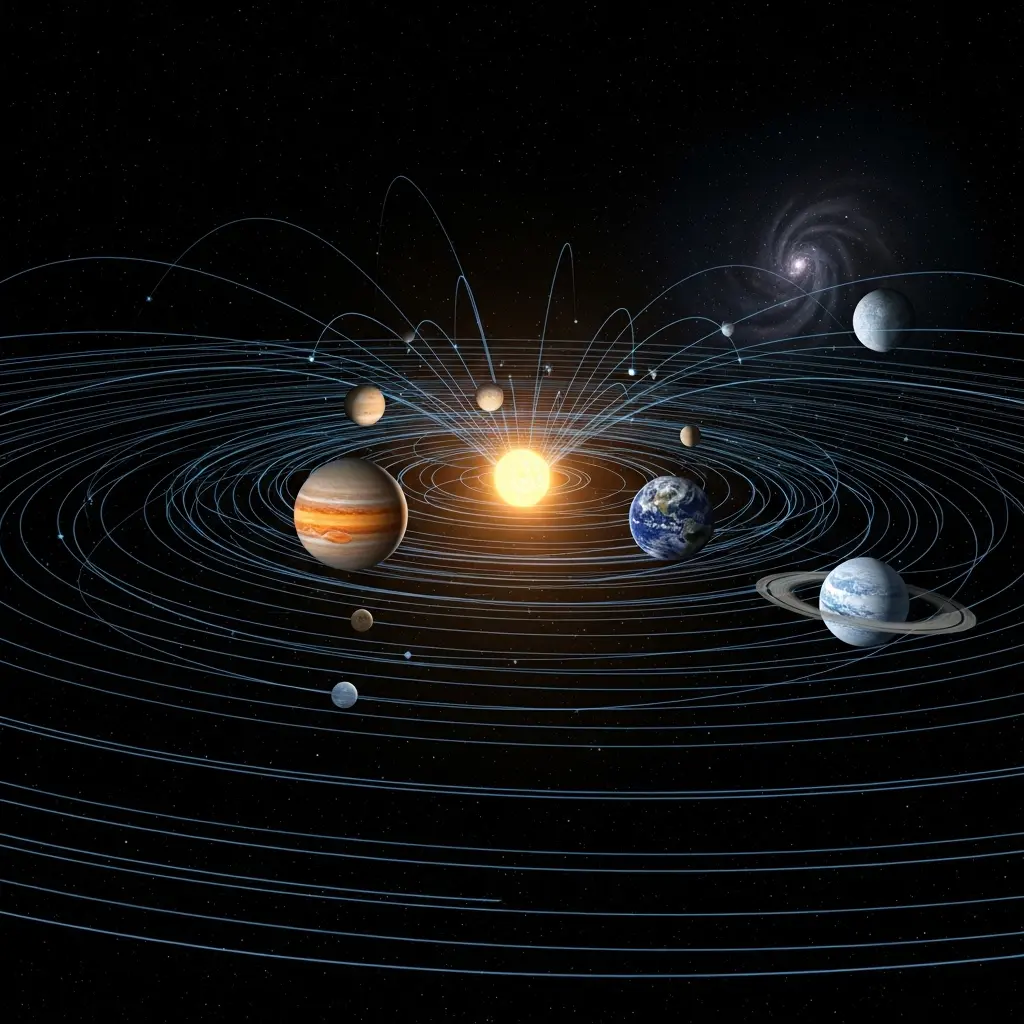
Researchers are striving to move beyond simply finding exoplanets to truly understanding them, a challenge addressed in new work led by Francisco J. Pozuelos, Pedro J. Amado, and Jesús Aceituno of the Instituto de Astrofísica de Andalucía and the Centro Astronómico Hispano en Andalucía, alongside Marina Centenera-Merino et al. While thousands of exoplanets have been identified, detailed physical characteristics , mass, internal structure, atmospheric composition , remain elusive for the vast majority, hindering our ability to establish meaningful population trends and unlock the secrets of planet formation and habitability. This research highlights the critical need for a new observational approach capable of characterising planetary interiors and atmospheres at a large scale, anticipating a surge in exoplanet discoveries from future missions like PLATO and the Nancy Grace Roman Space Telescope, and arguing that detailed individual system studies alone are insufficient for a comprehensive understanding.
Only approximately 10% of giant planets and less than 1% of planets smaller than four Earth radii possess the necessary data to accurately determine their physical characteristics, hindering our ability to establish robust population-level trends and fully comprehend planet formation and evolution. This limitation prevents scientists from identifying the underlying physical processes governing planetary systems and assessing their potential for habitability. While these missions will densely populate the radius-period plane, providing valuable data on planetary size and orbital periods, they will largely lack the means to determine crucial physical properties like mass and atmospheric composition for the majority of discovered planets.
Achieving mass accuracies of better than 15% currently demands 800 to 1200 radial velocity measurements per target, an investment incompatible with the demands of multi-science facilities and competitive observing time allocation. Consequently, a significant portion of the exoplanet population will remain physically ambiguous, hindering a comprehensive understanding of planetary diversity. However, Ariel’s spectral resolution and wavelength coverage are limited, restricting its ability to fully characterise smaller planets, and even the extremely large telescopes currently under construction, like the ELT, are unsuited for population-level atmospheric surveys due to the substantial observing time required.
This innovative strategy aims to overcome the limitations of current and planned facilities, enabling the simultaneous determination of bulk properties and atmospheric characteristics for a large number of exoplanets. Exoplanet. ESA’s Ariel mission, planned for the 2030s, will observe hundreds to thousands of planets, providing a baseline for comparative planetology, but its moderate spectral resolution restricts its ability to fully characterise sub-Neptunes and terrestrial planets. Data shows that even extremely large ground-based telescopes, such as the ELT with instruments like ANDES, are intrinsically unsuited for population-level atmospheric surveys despite their extraordinary capabilities.
Robust atmospheric detections for small planets typically require multiple transits or many hours of integration, limiting observations to a small number of benchmark systems. The team measured that high-resolution spectroscopy offers unique diagnostic power, including access to individual molecular lines and atmospheric dynamics, but at a substantial cost in observing time. The research confirms that without population-level atmospheric characterisation, establishing robust trends and linking them to planetary interiors remains difficult. Consequently, the search for potential biosignatures will remain confined to a limited number of favourable targets, preventing statistically meaningful assessments of inhabited worlds. A promising route to address this challenge is a photonics-enabled modular telescope architecture, capable of delivering an effective collecting area comparable to a 15, 30m telescope, with broad spectral coverage from 0.5, 1.8μm at resolving powers of R ≳100 000, combined with long-term instrumental stability at the cm s−1 level.
Exoplanet characterisation needs for future surveys are substantial
Scientists have extensively catalogued exoplanets over the last three decades, yet interpreting these populations remains challenging due to limited precise measurements of planetary mass, internal structure, and atmospheric composition. Without such characterisation, particularly for sub-Neptunes and rocky planets, establishing robust trends and understanding atmospheric diversity will be difficult. Consequently, the search for biosignatures will remain limited to a small number of promising targets, hindering any meaningful assessment of habitable world prevalence. The core issue is a shift from simply finding exoplanets to understanding them physically, requiring joint characterisation of mass, internal structure, and atmospheric properties across large samples.
A promising solution involves a photonics-enabled modular telescope architecture, potentially achieving an effective collecting area comparable to a 15-30 metre telescope at a reduced cost. This design utilises fibre-fed telescopes, photonic lanterns, and compact spectrographs to deliver high-resolution spectroscopy and precise radial velocity measurements, enabling population-level surveys. The authors acknowledge the need for long-term instrumental stability at the centimetre per second level, and suggest this approach supports the long-term vision of maintaining world-leading ground-based astronomy capabilities.
👉 More information
🗞 Towards a Comprehensive Understanding of Planetary Systems through Population-Level, Large-Scale Surveys
🧠 ArXiv: https://arxiv.org/abs/2601.18841