

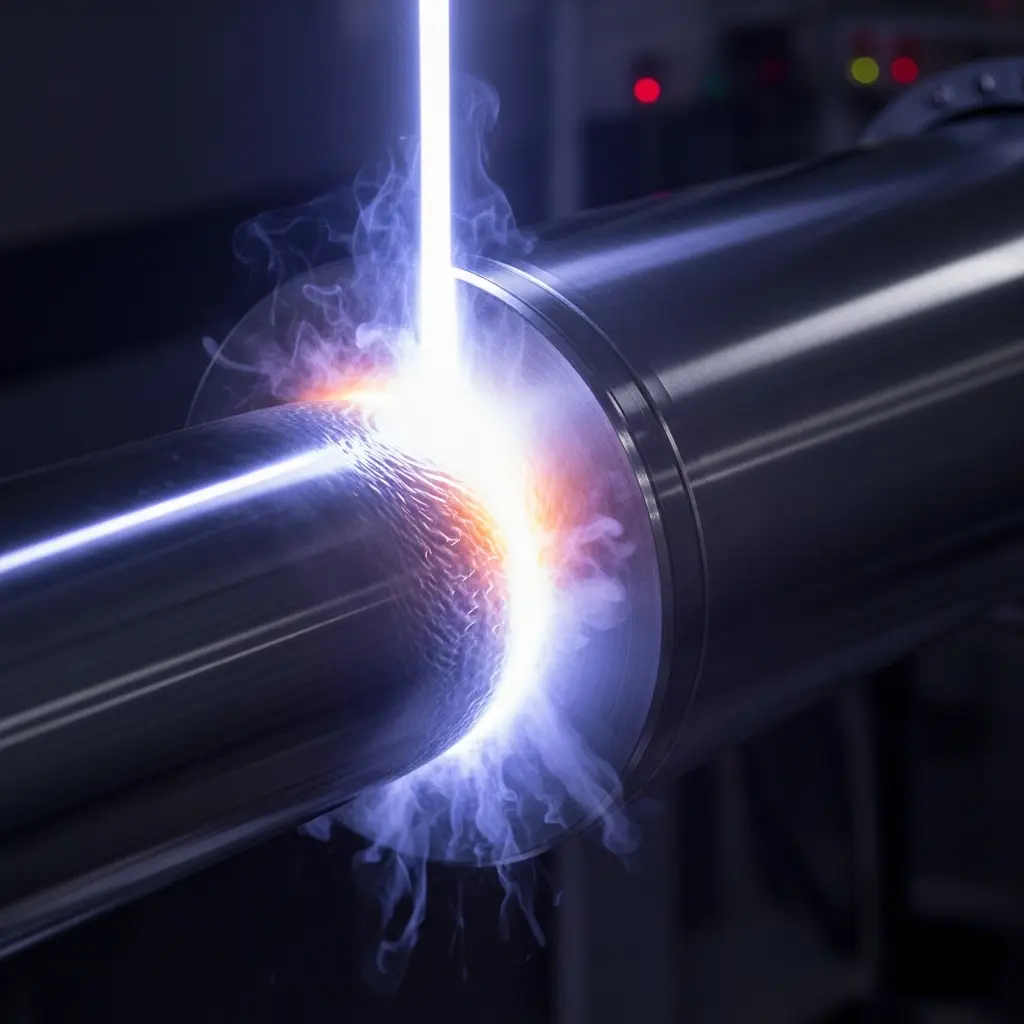
Scientists are tackling the formidable challenge of absorbing intense beamstrahlung radiation expected from CERN’s proposed Future Circular Collider (FCC-ee). Silvio Candido, Rui Franqueira Ximenes, and Anton Lechner, all from CERN, lead a team , including Frasca, Lerner, Marcone et al. , in presenting a novel liquid-lead ‘dump’ concept designed to dissipate up to 370kW of power with a mean energy of 62 MeV. This research is significant because it establishes circulating liquid lead as a viable and thermally robust technology for managing this radiation, a critical hurdle in realising the ambitious FCC-ee project, and details two innovative configurations optimised for absorption and heat dissipation using advanced Monte Carlo and fluid dynamics simulations.
This research establishes circulating liquid lead as a feasible and thermally robust technology for managing intense beamstrahlung radiation, a byproduct of the collider’s high-current operation. The team investigated two distinct absorber configurations: an inclined-flow geometry designed to maximize photon interaction length, and a compact upstream slope coupled with a downstream pool, where a free-surface lead flow initially intercepts the peak power before the remaining load is dissipated. Photon-matter interactions were meticulously modeled using Monte Carlo simulations in Fluka, while conjugate heat-transfer and free-surface dynamics were analysed via computational fluid dynamics simulations using Ansys Fluent.
Feasibility and Stable Operation of Absorber Designs
Demonstrating Feasibility and Stable Performance Ranges
The study reveals that both configurations demonstrate stable operation within a 300kg/s flow limit, crucially maintaining liquid-lead and structural temperatures within the operational range of 450, 500°C. Design refinements were strategically introduced based on simulated thermal and hydraulic performance, effectively mitigating secondary effects such as photon backscattering. The inclined-flow geometry enhances absorption by increasing the interaction length, while the compact upstream slope with a pool configuration provides a robust initial interception of the high-power beamstrahlung. These advancements address the unprecedented photon loads expected from the FCC-ee, which are several orders of magnitude higher than those experienced in previous lepton colliders like LEP or SuperKEKB.
Experiments show that the proposed liquid-lead systems offer a compelling alternative to solid absorbers, which are prone to melting, thermal fatigue, and radiation damage. The research establishes that liquid lead’s flowing nature allows for efficient heat removal, circumventing the structural limitations inherent in solid materials. Furthermore, the team’s choice of pure lead over lead-bismuth eutectic alloys minimizes the production of radiotoxic polonium-210, enhancing the safety and sustainability of the design. This work builds upon prior successes in liquid-metal technology demonstrated in facilities like BULLET and MEGAPIE, paving the way for a reliable and efficient beamstrahlung absorption system for the FCC-ee.
The innovative designs presented in this study address a key challenge in high-energy physics: effectively managing the intense photon beams generated during particle collisions. The team achieved this by meticulously optimizing the absorber geometry to maximize photon path length while adhering to strict hydraulic and integration constraints. The results establish a consistent framework for optimizing absorber designs, ensuring safe operation, and validating the feasibility of liquid lead as a baseline technology for beamstrahlung absorption. This research addresses the critical need for robust downstream absorbers capable of dissipating approximately 370kW of power, with a mean energy of 62 MeV, generated during electron-positron collisions. The study meticulously investigates two distinct configurations, an inclined-flow geometry and a compact upstream slope with an integrated pool, to optimise absorption efficiency and thermal management. Researchers employed Monte Carlo simulations using FLUKA to model particle interactions within the liquid lead, accurately capturing the complex electromagnetic cascades initiated by beamstrahlung photons.
Simultaneously, conjugate heat-transfer and free-surface dynamics were analysed
Analyzing Thermal Dynamics with Computational Fluid Models
Modeling Thermal and Hydraulic Behavior with CFD
Simultaneously, conjugate heat-transfer and free-surface dynamics were analysed via computational fluid dynamics (CFD) simulations using ANSYS Fluent, providing a comprehensive understanding of thermal and hydraulic behaviour. This coupled approach enabled the team to refine the absorber geometry, mitigating secondary effects like backscattering and ensuring stable operation within a 300kg/s flow limit. The simulations demonstrated that both configurations successfully maintain liquid-lead and structural temperatures between 450, 500°C. The experimental setup leverages detailed beam parameter data from guinea-pig++ simulations, specifically for optics V22, revealing that the FCC-ee will generate a substantial 370kW of beamstrahlung power per beam at the Z pole and 77kW during t-t operation.
Table I summarises these key parameters, including beam energy (45.6 GeV at Z pole, 182.5 GeV during t-t operation), bunch intensity (2.43x 10 11 at Z pole, 2.64x 10 11 during t-t operation), and corresponding BS mean photon energy (1.7 MeV at Z pole, 62.3 MeV during t-t operation). The team meticulously modelled the BS beam divergences, σpx of 91.8 μrad and σpy of 49.2 μrad at the Z pole, to accurately predict the photon beam’s spatial distribution at the absorber. Furthermore, the study accounted for synchrotron radiation emitted in downstream dipoles and final-focus magnets, although estimates indicate only a small fraction reaches the BS dump. The absorber is positioned 500m downstream of the interaction point, balancing separation from beamlines with reduced peak power density and minimising background noise for detectors. This innovative design, utilising lead’s short radiation length of 0. The research team focused on managing approximately 370kW of power with a mean photon energy of 62 MeV, crucial for stable collider operation. Experiments revealed two configurations, an inclined-flow geometry and a compact upstream slope with an additional pool, both designed to maximize absorption and maintain operational stability. Detailed Monte Carlo simulations using FLUKA modeled matter interactions, while conjugate heat-transfer and free-surface dynamics were analysed via computational fluid dynamics simulations using ANSYS Fluent.
Design refinements were introduced based on simulated thermal and hydraulic performance, specifically to mitigate secondary effects like photon backscattering. Results demonstrate both configurations operate stably within a 300kg/s flow limit, maintaining liquid-lead and structural temperatures between 450 and 500°C. Measurements confirm the circulating liquid lead is a feasible and thermally robust technology for beamstrahlung absorption within the FCC-ee. The study establishes that the expected beamstrahlung power at each interaction point will reach several hundred kilowatts, concentrated in a narrow forward cone, a level unprecedented among previous lepton colliders.
Comparative Analysis of Beam Energies and Materials
Comparative Analysis of Beam Energies and Materials
Data shows the SuperKEKB electron interaction points produce a beam with an average energy 63.3times lower, and the positron interaction points 23.2times lower, than that anticipated for FCC-ee during Z-pole operation. Solid absorbers, such as graphite or copper alloys, present limitations regarding melting and thermal fatigue, prompting the investigation of heavy liquid metals as alternatives. Researchers recorded that liquid lead combines high density and photon-absorption efficiency with a relatively low melting point and high boiling point, making it a promising candidate material. The team demonstrated the ability to circulate liquid lead in a closed loop, building on successes from facilities like BULLET and the Megawatt Pilot Experiment (MEGAPIE). The proposed design utilizes pure lead, avoiding the formation of volatile and radiotoxic 210Po, reducing its production by approximately four orders of magnitude compared to lead-bismuth eutectic alloys. These absorbers are crucial for dissipating approximately 370kW of power with a mean energy of 62 MeV, ensuring the collider’s safe and efficient operation. Two distinct configurations were investigated: an inclined-flow geometry designed for maximized absorption through increased interaction length, and a compact ‘CUSP’ concept utilizing a free-surface lead flow to initially intercept the peak power. Detailed Monte Carlo and fluid-dynamics simulations, employing Fluka and Ansys Fluent respectively, demonstrate the feasibility of both designs within a 300kg/s flow limit.
Both configurations maintain liquid-lead and structural temperatures within
Both configurations maintain liquid-lead and structural temperatures within the operational range of 450, 500°C, establishing circulating liquid lead as a thermally robust baseline technology for beamstrahlung absorption. The inclined-flow design maximizes absorption via its extended geometry, while the CUSP concept achieves comparable performance within a significantly smaller footprint of approximately 1m. The authors acknowledge conservative uncertainties of around 5% in absorbed power and 10% in local temperatures, highlighting the need for future experimental validation and prototype testing to refine these predictions. Further research should focus on building and testing a prototype to confirm the simulations and address any unforeseen challenges in a real-world operating environment.
🗞 Design and modeling of a liquid-lead dump concept for beamstrahlung radiation absorption in the CERN Future Circular e e Collider
🧠 ArXiv: https://arxiv.org/abs/2601.18470



See today’s quantum computing news on Quantum Zeitgeist for the latest breakthroughs in qubits, hardware, algorithms, and industry deals.



